Western Region
YOSEMITE NATIONAL PARK
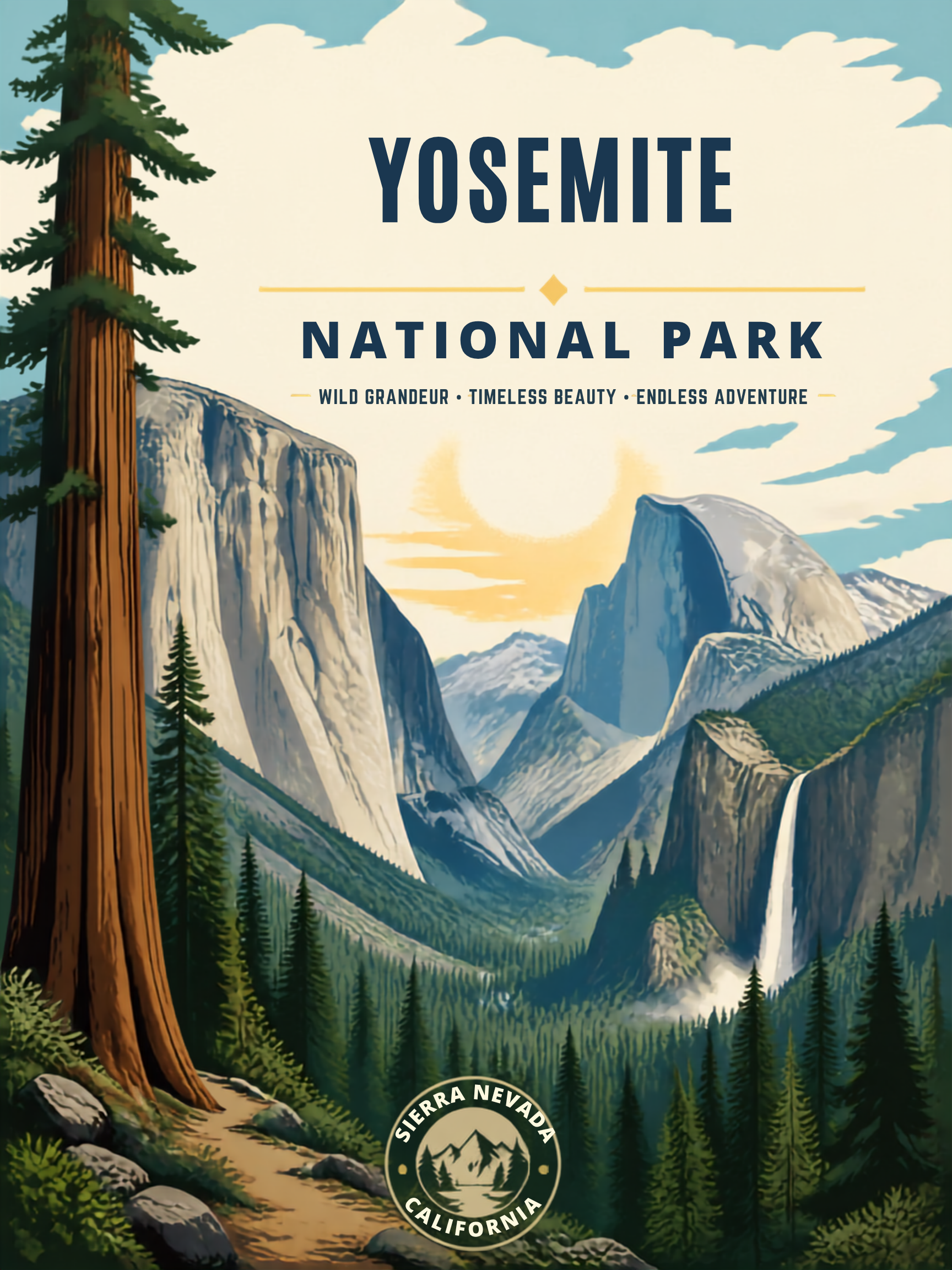
Welcome to Yosemite National Park, a majestic wilderness in California’s Sierra Nevada. Renowned for its towering granite cliffs, thundering waterfalls, ancient giant sequoias, and remarkably diverse ecosystems, Yosemite is one of the crown jewels of the National Park System. Its combination of dramatic vertical relief and serene alpine landscapes creates an experience that feels both monumental and deeply personal.

Did You Know?
- Yosemite National Park helped inspire the modern national park movement and played a major role in the development of conservation in the United States.
- The Yosemite Grant, signed by Abraham Lincoln in 1864, protected Yosemite Valley and Mariposa Grove before the National Park Service even existed.
- El Capitan rises approximately 3,000 feet above Yosemite Valley and is one of the world’s premier rock-climbing destinations.
- Yosemite Falls is one of the tallest waterfalls in North America, with a total drop of 2,425 feet.
- More than 95 percent of Yosemite National Park is designated wilderness.

My Personal Experience
Yosemite is one of my top three national parks in the Lower 48, and before moving to the East Coast, it was the park I visited most often. Today, that role has been taken over by Shenandoah. My earliest visits to Yosemite were long before it felt crowded like a major city during rush hour complete with traffic jams and competitive parking.
On one hand, it’s wonderful that so many people want to experience our national parks. On the other, it reminds us how important it is to visit responsibly so we don’t love these places to death. I’ve been to Yosemite in all four seasons, and each one feels completely different. If you visit too early or too late in the year, some roads will be closed due to snow, which can significantly shape your itinerary.
On my first visit, I focused on the classic highlights: Bridalveil Fall, Yosemite Falls, Yosemite Valley, Mariposa Grove, Tioga Road, and Tuolumne Meadows. With roughly 800 miles of hiking trails, it’s perfectly fine to stick to easier routes and still see many of Yosemite’s most famous sights. Trust me you’ll come back.
I was content simply seeing Half Dome without hiking it. Everyone I’ve spoken to who completed the hike described it as a once-in-a-lifetime experience, but the trail became so busy that the National Park Service introduced a permit lottery system to limit use.
If I had to describe Yosemite in a single word, it would be beautiful. There really is no better one. Seeing giant sequoias for the first time is something I’ll never forget. Winter in Yosemite is its own adventure, too and I was glad to have a 4WD vehicle. Driving in snow was challenging. If you’re in a two-wheel-drive vehicle, tire chains are mandatory when conditions require them.
There are bears in Yosemite, though I never saw one myself. Maybe you’ll be luckier than I was, just be sure to follow the park’s extensive guidance on bear safety. I never stayed inside the park, as I found lodging there quite expensive. Instead, I liked staying in Mariposa, about 50 minutes from the Arch Rock entrance, and entering the park as early as possible.
One last thing that makes Yosemite special to me. It’s the first National Park I visited together with my Mom.

Basic Facts
Address:
Yosemite National Park
California, USA
Operation Hours and Seasons:
The park is generally open 24 hours a day, year-round.
Visitors:
Approximately 4.5 million per year (2022)
Entrance Fees:
- Private Vehicle – $35.00 admits one private, non-commercial vehicle and all its occupants for 7 days
- Per Person – $20.00
Website:
nps.gov/yose
Map:
nps.gov/yose/planyourvisit/maps.htm
Additional Information:
For additional local information, visit yosemite.com.
Important Note:
During peak visitation periods (typically late spring through early fall), vehicle entry reservations may be required during certain hours. Always check the park’s official website for current reservation requirements before your visit.

Best Time to Visit
Many visitors consider spring the best season. Waterfalls are at peak flow, wildflowers bloom, and temperatures are generally comfortable. Parts of the park could still be close. Summer is the busiest season. All major roads are typically open, including Tioga Road and Glacier Point Road. Expect significant crowds.
Excellent weather, fewer visitors, and beautiful colors make fall one of the park’s most enjoyable seasons. Winter is a quieter and often magical time to visit. Snow transforms Yosemite Valley and the giant sequoia groves into a winter wonderland.

Recommended Time
1 Day: Visit Yosemite Valley, Yosemite Falls, Tunnel View, Bridalveil Fall, and Glacier Point.
2-3 Days: Ideal for most visitors. Add Tioga Road, Tuolumne Meadows, Mariposa Grove, and several hiking trails.

Getting There
The most common gateway communities are Mariposa, El Portal, and Lee Vining.
- From Mariposa, take CA-140 East for about 30 miles to the Arch Rock entrance.
- From the east, Tioga Road (CA-120) provides spectacular access via Lee Vining, when open.

Weather
Yosemite’s climate varies widely by elevation and season:
- Spring (Mar–May): 50s–70s °F (10–25 °C). Waterfalls are at their most powerful; higher elevations remain snow-covered.
- Summer (Jun–Aug): 80s–90s °F (27–32 °C). Ideal for high-country hiking; peak crowds.
- Fall (Sep–Nov): 50s–70s °F (10–25 °C). Fewer visitors, golden meadows, crisp air.
- Winter (Dec–Feb): 30s–50s °F (0–10 °C). Snow transforms the park into a winter landscape suited for snowshoeing and cross-country skiing.

Hiking
Yosemite National Park offers a variety of hiking trails catering to different skill levels and interests. Here are some recommended hikes:
Easy:
- Lower Yosemite Fall Trail – 1 mile loop: One of the most popular short walks in the park. The paved trail leads to excellent views of Yosemite Falls and is accessible to nearly all visitors.
- Bridalveil Fall Trail – 0.5 miles round trip: A short walk to one of Yosemite’s most famous waterfalls. During spring runoff, expect mist and spectacular water flow.
Moderate:
- Mist Trail – 3 miles round trip: One of Yosemite’s signature hikes. The trail climbs beside the Merced River and rewards visitors with close-up views of Vernal Fall. Continuing to Nevada Fall creates an even more spectacular experience.
- Mirror Lake Trail – 2 miles round trip: An easy-to-moderate hike offering excellent views of Half Dome reflected in calm water during certain times of year.
Strenuous:
- Half Dome – 14-16 miles round trip: One of the most famous hikes in the world. A permit is required for the cable route to the summit. The views are extraordinary and the experience is often described as life changing.
- Four Mile Trail – 4.8 miles one-way: Despite its name, the trail is nearly five miles each way. The route climbs from Yosemite Valley to Glacier Point and offers some of the finest panoramic views in the park.

Scenic Drives
- Tioga Road: This 46-mile drive offers access to high country meadows, lakes, and granite domes. Open seasonally from late May to October.
- Glacier Point Road: A 16-mile drive leading to Glacier Point, with breathtaking views of Yosemite Valley, Half Dome, and the High Sierra. Open seasonally.

Best Viewpoints
- Tunnel View: Arguably the most famous viewpoint in the National Park System. Visitors enjoy a sweeping panorama of El Capitan, Bridalveil Fall, and Half Dome.
- Glacier Point: Provides one of the grandest views in Yosemite, overlooking Yosemite Valley, Half Dome, and the High Sierra.
- Valley View: A classic riverside viewpoint featuring El Capitan reflected in the Merced River.
- Olmsted Point: Offers a unique perspective of Half Dome from the Tioga Road corridor.
- Sentinel Dome: One of the best locations for panoramic views of Yosemite Valley and the surrounding mountains.

Wildlife Viewing
Yosemite supports a surprisingly diverse collection of wildlife. Black bears are perhaps the park’s most famous residents, although sightings are less common than many visitors expect. Mule deer are frequently observed throughout Yosemite Valley and meadow areas. Coyotes, bobcats, foxes, marmots, and numerous bird species also inhabit the park. Visitors exploring Tuolumne Meadows and higher elevations may encounter pikas and other alpine wildlife. Early morning and evening provide the best wildlife-viewing opportunities.

Photography
Yosemite photography is defined by scale, verticality, and water:
- Granite Walls: El Capitan, Half Dome, Cathedral Rocks, and Sentinel Rock create some of the most recognizable landscapes in the world. Yosemite’s granite walls define the visual identity of the park.
- Waterfalls: Spring transforms Yosemite into one of North America’s premier waterfall destinations. Yosemite Falls, Bridalveil Fall, Vernal Fall, Nevada Fall, and countless seasonal waterfalls create endless photographic opportunities.
- Giant Sequoias: Mariposa Grove offers opportunities to photograph some of the largest living organisms on Earth. The immense scale of the giant sequoias can be difficult to capture but is unforgettable in person.
- Yosemite Valley: The combination of towering cliffs, meadows, rivers, and forests creates compelling compositions in every season and weather condition.
- High Country: Tuolumne Meadows, Tenaya Lake, and the Tioga Road corridor showcase a completely different side of Yosemite, featuring alpine landscapes, granite domes, and open meadows.
Yosemite’s vast cliffs and high elevations also make it an excellent location for night photography when conditions allow.

Horseback Riding
Horseback riding has been part of Yosemite’s history since the park’s earliest days and remains a wonderful way to experience portions of the backcountry. Most designated trails in Yosemite are open to stock use unless otherwise posted. Cross-country or off-trail travel is prohibited. Stock groups are limited to 25 animals, and many routes exceed 8,000 feet in elevation, so acclimation is important. Always consult current regulations and trail closures before riding at nps.gov/yose/planyourvisit/stock.htm.
Guided mule rides and pack and saddle trips are available through an authorized concessioner from spring through fall.

General Aviation
For GA pilots the following airports might be good options:
Mariposa–Yosemite Airport (KMPI) in Mariposa, CA:
- The most convenient general aviation airport for many Yosemite visitors.
- Approximately 40 miles from Arch Rock Entrance
- Longest runway: 3,306 feet
- 100LL available
- Limited rental car availability
- Lodging available in Mariposa
Fresno Yosemite International Airport (KFAT) in Fresno, CA:
- Often the most practical aviation gateway.
- Approximately 65 miles from the South Entrance
- Longest runway: 9,539 feet
- 100LL available
- Multiple rental car providers
- Extensive lodging options
Lee Vining Airport (O24) in Lee Vining, CA:
- Useful for visitors entering via Tioga Road when open.
- Closest airport to the eastern entrance corridor
- Limited services, no rental cars available
- Seasonal access dependent upon Tioga Road conditions
Flying in the Sierra Nevada requires careful planning. Density altitude, mountain weather, turbulence, and rapidly changing conditions can affect even experienced pilots. Afternoon thunderstorms occasionally develop during summer, and mountain obscuration can occur during winter storms.parks, but summer temperatures can still affect aircraft performance. The aerial view of the badlands is spectacular, revealing a maze of ridges, canyons, and colorful formations that is difficult to appreciate fully from the ground.

Nearby Attractions
- Mariposa: A popular gateway community and an excellent base for visiting Yosemite.
- Tuolumne Meadows: One of the most beautiful alpine landscapes in the Sierra Nevada.
- Mono Lake: A remarkable ancient lake famous for its limestone tufa towers.
- Devils Postpile National Monument: Known for its striking basalt columns and nearby Rainbow Falls.
- Ansel Adams Wilderness: Named after the legendary photographer whose images helped define Yosemite’s visual legacy.

Important Tips
- Arrive Early: Parking can become difficult surprisingly early, particularly during summer and holiday periods.
- Use the Shuttle System: The Yosemite Valley shuttle can save considerable time and frustration.
- Respect Bear Regulations: Bear-related food storage rules are strictly enforced and for good reason.
- Expect Crowds: Yosemite is one of the most visited national parks in the country. Patience is part of the experience.
- Do Not Skip the High Country: Many visitors spend all their time in Yosemite Valley and miss some of the park’s finest scenery.
- Check Road Conditions: Tioga Road and Glacier Point Road are seasonal and can dramatically affect your itinerary.
- Plan to Return: Few parks reward repeat visits more than Yosemite. Every season offers a completely different experience.
Yosemite National Park is one of those rare places that feels larger than life. Towering granite cliffs, powerful waterfalls, ancient sequoias, and vast wilderness combine to create a landscape that has inspired artists, photographers, climbers, and conservationists for generations.
Whether you are standing beneath El Capitan, watching the mist rise from Vernal Fall, exploring the high country along Tioga Road, or simply sitting quietly in Yosemite Valley, the park leaves a lasting impression. For me, Yosemite will always be special. It introduced me to giant sequoias, provided countless memorable visits, and remains connected to cherished memories with my mother. Few places blend natural beauty and personal meaning so completely, and that is why Yosemite remains one of my favorite national parks.


