Western Region
SEQUOIA NATIONAL PARK
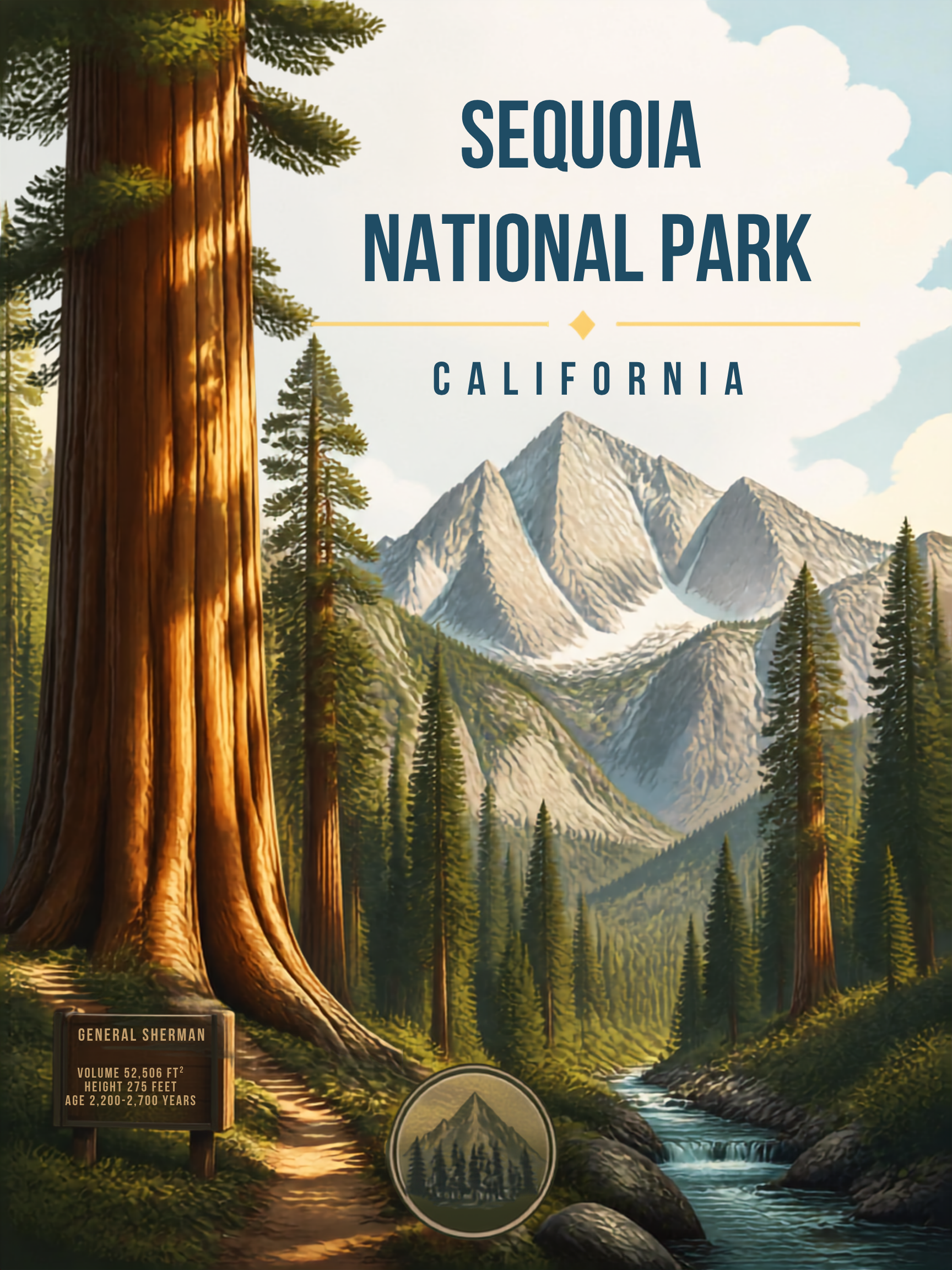
Welcome to Sequoia National Park, home to the giant sequoias among the largest living organisms on Earth located in California’s southern Sierra Nevada. The park combines awe-inspiring forests with high-mountain scenery, deep canyons, and remarkable biodiversity, creating an experience that feels both monumental and deeply grounding.

Did You Know?
- The General Sherman Tree is the largest known living tree on Earth by volume.
- Giant sequoias can live for more than 3,000 years.
- Sequoia National Park was established in 1890, making it America’s second national park after Yellowstone.
- Mount Whitney, located on the park’s eastern boundary, is the highest peak in the contiguous United States at 14,505 feet.
- Many giant sequoias survive wildfires because their bark can exceed two feet in thickness and provides remarkable protection from heat.

My Personal Experience
Sequoia, the larger sibling within Sequoia & Kings Canyon National Parks, is home to the highest peak in the contiguous United States, Mount Whitney at 14,505 feet above sea level and, of course, the giant sequoias. I had never seen Sequoiadendron giganteum before in my life.
You absolutely must visit the General Sherman Tree, the largest known living tree on Earth by volume. It rises about 275 feet (84 meters) and measures roughly 36 feet (11 meters) in diameter at its base. It’s neither the tallest, widest, nor oldest tree on the planet, but it is still the largest known. Its age is estimated at 2,300–2,700 years. Standing in front of it made me feel small and humble and yes, I had to hug one.
If you’re a first-time visitor, you should start with the groves. Grant Grove and Cedar Grove offer easy local hikes and also serve as trailheads for longer, more demanding routes. I was feeling a bit adventurous and climbed Moro Rock, a granite dome with a spectacular vantage point. All you need to do is climb about 400 steps and hold on to the handrails. It’s strenuous but absolutely worth it.

Basic Facts
Address:
Sequoia National Park
47050 Generals Highway
Three Rivers, CA 93271
Operation Hours and Seasons:
The park is open 24 hours a day, year-round. Some roads and facilities operate seasonally due to snow.
Visitors:
Over 1 million per year (2022)
Entrance Fees:
- Private Vehicle: $35.00 (admits one private, non-commercial vehicle and all its occupants)
- Per Person: $20.00
Website:
nps.gov/seki
Map:
nps.gov/seki/planyourvisit/maps.htm
Additional Information:
For additional local information, visit visitsequoia.com.

Best Time to Visit
Summer is the most popular season. Nearly all roads and facilities are open, and access to higher elevations is generally unrestricted. Fall is also an excellent time to visit. Crowds diminish, temperatures remain comfortable, and visibility is often exceptional.
Waterfalls are flowing strongly in spring, wildflowers bloom at lower elevations, and giant sequoia groves are especially beautiful. Snow transforms the giant sequoia groves into one of the most magical winter landscapes in the National Park System.

Recommended Time
1 Day: Visit the Giant Forest, General Sherman Tree, Moro Rock, and Crescent Meadow.
2-3 Days: Ideal for most visitors. Add several hikes, explore Lodgepole and Wolverton, and spend additional time in the giant sequoia groves.

Getting There
The closest major city is Fresno, California. From Fresno, take CA-180 East toward Grant Grove or CA-198 East via Three Rivers for access to the Giant Forest and Lodgepole areas. Both routes climb steeply into the Sierra Nevada and are highly scenic.

Weather
Sequoia National Park’s climate varies significantly by elevation:
- Spring (Mar–May): 40s–60s°F (4–20°C). Snow lingers at higher elevations while wildflowers bloom lower in the park.
- Summer (Jun–Aug): 60s–90s°F (15–32°C). Ideal for hiking and exploring the giant sequoias; afternoons can bring thunderstorms.
- Fall (Sep–Nov): 40s–70s°F (4–21°C). Crisp air, golden meadows, and fewer visitors.
- Winter (Dec–Feb): 30s–50s°F (0–10°C). Snow is common; chains may be required, and some areas become inaccessible.

Hiking
Sequoia National Park offers trails ranging from short grove walks to demanding backcountry routes:
Easy:
- Big Trees Trail – 1.2-mile loop: A flat, accessible loop through the Giant Forest that offers close-up views of massive sequoias, including interpretive signage. Ideal for all ages and abilities.
- Moro Rock – 0.5 miles round trip: A short but steep stair climb to the top of a granite dome, rewarding hikers with sweeping views over the Great Western Divide and surrounding forest.
Moderate:
- Crescent Meadow Loop – 1.6 miles loop: A scenic loop through lush meadows and sequoia groves once called “the gem of the Sierra” by John Muir. A peaceful alternative to busier areas.
Strenuous:
- High Sierra Trail – 60 miles: A classic long-distance route that traverses the Sierra Nevada from Giant Forest to Mount Whitney. Designed for experienced backpackers with proper permits and preparation.

Scenic Drives
Generals Highway: One of California’s most scenic mountain roads, connecting Sequoia and Kings Canyon National Parks. The route winds through giant sequoia groves, granite landscapes, and mountain forests while providing access to many of the parks’ most famous attractions.

Best Viewpoints
- Moro Rock: The park’s premier viewpoint. Visitors who climb the staircase are rewarded with panoramic views across the Great Western Divide and the High Sierra.
- Beetle Rock: An easy-access overlook providing excellent sunset views and sweeping forest panoramas.
- Crescent Meadow: John Muir referred to this area as the “Gem of the Sierra.” It remains one of the most peaceful and beautiful locations in the park.
- Tunnel Rock: A classic photo stop along Generals Highway and one of the park’s most recognizable landmarks.
- Buena Vista Peak: A less-visited viewpoint offering expansive views across the surrounding mountains and forests.

Wildlife Viewing
Sequoia National Park supports an impressive variety of Sierra Nevada wildlife. Black bears are among the park’s most famous residents and are frequently observed throughout forested areas. Mule deer are common near meadows and developed areas, while bobcats, coyotes, foxes, marmots, and numerous smaller mammals inhabit the park’s diverse ecosystems. Birdwatchers may encounter Steller’s jays, woodpeckers, owls, hawks, and many other species. Early morning and evening generally provide the best opportunities for wildlife observation.

Photography
Photography in Sequoia is about scale and vertical contrast:
- Giant Sequoias: The giant sequoias are the park’s defining photographic subject. Capturing their scale can be challenging, and including people, trails, or surrounding trees often helps communicate their immense size.
- The General Sherman Tree: The largest living tree on Earth deserves special attention. Photographing the tree from multiple angles helps convey both its height and extraordinary volume.
- Giant Forest: One of the finest places in the world for forest photography. Light filtering through the canopy creates beautiful textures and constantly changing conditions.
- Moro Rock: The granite dome offers some of the park’s best panoramic photography opportunities, particularly for capturing the relationship between forests and mountains.
- High Sierra Landscapes: Many visitors focus exclusively on the sequoias and overlook the spectacular mountain scenery. The park protects alpine lakes, granite peaks, deep canyons, and wilderness landscapes worthy of any photographer’s attention.

Horseback Riding
Horseback riding remains one of the best ways to experience Kings Canyon’s vast backcountry. Check the park’s website for details: nps.gov/seki/planyourvisit/horsebackriding.htm for information. Visitors bringing their own stock may access many designated trails throughout the park. Day-use trips are relatively straightforward, while overnight trips require wilderness permits and compliance with stock-use regulations. Because many routes enter remote wilderness areas, riders should be comfortable with backcountry travel and changing mountain weather.
If you left your equine friend at home and are still interested in day ride, there are two stables that operate under a concessions permit. Please call them in advance for additional information. Both operators, Grant Grove Stables and Cedar Grove Pack Station typically offer tours June through mid-October.

General Aviation
There are two options for general aviation pilots:
Visalia Municipal Airport (KVIS) in Visalia, CA:
- Often the most practical airport for general aviation pilots visiting Kings Canyon and Sequoia.
- Approximately 60 miles from Grant Grove
- Longest runway: 6,006 feet
- 100LL available
- Rental cars available
- Multiple lodging options nearby
Fresno Yosemite International Airport (KFAT) in Fresno, CA:
- The most convenient full-service option.
- Approximately 80 miles from Grant Grove
- Longest runway: 9,539 feet
- 100LL available
- Multiple rental car providers
- Excellent lodging options
Rent a car or arrange ground transportation to explore the park. Options closer to the park like Reedley Municipal (O32) might not offer reliable fuel and rental car options.
Flying into the Sierra Nevada requires attention to density altitude, mountain weather, and terrain. Summer temperatures can significantly affect aircraft performance, particularly at smaller airports. Afternoon turbulence is common, and winter storms can rapidly affect mountain flying conditions.

Nearby Attractions
- Kings Canyon National Park: Sequoia’s sister park and one of the most underrated mountain parks in the United States.
- Three Rivers: A popular gateway community located near the Ash Mountain Entrance.
- Mount Whitney: The highest peak in the contiguous United States.
- John Muir Wilderness: Provides access to some of the finest backcountry landscapes in the Sierra Nevada.

Important Tips
- Weather: Conditions change quickly at elevation; carry layers year-round.
- Permits: Required for overnight backpacking and stock use.
- Respect Nature: Stay on marked trails and protect fragile root systems around sequoias.
- Safety: Distances are deceptive. Carry maps and inform someone of your plans.
Sequoia National Park offers one of the most humbling experiences available anywhere in the National Park System. Standing beneath a giant sequoia is difficult to describe. These trees have survived thousands of years of storms, droughts, wildfires, and human history. They were already ancient when many of the world’s great civilizations were still young.
Whether you are standing beneath the General Sherman Tree, climbing Moro Rock, wandering through Giant Forest, or exploring the High Sierra beyond the groves, Sequoia has a remarkable ability to alter your sense of scale and perspective. It reminds us that nature measures time differently than we do. Few places leave visitors feeling both smaller and more connected to the natural world, and that is precisely what makes Sequoia National Park so special.


