Alaska and Pacific Northwest Region
OLYMPIC NATIONAL PARK
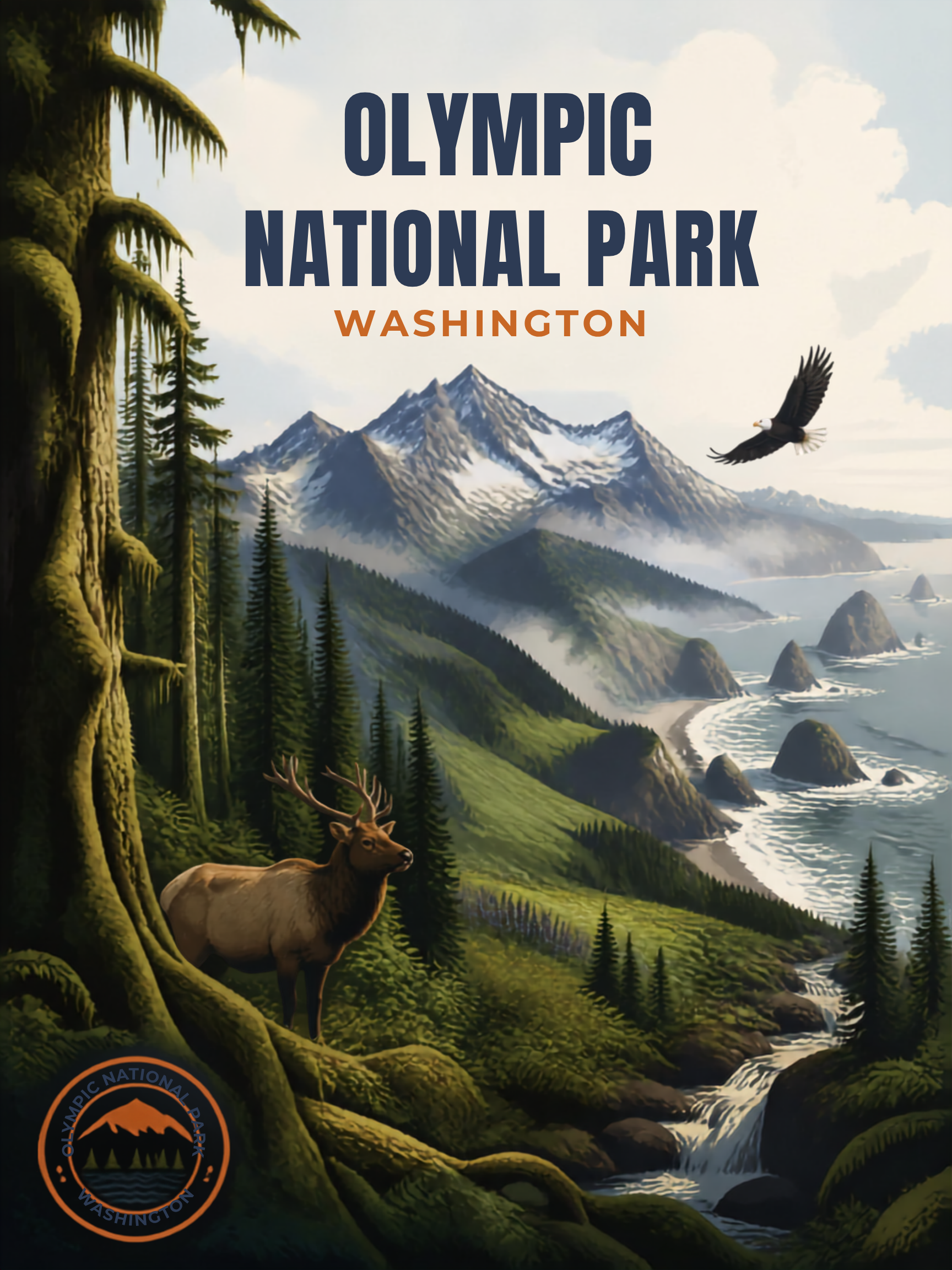
Welcome to Olympic National Park, a diverse landscape of rugged coastlines, temperate rainforests, and towering mountains located in the Pacific Northwest. The park protects an extraordinary range of ecosystems and offers breathtaking scenery and countless outdoor opportunities.

Did You Know?
- Olympic is often described as “three parks in one”: glaciated mountains, ancient temperate rainforests, and a wild Pacific coastline.
- The Hoh Rain Forest is one of the wettest places in the continental United States, receiving 12–14 feet of rain annually.
- The park is home to numerous endemic species, including plants and animals found nowhere else in the world.

My Personal Experience
Olympic National Park covers most of the Olympic Peninsula west of Seattle, with 7,966-foot Mount Olympus at its center. A visit can easily be combined with Mount Rainier or North Cascades National Park, making it a great addition to a Pacific Northwest itinerary.
I visited the park more than twenty years ago. I remember taking a ferry across Puget Sound to avoid Seattle traffic and I am certain I saved a lot of time. Driving around the Sound to Hurricane Ridge takes longer than you might expect. I entered the park through Port Angeles and started with the drive up to Hurricane Ridge. It’s a fantastic scenic drive with panoramic views of the Olympic Mountains, including Mount Olympus.
However, I also had one of my most memorable “learning experiences” there. Back in 2004, I apparently didn’t pull the parking brake hard enough. While I was taking pictures, I heard a noise my rental car slowly rolling downhill. I sprinted toward it, jumped in, and slammed the brakes. Problem solved but that could have turned into a very expensive vacation. After that adrenaline rush, I continued to Lake Crescent and hiked to Marymere Falls, which is absolutely worth it. From there, I headed to the Hoh Rain Forest, my first time ever in a true rainforest. I ended the day at Ruby Beach, watching the sunset over the Pacific Ocean.
Olympic truly is three parks in one: mountains, rainforest, and coastline all in a single day if you plan carefully.

Basic Facts
Address:
Olympic National Park
600 E. Park Avenue
Port Angeles, WA 98362
Operation Hours and Seasons:
The park is open year-round, 24 hours a day.
Visitors:
Over 3 million per year (2022)
Entrance Fees:
- Private Vehicle: $30.00 (admits one private, non-commercial vehicle and all its occupants for seven days)
- Per Person: $15.00 (when entering on foot or bicycle, valid for seven days)
Website:
nps.gov/olym
Map:
nps.gov/olym/planyourvisit/maps.htm
Additional Information:
For additional local information, visit olympicpeninsula.org.

Best Time to Visit
Summer offers the best access to Hurricane Ridge and high-elevation areas. September is an excellent alternative with fewer crowds and still favorable weather.

Recommended Time
1 Day: If you have to choose one area, focus on Hurricane Ridge.
2-3 Days: Add the Hoh Rain Forest, Lake Crescent, and at least one coastal area such as Ruby Beach or Rialto Beach.

Getting There
The closest major city is Seattle, Washington. From Seattle, take a ferry across Puget Sound and drive west to reach the park.

Weather
Olympic’s weather varies significantly by region.
- Spring (March to May): 40s–60s °F (4–15°C). Mild with rain and blooming wildflowers.
- Summer (June to August): 50s–70s °F (10–21°C). Drier and best for hiking.
- Fall (September to November): 40s–60s °F (4–15°C). Clear and less crowded.
- Winter (December to February): 30s–50s °F (-1 to 10°C). Rain in lowlands, snow in the mountains

Hiking
Olympic National Park offers a variety of trails for all levels:
Easy:
- Hall of Mosses Trail – 0.8-mile loop: A short walk through the Hoh Rain Forest surrounded by moss-covered trees and lush vegetation.
- Marymere Falls Trail – 1.8 miles round trip: A scenic forest hike leading to a picturesque waterfall near Lake Crescent.
- Rialto Beach Trail – 1.5 mile round trip: A coastal walk to the famous Hole-in-the-Wall sea arch with dramatic ocean views
Moderate:
- Sol Duc Falls Trail – 1.6 miles round trip: A beautiful trail through old-growth forest to one of the park’s most impressive waterfalls.
- Hurricane Hill Trail – 3.2 mile round trip: A paved climb offering panoramic views of the Olympic Mountains and surrounding landscape.
Strenuous:
- Mount Storm King Trail – 3.9 miles round trip: A steep ascent with ropes near the top, rewarding hikers with stunning views over Lake Crescent.
- East Fork Quinault River Trail – up to 30 miles round trip: A long backcountry trail leading to Enchanted Valley, best suited for backpacking adventures.

Scenic Drives
Olympic is not a traditional drive-through park, but several roads provide access to different regions.
Hurricane Ridge Road: The most scenic drive in the park, offering sweeping mountain views

Best Viewpoints
- Hurricane Ridge: The park’s premier mountain viewpoint, offering sweeping vistas of the Olympic Mountains, Mount Olympus, alpine meadows, and distant glaciers.
- Ruby Beach: One of the most iconic coastal locations in the Pacific Northwest, known for its sea stacks, driftwood-strewn shoreline, and spectacular sunsets.
- Rialto Beach: A rugged stretch of coastline featuring dramatic sea stacks, crashing waves, and access to the famous Hole-in-the-Wall sea arch during favorable tides.

Wildlife Viewing
Olympic National Park is one of the best wildlife destinations in the Pacific Northwest. Roosevelt elk are the park’s signature animals and are frequently seen in the Hoh, Quinault, and Sol Duc valleys. Black bears are regularly spotted in meadows, berry patches, and along quieter trails during summer and early fall. Along the coast, visitors may observe harbor seals, sea otters, and migrating gray whales during certain times of the year.
Birdwatchers should look for bald eagles, osprey, ravens, and a variety of seabirds along the coastline. Mountain goats can occasionally be seen in higher elevations near Hurricane Ridge.

Photography
Olympic offers exceptional variety for photographers:
- Rainforests: The Hoh and Quinault Rain Forests provide opportunities for atmospheric images of moss-draped trees, ferns, and filtered light. Overcast days often create the best conditions.
- Waterfalls: Marymere Falls and Sol Duc Falls are among the park’s most photographed waterfalls, particularly during spring runoff.
- Mountains: Hurricane Ridge offers sweeping alpine views of Mount Olympus, glaciers, wildflower meadows, and distant mountain ranges. Sunrise and sunset often provide dramatic lighting.
- Coastline: Ruby Beach, Rialto Beach, and other coastal areas feature sea stacks, driftwood, tide pools, and some of the most spectacular sunsets in the Pacific Northwest.
- Wildlife: Roosevelt elk are among the park’s most recognizable photographic subjects and are frequently seen in the Hoh and Quinault valleys.

Horseback Riding
Over 365 miles of trails are maintained for stock use. The park created a handy list of trails sorted by experience of stock and its riders: nps.gov/olym/planyourvisit/stockuse.htm. Check regulations carefully some trails are restricted, and only certified weed-free feed (pellets) is allowed. Grazing is limited to designated areas.

General Aviation
There are multiple options for general aviation pilots to get close to the park. Limitation is availability of rental cars. The following airports all offer rental car options.
William R Fairchild International Airport (KCLM) in Port Angeles, WA:
- Closest to the park
- Longest runway is 6,347 feet
- 100LL available
Bremerton National Airport( KPWT) in Bremerton, WA:
- East of the park
- 6,000 foot runway
- 100LL available
Olympia Regional Airport (KOLM) in Olympia, WA:
- South of the park, significantly longer drive to get to the Port Angeles entrance
- Longest runway is 5,500 feet
- 100LL available
Olympic’s mountainous terrain, rapidly changing weather, coastal fog, and low cloud ceilings can create challenging flying conditions. Pilots should carefully review weather along the Olympic Peninsula and remain alert for rapidly changing visibility, particularly during the morning and evening hours.

Nearby Attractions
- Port Angeles: The primary gateway community for Olympic National Park, offering lodging, restaurants, museums, and ferry connections to Canada.
- Cape Flattery: The northwesternmost point in the contiguous United States, featuring dramatic sea cliffs, sea caves, and spectacular Pacific Ocean views.
- Makah Cultural and Research Center: Located in Neah Bay, this excellent museum showcases the history, culture, and maritime traditions of the Makah people

Important Tips
- Weather: Conditions can vary dramatically between the coast, rainforest, and mountains. Carry layers even on sunny days.
- Rain: Waterproof clothing and footwear are recommended year-round, especially in the rainforest regions.
- Tides: Check tide tables before hiking coastal areas such as Rialto Beach or Hole-in-the-Wall. High tides can make some routes impassable.
- Permits: Required for backcountry camping and certain wilderness areas.
- Navigation: Cell coverage is limited throughout much of the park. Carry a map and know your route.
- Wildlife: Give elk and bears plenty of space, particularly during the elk rut in fall.
Olympic National Park truly offers three completely different experiences in one place: mountains, rainforest, and coastline. No matter how you plan your visit, you will likely leave wishing you had more time.


