Midwest Region
VOYAGEURS NATIONAL PARK
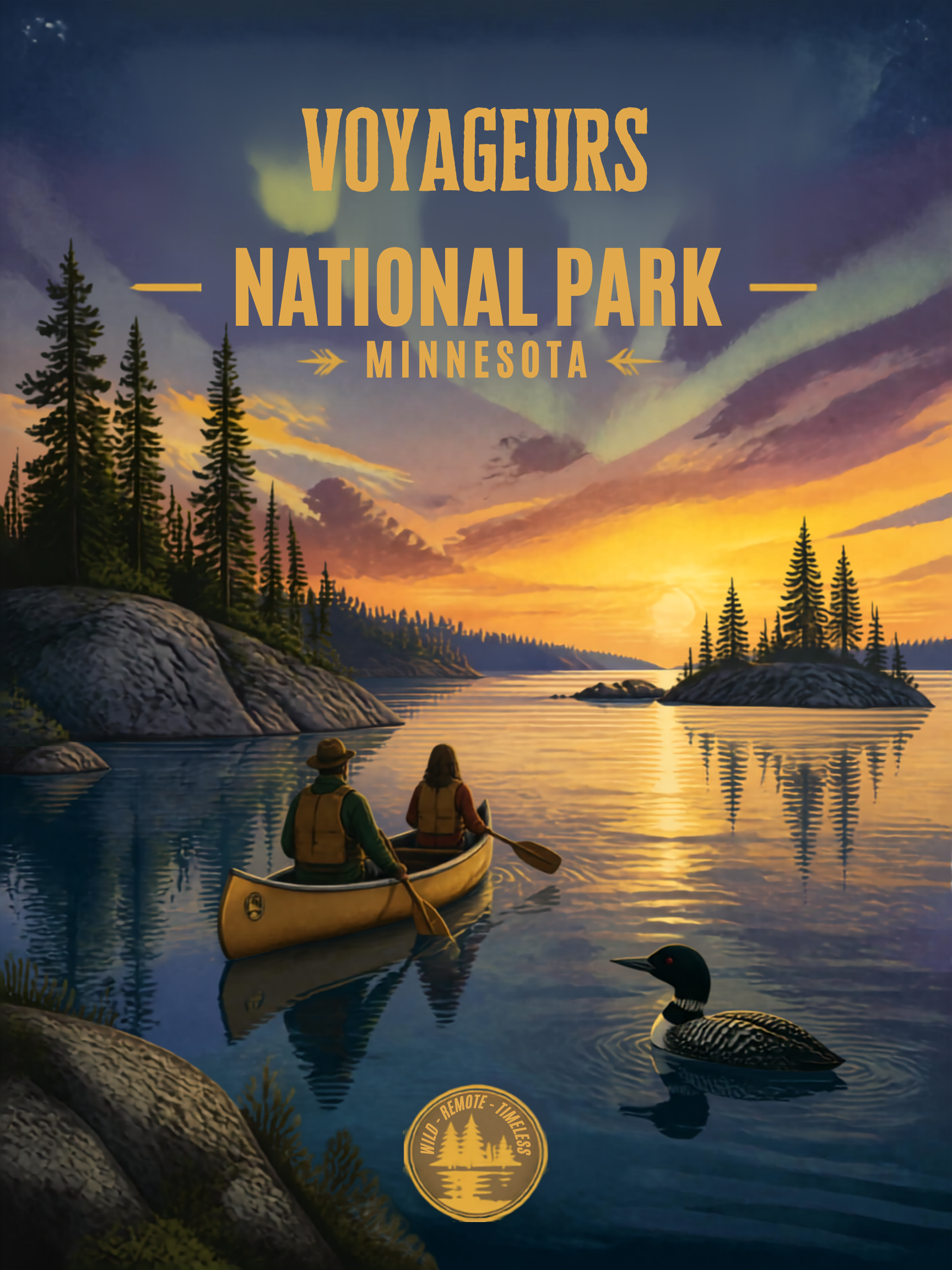
Welcome to Voyageurs National Park, a pristine water-based wilderness along the Canadian border in northern Minnesota. Defined by interconnected lakes, boreal forests, rocky shorelines, and endless waterways, this park offers outstanding opportunities for boating, paddling, fishing, wildlife viewing, and winter recreation.

Did You Know?
- Roughly 40% of Voyageurs National Park is water, making it a true paddler’s paradise
- The park is named after the French-Canadian “voyageurs,” fur traders who paddled these waterways in the 18th and 19th centuries
- Some exposed rock formations date back 2.5–2.8 billion years, making them among the oldest on Earth
- During winter, the frozen lakes become official ice roads that visitors can drive across

My Personal Experience
Voyageurs National Park sits directly along the Canadian border in northern Minnesota. We visited once and made a classic rookie mistake: we arrived far too early in the season on Easter Sunday in April. When we walked into the visitor center, a ranger greeted us with: “Wow, you guys are early.” And he was right.
Voyageurs is a park best experienced on the water, and there was absolutely no chance we wanted to spend any meaningful amount of time paddling on ice-cold lakes surrounded by melting snow and freezing wind. Instead, we spent time inside the warm visitor center learning about the area’s natural history and the French-Canadian voyageurs who once traveled these waterways during the fur trade era. Later, we explored some shoreline areas and walked a short trail near a pond hoping to spot beavers. It may not sound spectacular, but we practically had the entire park to ourselves.
We will definitely return in summer, rent kayaks, and experience Voyageurs the way it was meant to be explored. I am certain that I will have more to share in the next edition of this guide.

Basic Facts
Address:
Voyageurs National Park
360 Highway 11 East
International Falls, MN 56649
Operation Hours and Seasons:
The park is open year-round, 24 hours a day.
Visitors:
Over 230,000 per year (2022
Entrance Fees:
The park does not charge an entrance fee.
Website:
nps.gov/voya
Map:
nps.gov/voya/planyourvisit/maps.htm
Additional Information:
For additional local information, visit voyageurs.org.

Best Time to Visit
Voyageurs changes dramatically with the seasons. Late May–September is best for boating, kayaking, fishing, and ranger-led tours. September is excellent fall colors and fewer mosquitoes. Visitor will find outstanding opportunities for snowshoeing, ice fishing, and driving across frozen lake roads in winter. Spring is beautiful but often cold, wet, and not yet ideal for water recreation.

Recommended Time
1 Day: Focus on one visitor center area such as Rainy Lake or Ash River. Take a short hike and join a ranger-led boat tour.
2-3 Days: Ideal for combining hiking, paddling, boat tours, fishing, and exploring multiple sections of the park. Staying overnight on or near the water greatly improves the experience. Stay longer for renting a house boat or camping on a remote island.
.

Getting There
The closest major city is Duluth, Minnesota. From Duluth, take US-53 North toward International Falls and then follow park signs to Rainy Lake, Ash River, or Kabetogama visitor areas.

Weather
Voyageurs experiences a true northern continental climate with long winters and short but beautiful summers:
- Spring (March to May): 30s–60s°F (0–15°C). Melting snow, muddy trails, active wildlife, and lingering cold conditions.
- Summer (June to August): 70s–80s°F (21–27°C). Warm days and ideal boating weather. Mosquitoes can be intense, especially in early summer.
- Fall (September to November): 30s–60s°F (0–15°C). Cooler temperatures, vibrant foliage, and fewer visitors.
- Winter (December to February): 10s–30s°F (-12 to -1°C). Heavy snow, frozen lakes, and excellent winter recreation conditions.
Weather can change quickly, especially on open water. Wind and fog may create hazardous boating conditions. It’s advisable to check the specific weather forecast before planning a trip.

Hiking
Voyageurs is primarily a water-focused park, but several mainland-accessible trails provide excellent hiking opportunities:
Easy:
- Oberholtzer Trail – 1.7 miles round trip: A scenic shoreline hike passing wetlands, rocky outcrops, and forested sections while highlighting the legacy of conservationist Ernest Oberholtzer. Several viewpoints provide beautiful views across Rainy Lake.
- Echo Bay – 2.5 miles round trip: A quiet walk through boreal forest and marsh habitats. This trail is particularly rewarding for birdwatchers and visitors hoping to spot beavers, otters, or other wildlife.
Moderate:
- Blind Ash Bay Trail – 2.5 miles loop: One of the park’s most popular hikes, featuring elevated views over Lake Kabetogama, rocky ridges, and classic northwoods scenery. Fall colors can be especially impressive here.
Strenuous:
- Kab-Ash Trail – 27.9 miles: A rugged backcountry route connecting the Kabetogama and Ash River areas through remote forests, wetlands, and lakeshore environments. This trail is best suited for experienced hikers seeking solitude and a true wilderness experience.
Boating and Fishing
Water defines the Voyageurs experience. Visitors can explore Rainy Lake, Kabetogama Lake, Namakan Lake, and Sand Point Lake Popular activities include canoeing, kayaking, houseboating, and ranger-led boat tours. Fishing is popular throughout the interconnected lake system, with abundant walleye, northern pike, and smallmouth bass.
Winter Sports
Voyageurs transforms into a winter wilderness once the lakes freeze, Popular winter activities include snowshoeing, cross-country skiing, ice fishing, snowmobiling (outside certain protected zones), and driving on official ice roads. Winter visitors experience a completely different version of the park that is quiet, remote, and extraordinarily scenic.

Scenic Drives
Voyageurs is not a traditional driving park. The visitor centers and the dock and activity hubs are accessible by car but this is a park you experience on the water. There are no major roads within the park. Frozen lakes in winter provide opportunities to drive on ice roads. Check the park’s website for information and ‘road’ conditions.

Best Viewpoints
- Blind Ash Bay Trail: Classic postcard-style views across Lake Kabetogama, particularly beautiful during sunrise and fall foliage season.
- Rainy Lake Visitor Center: Scenic lakefront views, frequent wildlife sightings, and excellent sunset opportunities overlooking Rainy Lake.
- Anderson Bay: Rugged granite cliffs, quiet coves, and expansive vistas across Rainy Lake that showcase the park’s water-dominated landscape.
- Kettle Falls Area: Historic surroundings combined with beautiful lake views and opportunities to watch boats navigate the famous portage route.

Wildlife Viewing
Voyageurs supports a rich boreal ecosystem and offers some of the best wildlife viewing opportunities in the Midwest. Bald eagles are commonly seen soaring above the lakes, while common loons provide the soundtrack for many summer evenings. Beaver and river otters are frequently observed along quiet shorelines and wetlands. Black bears inhabit the forests throughout the park, although sightings are less common. Moose are present but can be elusive, particularly during warmer months. Early morning and evening typically provide the best opportunities for wildlife viewing, especially from boats or while quietly paddling along secluded shorelines.

Photography
Voyageurs offers excellent photography opportunities throughout the year:
- Water Reflections: Morning mist combined with calm lakes often creates mirror-like reflections of the surrounding boreal forest.
- Night Skies: As an International Dark Sky Park, Voyageurs is exceptional for Milky Way photography, star trails, northern lights, and meteor showers.
- Ellsworth Rock Gardens: Fascinating hand-built rock sculptures created by self-taught artist and lumberjack Jack Ellsworth provide a unique photographic subject unlike anything else in the National Park System.
- Wildlife: Loons, bald eagles, moose, beavers, and black bears provide memorable photographic opportunities.
- Fall Colors: September often brings spectacular reflections of golden and red foliage along the shoreline and on the park’s many islands.

Horseback Riding
The park focuses almost entirely on water-based recreation. There are no designated horseback riding trails, stables or campgrounds for horses within park boundaries.

General Aviation
There is one airport nearby with reliable rental car options.
Falls International /Einarson Field Airport (INL) in International Falls, MN:
- 14 miles to the Rainy Lake visitor center
- Longest runway 7,400 feet
- 100LL available
The airport sits directly at the Canadian border and pilots should avoid accidental entry into Canadian airspace. Nearby seaplane activity is common. Numerous lakes in and around the park attract floatplane activity during summer. Pilots should remain alert for seaplane traffic, particularly near major visitor access points and lodges. Weather conditions including fog, snow, and lake-effect systems may change rapidly.

Nearby Attractions
- Boundary Waters Canoe Area Wilderness: One of the premier canoe wilderness destinations in North America
- International Falls: Historic border town known as the “Icebox of the Nation”
- Kettle Falls Hotel: Historic boat-access-only lodge within the park

Important Tips
- Timing Matters: Summer is by far the best season for first-time visitors wanting to experience the park on the water.
- Mosquitoes: Bring strong insect repellent during late spring and early summer.
- Water Safety: Large lakes can develop dangerous waves quickly. Always monitor weather conditions before boating or paddling.
- Navigation: Cell service can be unreliable. Carry maps or GPS equipment, especially when boating.
- Camping & Permits: Backcountry camping requires permits and advance planning.
- Winter Conditions:
Ice roads and lake conditions vary annually. Always verify conditions with the park before traveling.
Voyageurs National Park is one of the best places in the Midwest to experience true northern wilderness. Unlike many national parks, Voyageurs is not centered around scenic roads or viewpoints. It is a park built around water, weather, and exploration. Whether you paddle quiet lakes at sunrise, watch northern lights dance above a frozen bay, or simply enjoy the silence of the northwoods, Voyageurs offers an experience that feels both peaceful and deeply authentic.


