Alaska and Pacific Northwest Region
NORTH CASCADES NATIONAL PARK
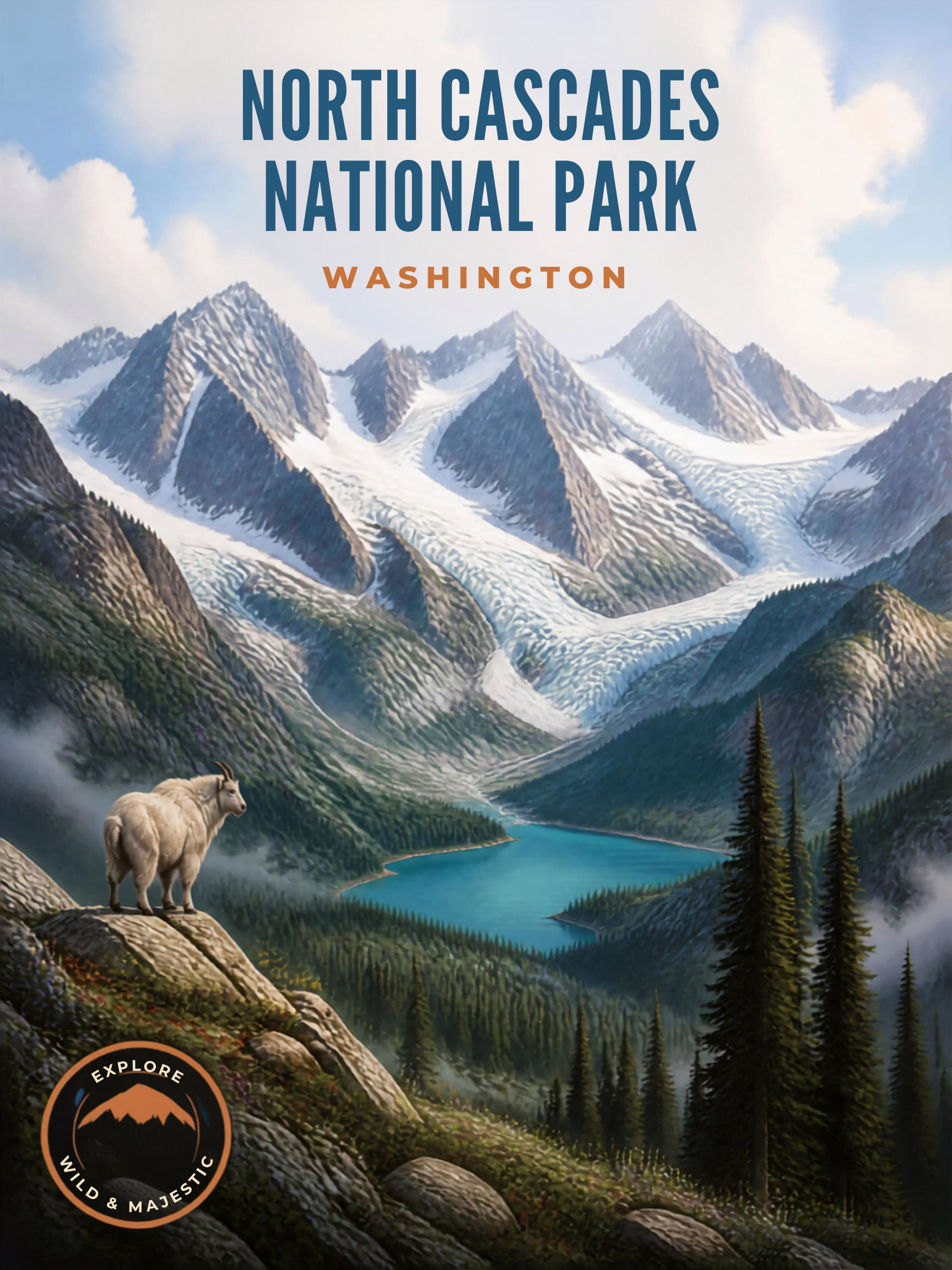
Welcome to North Cascades National Park, a rugged wilderness known for its jagged peaks, alpine lakes, and extensive glaciers located in northern Washington State. This park offers dramatic scenery, remote backcountry experiences, and some of the wildest landscapes in the continental United States.
North Cascades is part of the Pacific Northwest region, known for its dramatic glaciated mountains, volcanic peaks, dense forests, and rapidly changing mountain weather.

Did You Know?
- North Cascades has one of the largest concentrations of glaciers in the contiguous United States outside of Alaska.
- It is among the least-visited national parks in the lower 48.
- The nearby Skagit River hosts one of the largest wintering populations of bald eagles in the U.S.
- Historically, grizzly bears lived here. Today, the park’s bear population consists of black bears.

My Personal Experience
North Cascades is one of the least-visited parks in the lower 48 even though it’s only about 2.5 hours from Seattle and State Route 20 appears to run straight through it. However, this is where things get interesting: the road and visitor center are not actually inside the national park, but in the adjacent Ross Lake National Recreation Area. To truly enter North Cascades National Park, you usually need to hike. Many visitors think they’ve visited the park but technically, they haven’t.
Looking back at my notes from 2004, I spent a full day hiking in the area. However, I can’t say with certainty that I actually crossed into park boundaries. At one point, I heard a growling sound and was convinced it was a mountain lion. I turned around immediately. In hindsight, it was probably just my stomach asking for a sandwich but I didn’t stick around to find out. There’s only one way to be sure: I’ll have to go back and cross the boundary for real.

Basic Facts
Address:
North Cascades National Park
810 State Route 20
Sedro-Woolley, WA 98284
Operation Hours and Seasons:
The park is open year-round, 24 hours a day. Some facilities and roads are closed in winter due to snow.
Visitors:
Over 30,000 per year (2022)
Entrance Fees:
The park does not charge an entrance fee.
Website:
nps.gov/noca
Map:
nps.gov/noca/planyourvisit/maps.htm
Additional Information:
For additional local information, visit northcascades.org.

Best Time to Visit
Mid-June through late September offers the best conditions, with snow-free trails and access via State Route 20.

Recommended Time
1 Day: Drive State Route 20, stop at Diablo Lake Overlook, Gorge Creek Falls, and explore Ross Lake. Most visitors won’t actually enter the national park itself..
2-3 Days: Plan at least one hike into the park boundary and spend time on the water at Ross or Diablo Lake.

Getting There
The closest major city is Seattle, Washington. From Seattle, take I-5 North and connect to WA-20 East.
This park combines well with other Pacific Northwest destinations such as Mount Rainier National Park and Olympic National Park.

Weather
North Cascades National Park experiences varied weather throughout the year:
- Spring (March to May): 30s–60s °F (0–15°C). Snow gradually retreats from lower elevations while many higher trails remain snow-covered. Waterfalls are often at their most impressive.
- Summer (June to August): 60s–80s °F (15–27°C). The best season for hiking, backpacking, and accessing alpine terrain. Wildflowers peak in many high-elevation meadows.
- Fall (September to November): 30s–60s °F (0–15°C). Crisp air, excellent visibility, and fewer visitors make September one of the best months to visit.
- Winter (December to February): 20s–40s °F (-6 to 4°C). eavy snowfall closes much of the high country and portions of State Route 20, creating a remote winter landscape.
Weather can change rapidly in the mountains, particularly at higher elevations. Even during summer, hikers should be prepared for cool temperatures, rain, and sudden changes in visibilityooler than in nearby lowland communities. Always carry layers and be prepared for sudden changes in visibility and weather.

Hiking
North Cascades is a hiker’s park most true experiences require leaving the road behind:
Easy:
- Sterling Munro Trail – 300 feet: A short, accessible boardwalk with excellent views of the Picket Range.
- Happy Creek Forest Walk – 1.3 mile loop: A peaceful forest trail along a lively creek, perfect for a quick nature walk.
Moderate:
- Thunder Knob Trail – 3.6 miles round trip: A steady climb leading to a viewpoint overlooking the vivid turquoise waters of Diablo Lake.
- Cascade Pass Trail – 7.4 miles round trip: One of the park’s classic hikes, offering sweeping views of glaciers, peaks, and alpine valleys.
Strenuous:
- Sourdough Mountain Trail – 10 miles round trip: A demanding ascent to a historic fire lookout with expansive views of Ross Lake and surrounding peaks.
- Hidden Lake Lookout Trail – 8 miles round trip: A challenging hike to a scenic alpine basin and fire lookout with dramatic mountain views.
Boating and Kayaking
Ross Lake and Diablo Lake are ideal for kayaking and boating. The striking turquoise color of Diablo Lake comes from glacial silt, making it one of the most photogenic lakes in the region.

Scenic Drives
State Route 20 (North Cascades Highway): A spectacular drive through Ross Lake National Recreation Area – the closest most visitors get to the park.

Best Viewpoints
Most are outside park boundaries but easily accessible:
- Diablo Lake Overlook: The park complex’s most famous viewpoint, offering spectacular views of Diablo Lake’s vivid turquoise waters surrounded by rugged peaks.
- Ross Lake Overlook: A sweeping view of the long, narrow reservoir stretching deep into the surrounding mountains and forests.
- Cascade Pass: One of the finest viewpoints in the North Cascades, with panoramic views of glaciers, jagged peaks, and alpine valleys.
- Gorge Creek Falls: A dramatic roadside waterfall plunging beneath a bridge along the North Cascades Highway.

Wildlife Viewing
North Cascades National Park supports a rich variety of wildlife, although many species can be surprisingly difficult to spot in such a vast and rugged landscape. Black bears, mule deer, and hoary marmots are among the animals visitors are most likely to encounter, particularly along popular hiking trails and alpine meadows.
Mountain goats are often seen in higher elevations near Cascade Pass and other alpine areas, where they navigate steep rocky terrain with remarkable ease. Bald eagles, ospreys, and other birds of prey can frequently be observed around Ross Lake, Diablo Lake, and the Skagit River corridor.

Photography
North Cascades offers some of the most dramatic mountain photography in the Pacific Northwest.
- Diablo Lake: The lake’s striking turquoise color is best captured during sunny conditions from Diablo Lake Overlook.
- Glaciers & Alpine Peaks: Cascade Pass and surrounding high-country trails provide classic North Cascades scenery with rugged peaks and hanging glaciers.
- Layered Mountain Ridges: Morning and evening light often creates beautiful layers of receding ridgelines, particularly after passing weather systems.
- Fall Colors: Larch and alpine vegetation can provide excellent seasonal color in higher elevations during early fall.

Horseback Riding
Explore the many opportunities to explore the park on horseback for day or overnight. Most popular trails are in the southeast of the park. Not all trails are maintained to standards safe for use of stock. Check the park’s website for details: nps.gov/noca/planyourvisit/horseback-riding.htm. Outfitters near the park offer guided tours.

General Aviation
There are small airfields near the park but you will not find any rental car options:
Mears Field Airport (3W5) in Concrete, WA:
- 2,609 feet runway
- 100 LL available
For rental cars and better access try:
Skagit Regional Airport (KBVS) in Burlington, VA:
- 1.5 hours to the west
- Longest runway: 5,480 feet
- 100 LL available
Bellingham International (KBLI) in Bellingham, WA:
- 1hour 40 minutes to the northwest
- 6,700 feet runway
- 100 LL available
Mountain flying requires careful planning. Terrain, rapidly changing weather, and reduced visibility near ridgelines can create challenging conditions even during summer. Pilots should review mountain weather forecasts carefully before departure.

Nearby Attractions
- Ross Lake National Recreation Area: Surrounds much of the national park and offers boating, kayaking, hiking, and excellent scenic viewpoints.
- Lake Chelan National Recreation Area: A remote recreation area accessible primarily by boat or floatplane, providing access to the northern reaches of the park complex.
- North Cascades Highway (State Route 20): One of the most scenic drives in Washington, crossing spectacular mountain terrain and providing access to many viewpoints and trailheads.
- Skagit Valley: Famous for its spring tulip blooms, fertile farmland, and winter bald eagle viewing opportunities.

Important Tips
- Weather: Mountain weather changes quickly; carry layers and rain gear even during summer.
- Permits: Required for backcountry camping and certain wilderness activities.
- Respect Nature: Practice Leave No Trace principles and avoid disturbing wildlife.
- Safety: Many of the park’s best experiences require hiking in remote terrain. Carry navigation tools and be prepared for limited cell coverage.
- Road Conditions: State Route 20 is typically closed during winter and may not fully reopen until late spring or early summer.
- Pacific Northwest Tip: Travel times are often longer than expected due to mountain roads and terrain. Allow extra time and be prepared for rain at any time of year.
North Cascades National Park rewards those willing to go the extra mile literally. While many visitors stay along the scenic highway, those who venture into the backcountry will discover one of the most remote and spectacular landscapes in the United States. Combine it with visits to Olympic and Mount Rainier National Parks.


