Rocky Mountain Region
GREAT SAND DUNES
NATIONAL PARK
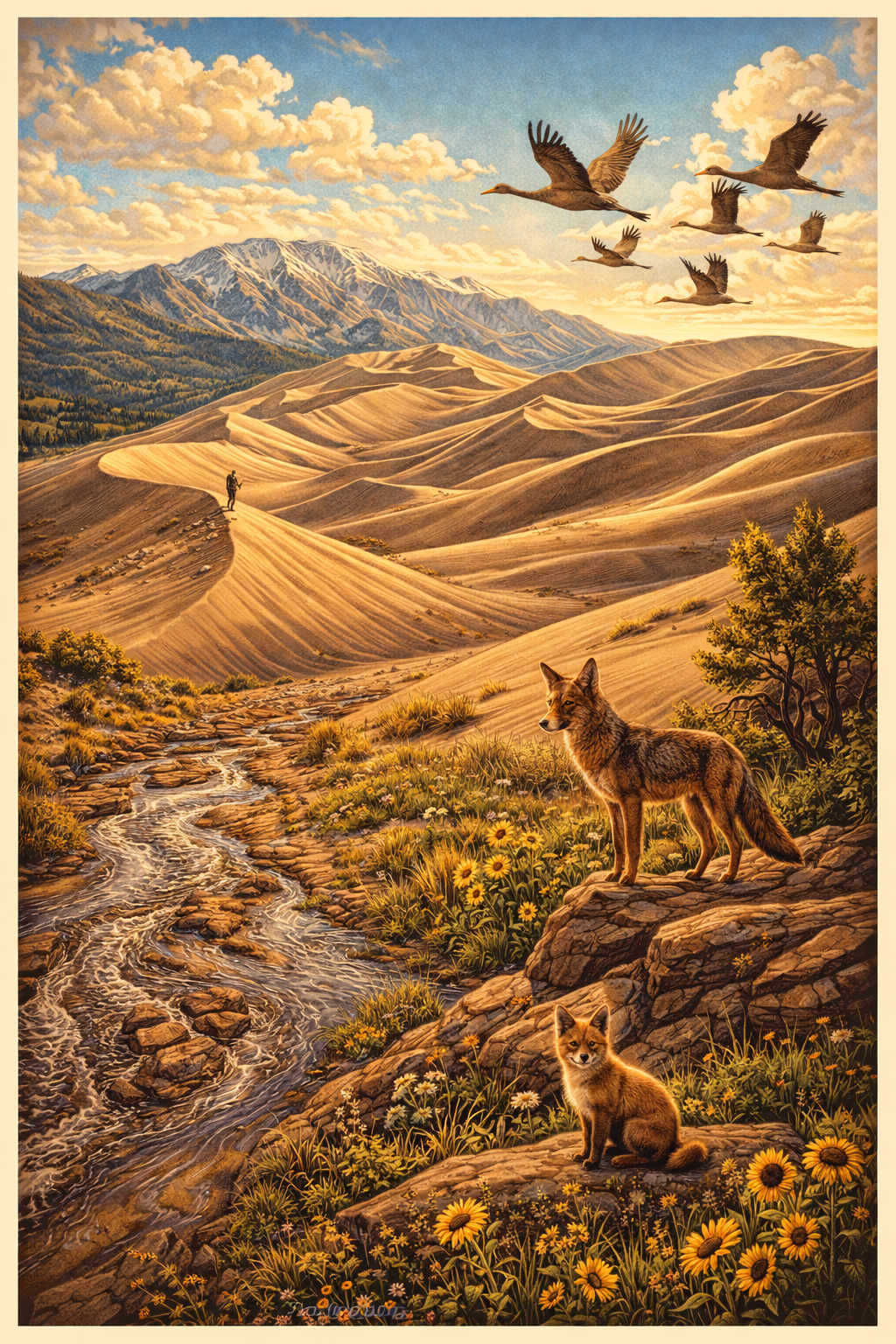
Welcome to Great Sand Dunes National Park and Preserve, home to the tallest sand dunes in North America, rising up to 750 feet high against the backdrop of Colorado’s Sangre de Cristo Mountains. Covering 30 square miles of dune field and more than 100,000 acres of surrounding grasslands, wetlands, forests, and alpine tundra, this is one of the most diverse parks in the system.
From climbing the dunes to wading in seasonal Medano Creek, from alpine hikes to dark-sky stargazing, the park is a place of contrasts. It is also unusual in that it protects both a National Park and a National Preserve, allowing a mix of recreational opportunities including backpacking, fishing, and even hunting in the preserve.

My personal experience
This is one of those “two-for-one” places — both a park and a preserve in a single stop. On my visit, the dunes dominated everything. They really are enormous, the tallest in North America. But the experience is more than just sand.
One thing I quickly learned: timing matters. In summer, surface sand temperatures can reach 150°F (65°C), so you want to climb early in the morning or later in the evening. I tried hiking up one of the lower dunes, and let me tell you — walking in soft sand is much harder than you’d expect. Every step sinks, and progress is slow. It took far more time than a “normal” hike of the same distance.
Crossing Medano Creek was also part of the adventure. Sometimes it’s just a trickle, sometimes it flows wide and shallow, and sometimes it dries up completely. And yes, I learned the hard way that not all sleds work on sand. The NPS doesn’t rent sandboards or sleds, but outfitters in the San Luis Valley do. Regular snow sleds or plastic toys won’t slide on dry sand. Trust me — your bottom won’t either! Despite the effort, climbing a dune is absolutely worth it.

Basic Facts
Address:
Great Sand Dunes National Park and Preserve
11999 Highway 150
Mosca, CO 81146
Operation Hours and Seasons:
The park is open year-round, 24 hours a day.
Visitors:
Over 500,000 per year (2022)
Entrance Fees:
- Private Vehicle: $25.00 (admits one private, non-commercial vehicle and all its occupants for seven days)
- Per Person: $15.00 (when entering on foot or bicycle, valid for seven days)
Website:
nps.gov/grsa
Map:
nps.gov/grsa/planyourvisit/maps.htm
Additional Information:
For additional local information, visit alamosa.org
Getting there
The closest major city is Alamosa, Colorado. From Alamosa, take US-160 East to CO-150 North to the park entrance.Montrose, Colorado (15 miles from South Rim entrance).
Weather
Great Sand Dunes National Park and Preserve experiences varied weather throughout the year
- Spring (March to May): Temperatures range from 30s to 70s°F (0-21°C). Windy conditions are common, with occasional rain and snow.
- Summer (June to August): Highs range from 80s to 90s°F (27-32°C). Warm and dry during the day, cooler at night.
- Fall (September to November): Temperatures range from 30s to 70s°F (0-21°C). Clear, pleasant days with fewer crowds.
- Winter (December to February): Highs in the 20s to 50s°F (-6 to 10°C). Cold with occasional snow; fewer visitors.
Great Sand Dunes National Park and Preserve experiences significant temperature fluctuations between day and night throughout the year. It’s advisable to check the specific weather forecast before planning a trip and to be prepared for sudden changes in weather conditions.
Let’s dive into the various activities you can enjoy during your visit:
Hiking
Great Sand Dunes National Park and Preserve offers a variety of trails for all levels:
Easy:
- Dunes Overlook Trail: A 2.3-mile round trip with panoramic views of the dunes and surrounding mountains.
- Mosca Pass Trail: A 6.5-mile round trip through a forested canyon to Mosca Pass.
Moderate:
- Medano Lake Trail: An 8-mile round trip to a high alpine lake with stunning views.
- Montville Nature Trail: A 0.5-mile loop offering views of the dunes and the Sangre de Cristo Mountains.
Strenuous:
- High Dune Trail: A 3-mile round trip to the top of the first high dune, offering breathtaking vistas.
- Star Dune Trail: A challenging 6-mile round trip to the highest dune in North America.
Unique Activities
- Sandboarding & Sand Sledding
A must-do experience. Boards and sleds designed for sand are available at local outfitters (not from the NPS). Avoid snow sleds or plastic toys. - Medano Creek Splashing
Seasonal creek crossing creates a fun “beach” atmosphere in spring and early summer. - Backpacking
Permits required for camping in the dunefield or wilderness. Popular for star-filled nights under pristine skies.
Wildlife Viewing
The park preserves multiple ecosystems, so you may see:
- Mule deer and elk in meadows.
- Pronghorn antelope in the valley.
- Black bears in forested areas.
- Bighorn sheep and mountain lions in higher elevations.
- Birds of prey, owls, and sandhill cranes (especially during spring migration).

Photography
Capture the stunning landscapes and unique sand formations:
- Golden Hour: Soft sunlight enhances the textures and colors of the dunes and surrounding mountains.
- Night Photography: The clear skies offer excellent opportunities for photographing the Milky Way and stars.
Horseback Riding
Great Sand Dunes National Park and Preserve allows horseback riding and pack animals (including llamas) in designated areas. Stock use is permitted on Medano Pass Primitive Road, in the Preserve’s backcountry, and along selected trails such as the Sand Ramp Trail.
Commercial guided trips are not available inside the park itself, but several outfitters in the San Luis Valley offer guided horseback tours just outside park boundaries. Riding across the dunefield is not permitted, both to protect fragile vegetation and because deep sand is extremely hard on animals.
Regulations: Stock must be kept 200 ft from water sources, and manure must be scattered. Check the NPS guidelines for full details.
Best for riders: Sand Ramp Trail (moderate, with views of dunes and mountains).
Access points: Piñon Flats Campground area and Medano Pass Road.
General Aviation
San Luis Valley Regional Airport (ALS) in Alamosa, Colorado is the closest public use airport with road access and about 35 miles away from the park entrance. From there, rent a car or arrange ground transportation to explore the park. The one paved runway is 8,521 ft long and the local FBO offers 100LL and Jet A+. Scenic flight tours offer breathtaking views of the Great Sand Dunes and surrounding landscapes are available from nearby airfields.

Important Tips
- Timing: Climb dunes early or late in the day; midday heat is extreme.
- Footwear: Sand can burn bare skin — wear closed-toe shoes or sand socks.
- Permits: Required for backcountry camping and some activities.
- Leave No Trace: The dune field is fragile — pack out all trash.
- Hydration: Carry more water than you think you’ll need; the altitude and sand make hiking strenuous.
Great Sand Dunes National Park and Preserve is unlike any other in the U.S. Here you’ll find the surreal combination of desert-like dunes, alpine peaks, seasonal creeks, and some of the darkest skies in the country. Whether you’re sledding down a dune, splashing in Medano Creek, or camping under a sea of stars, the park offers a one-of-a-kind adventure.


