Rocky Mountain Region
BADLANDS NATIONAL PARK
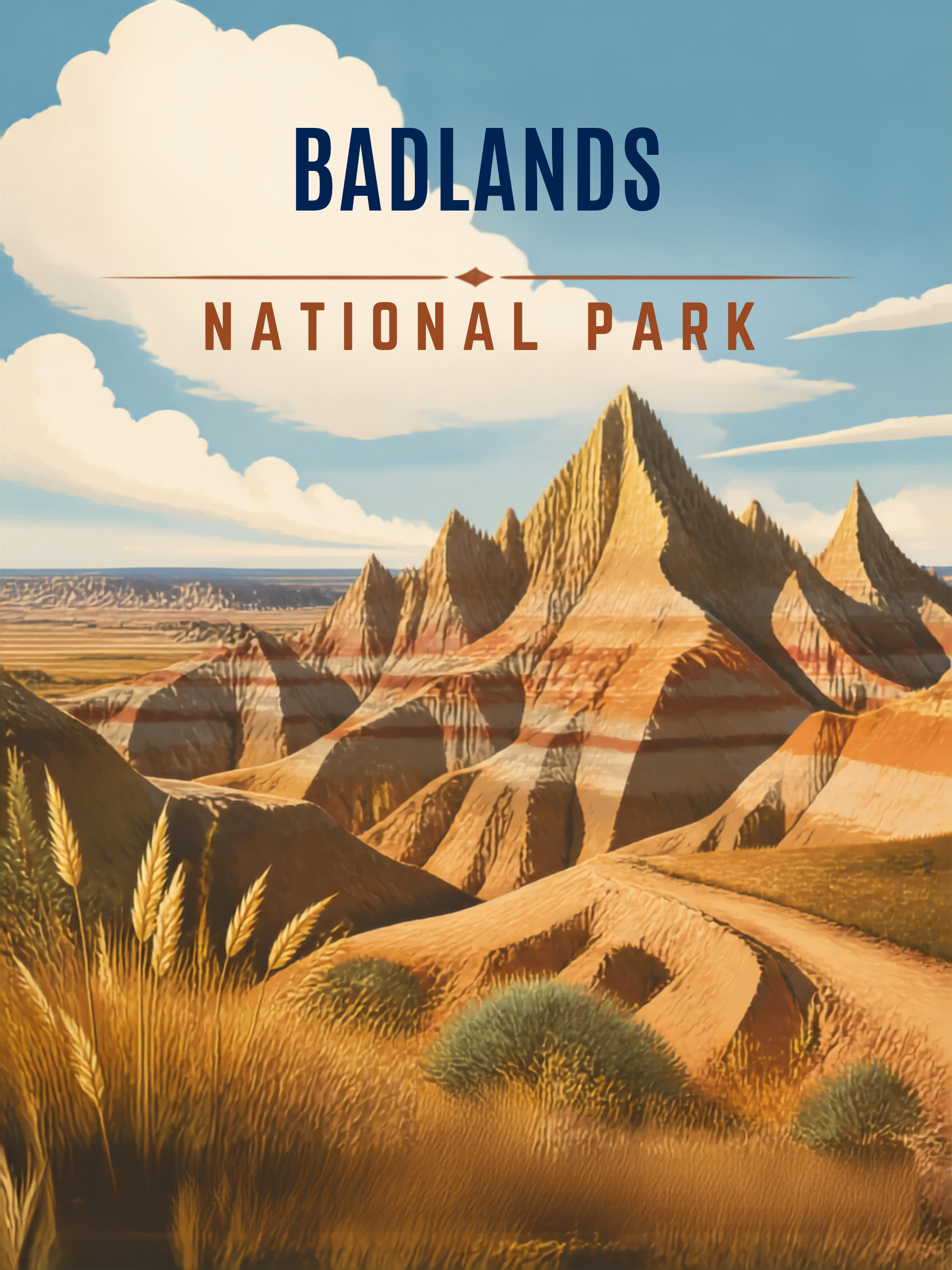
Welcome to Badlands National Park, a striking landscape of jagged spires, eroded buttes, sweeping mixed-grass prairies, and some of the richest fossil beds on Earth. Located in southwestern South Dakota, the park protects approximately 242,756 acres of sharply eroded terrain alongside vast grassland that supports abundant wildlife and dramatic panoramas. This remarkable place offers both geological wonder and ecological diversity.

Did You Know?
- Badlands National Park contains one of the richest fossil beds in the world, preserving ancient mammals that lived approximately 30 million years ago.
- More than 200 species of birds have been documented within the park.
- The word “badlands” comes from a Lakota phrase meaning “land bad for traveling through.”
- The park protects one of the largest remaining mixed-grass prairie ecosystems in North America.
- The endangered black-footed ferret has been successfully reintroduced to portions of the park.

My Personal Experience
Badlands can be perfectly combined with a visit to Wind Cave NP, Mount Rushmore, or Custer State Park if you already make the drive to southwest South Dakota. I found the North Unit of the park more accessible by car, with easy stops and views from pull-outs along the scenic highway. The South Unit is more remote, and there are no paved roads running through it, making it a quieter but more rugged experience.
For first-timers, I’d recommend starting with the Door Trail, which leads through a break in the Badlands Wall to an overlook of the eroded landscape, and the Window Trail, which passes to a natural “window” in the rock offering expansive views of the canyons. I also enjoyed the short Fossil Exhibit Trail, which features replicas and interpretive displays of creatures that once lived here perfect for families.
Don’t forget to watch the wildlife calling the Badlands home. Visit the prairie dog town and watch these playful mammals interact, and you might also spot pronghorn or bison roaming the grasslands. Lastly, I recommend driving the Badlands Loop Road and pulling off at overlooks for photos. It’s an Instagram-worthy route with endless striking scenery.
Basic Facts
Address:
Badlands National Park
25216 Ben Reifel Road
Interior, SD 57750
Operation Hours and Seasons:
The park is open 24 hours a day, year-round. The visitor center has seasonal hours.
Visitors:
Approximately 1 million per year (2022)
Entrance Fees:
- Private Vehicle – $30.00 admits one private, non-commercial vehicle and all its occupants
- Per Person – $15.00
Website:
nps.gov/badl
Map:
nps.gov/badl/planyourvisit/maps.htm
Additional Information:
For additional local information, visit travelsouthdakota.com

Best Time to Visit
Spring is of the best times to visit. Wildflowers bloom across the prairie, temperatures are comfortable, and wildlife activity increases significantly. Summer is the busiest season. Long daylight hours provide excellent sightseeing opportunities, although afternoon temperatures can become quite hot.
Many visitors consider fall the ideal season. Comfortable temperatures, fewer crowds, and excellent wildlife-viewing conditions make this an outstanding time to visit. Winter is the least crowded season. Snow occasionally transforms the badlands into a striking black-and-white landscape and provides unique photographic opportunities

Recommended Time
1 Day: Drive the Badlands Loop Road, stop at the major overlooks, visit the Fossil Exhibit Trail, and hike the Door, Window, and Notch Trails.
2-3 Days: Ideal for most visitors. Explore both the North Unit and portions of the South Unit, complete longer hikes, and spend time watching wildlife throughout the park.
Getting there
The closest town is Interior, South Dakota. From Interior, drive north on SD-377 to the Badlands entrance. If coming from Rapid City, take I-90 East to SD-240 (the Badlands Loop Road) to access the park’s scenic north unit.
Weather
Badlands weather varies considerably by season:
- Spring (Mar–May): 40°F to 75°F (4°C to 24°C). Mild with occasional rain showers; ideal for hiking.
- Summer (Jun–Aug): 55°F to 95°F (13°C to 35°C). Hot and dry so early morning and evening are best for outdoor activities.
- Fall (Sep–Nov): 25°F to 80°F (-4°C to 27°C).Comfortable temperatures and fewer crowds.
- Winter (Dec–Feb): 10°F to 40°F (-12°C to 4°C. Cold with possible snow. the stark winter landscape is a different but beautiful experience.
Due to the open prairie terrain, winds and sudden storms can occur unexpectedly, so always check local forecasts before heading out.
Hiking
Badlands National Park offers a limited amount of hiking trails only. Here are some:
Easy:
- Door Trail – 0.75 miles round trip: One of the park’s most popular trails. Visitors pass through a natural break in the Badlands Wall and enter a landscape of eroded formations, canyons, and spires that perfectly captures the essence of the park.
- Window Trail – 0.25 miles round trip: A short boardwalk trail leading to a natural “window” in the rock formations. The overlook provides excellent views into the surrounding badlands and is suitable for nearly all visitors.
Moderate:
- Notch Trail – 1.5 miles round trip: One of the park’s signature hikes. After climbing a wooden ladder, hikers traverse ledges and canyon walls before reaching spectacular views overlooking the White River Valley.
- Castle Trail – 10 miles round trip: The longest maintained trail in the park. It traverses a remarkable variety of badlands formations, prairie landscapes, and open grasslands while providing opportunities for solitude and wildlife viewing.
Strenuous:
- Medicine Root Loop – 4 mile loop: Often combined with Castle Trail, this route provides a more challenging experience through mixed-grass prairie and rugged badlands terrain. The trail offers excellent opportunities for wildlife viewing and panoramic scenery.
Fossil Hunting
While collecting fossils is prohibited, Badlands offers excellent educational opportunities. The park hosts interpretive exhibits and ranger-led programs that explore the region’s ancient life and geology. If you find what looks like a fossil, document its location and notify a park ranger. It could help scientists understand the area’s paleontological record.
Scenic Drives
Badlands Loop Road is a 39-mile scenic byway with many overlooks and trailheads. It’s an excellent way to experience the park’s stark beauty from your vehicle, with plenty of opportunities to stop for photos or short walks.
Best Viewpoints
- Big Badlands Overlook: One of the park’s most iconic viewpoints and an excellent introduction to the dramatic landscape.
- Panorama Point: Provides expansive views across the badlands and surrounding prairie.
- Yellow Mounds Overlook: Showcases some of the park’s most colorful geological formations, including vibrant yellows, reds, and oranges.
- Pinnacles Overlook: One of the best locations for viewing bighorn sheep and appreciating the scale of the badlands.
- White River Valley Overlook: Offers sweeping views of the prairie landscape stretching beyond the badlands formations.
Wildlife Viewing
Badlands supports a rich mix of wildlife adapted to its harsh terrain and climate. Expect to see bison grazing on the prairie, black-tailed prairie dogs in their expansive towns, pronghorn antelope sprinting across the grasslands, bighorn sheep on rocky slopes, coyotes, numerous bird species (200+ documented), amphibians, and rare black-footed ferrets (endangered and periodically monitored in the park).
Best viewing is typically in early morning and late afternoon when animals are most active.

Photography
Badlands is a photographer’s dream with unique light and landscape features:
- Badlands Formations: The park’s layered cliffs, spires, buttes, and pinnacles are the primary photographic attraction. The variety of colors and textures creates endless opportunities for landscape photography throughout the day.
- Prairie Dog Towns: The park’s prairie dog colonies offer unique opportunities for behavioral photography as these social animals interact, feed, and communicate.
- Fossil Interpretation Displays: Few parks tell the story of prehistoric life as effectively as Badlands. The Fossil Exhibit Trail and surrounding formations provide opportunities to photograph the landscape that once supported ancient mammals and other extinct species.
- Prairie Wildlife: Bison, prairie dogs, bighorn sheep, pronghorn, coyotes, and numerous bird species make Badlands one of the best wildlife-photography destinations in the Great Plains.
- Storm Photography: Summer thunderstorms often create dramatic skies over the badlands. Dark clouds, rain shafts, and changing light can transform the landscape into a photographer’s dream.
- Night Photography: Badlands is designated an International Dark Sky Park. The combination of dramatic foreground formations and dark skies creates outstanding opportunities for astrophotography and Milky Way photography.
Horseback Riding
Horseback riding offers one of the most authentic ways to experience the remote portions of Badlands National Park. Unlike many national parks, Badlands allows stock use across much of the park’s backcountry rather than restricting riders to designated equestrian trails. Riders should be comfortable navigating with maps and traveling in remote terrain. Because the park lacks a formal trail network for horseback riders, route planning is essential.
Guided horseback rides are generally not offered within the park itself, although outfitters in the surrounding Black Hills region may offer riding opportunities on nearby public and private lands.
General Aviation
Airports close to the park might lack fuel or rental car availability or both. Reliable alternative is Rapid City, South Dakota.
Wall Municipal Airport (6V4) in Wall, SD:
- The closest airport to Badlands National Park.
- Approximately 8 miles from the Pinnacles Entrance
- Longest paved runway: approximately 3,500 feet
- No fuel services currently available
- No on-airport rental cars
- Suitable primarily for pilots planning carefully for fuel and ground transportation
Philip Airport (KPHP) in Philip, SD:
- A useful alternative east of the park.
- Approximately 30 miles from the park
- Longest runway: 4,300 feet
- 100LL available
- Ground transportation may be available with advance planning
Rapid City Regional Airport (KRAP) in Rapid City, SD:
- The most practical airport for many visitors.
- Approximately 75 miles from the park
- Longest runway: 8,701 feet
- 100LL available
- Multiple rental car providers
Flying in western South Dakota is generally straightforward, although strong prairie winds and summer thunderstorms can occasionally create challenging conditions. Density altitude is usually less of a concern than in the Rocky Mountain parks, but summer temperatures can still affect aircraft performance. The aerial view of the badlands is spectacular, revealing a maze of ridges, canyons, and colorful formations that is difficult to appreciate fully from the ground.
Nearby Attractions
- Wind Cave National Park: One of the world’s longest caves and home to one of the finest remaining mixed-grass prairie ecosystems in North America.
- Custer State Park: Famous for its scenic drives, bison herds, granite spires, and mountain lakes.
- Mount Rushmore National Memorial: One of America’s most recognizable landmarks.
- Wall: Home of the famous Wall Drug and a popular gateway community for Badlands visitors.
- Minuteman Missile National Historic Site: Provides a fascinating look at Cold War history and can easily be combined with a Badlands visit.
Important Tips
- Do Not Rush the Loop Road: Many of the best views are found at overlooks scattered along the Badlands Loop Road. Plan extra time for stops.
- Carry Plenty of Water: Shade is extremely limited throughout much of the park.
- Watch for Wildlife: Bison, prairie dogs, bighorn sheep, and pronghorn are common throughout the park, particularly during morning and evening hours.
- Prepare for Wind: Strong winds are common and can make exposed hikes more challenging than expected.
- Stay Weather Aware: Thunderstorms can develop rapidly during summer months and create hazardous conditions.
- Visit the Fossil Exhibits: The fossils are an essential part of the Badlands story and help visitors understand the significance of the landscape.
- Explore Beyond the Overlooks: Short hikes such as Door, Window, and Notch provide a much deeper appreciation of the park than viewpoints alone.
Badlands National Park is one of the most distinctive landscapes in the United States. Its colorful formations, vast prairie, abundant wildlife, and remarkable fossil resources create a destination unlike any other in the National Park System.
Whether you are hiking through a maze of eroded spires, watching prairie dogs chatter across the grasslands, spotting bison in the distance, or standing beneath a sky filled with stars, the park offers experiences that are both memorable and uniquely American. Combined with the attractions of the Black Hills region, Badlands National Park deserves a place on every national park traveler’s itinerary.


