Alaska and Pacific Northwest Region
CRATER LAKE NATIONAL PARK
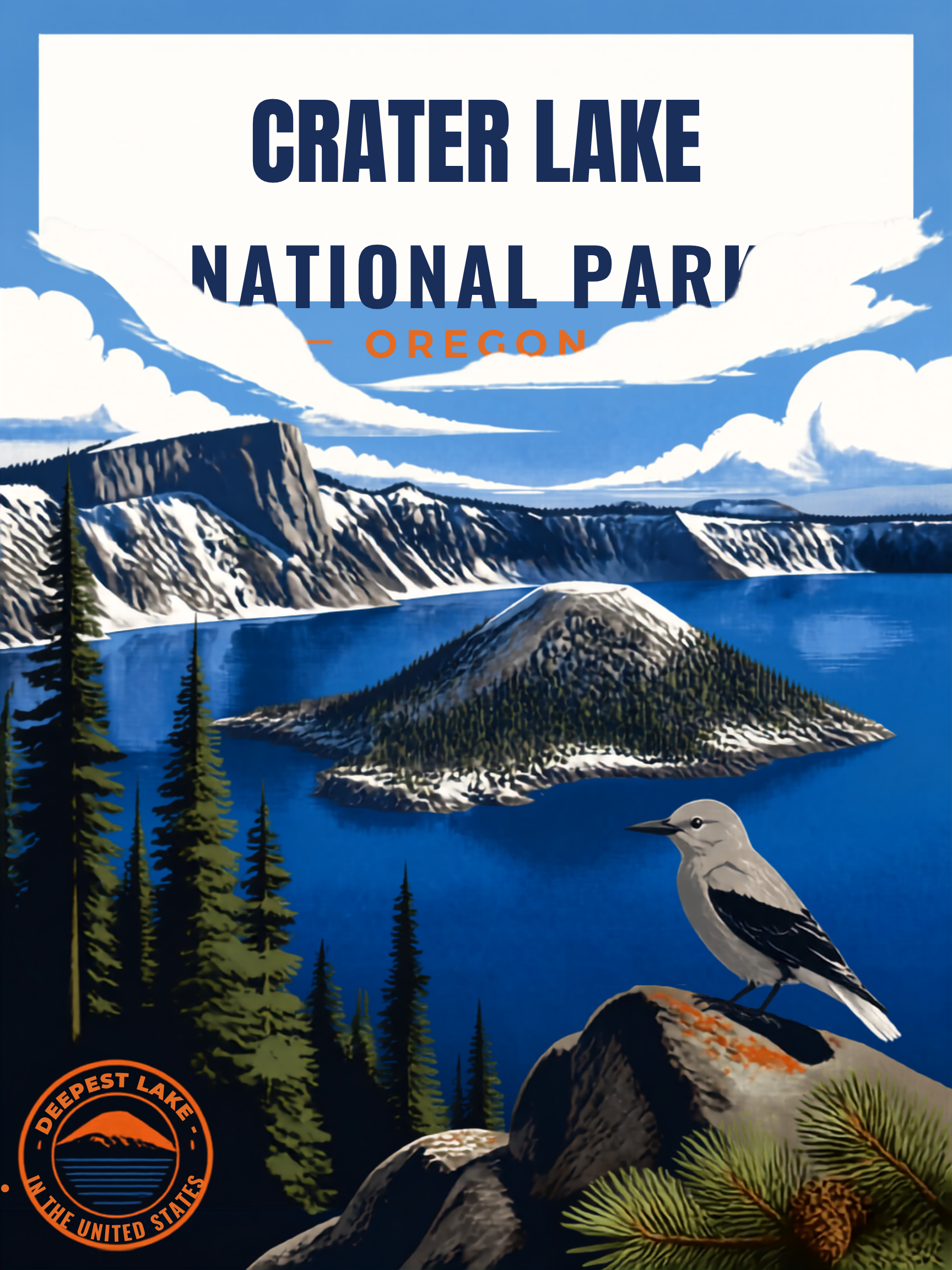
Welcome to Crater Lake National Park, home to the deepest lake in the United States, located in southern Oregon. Known for its intensely blue water and dramatic surrounding cliffs, the park offers breathtaking scenery, volcanic geology, and excellent hiking opportunities.

Did You Know?
- Crater Lake is the deepest lake in the United States at 1,943 feet (592 m). It formed about 7,700 years ago when the volcano Mount Mazama collapsed after a massive eruption.
- The lake has no rivers flowing in or out. Its water comes entirely from rain and snow, which helps give it its exceptional clarity and deep blue color.
- The Mazama newt is found nowhere else on Earth except in and around the Crater Lake caldera.

My Personal Experience
I had one objective when I visited Crater Lake National Park: get to Wizard Island, the tiny volcanic island rising from the lake. Well… I tried three times and failed every single time.
Either I arrived too early or too late in the season to catch the boat tour. Crater Lake is one of the snowiest places in North America, and snow and ice often delay the opening of the boat tours well into summer. Maybe fourth time’s the charm.
For first-time visitors, I highly recommend driving the 33-mile Rim Drive. Pull over whenever you like, take photos of the crater, Phantom Ship, and Wizard Island, and simply enjoy the views. The lake’s incredibly deep blue color makes photographs look almost unreal.
Unfortunately, there will be no boat tours to Wizard Island in 2026–2027 due to a major trail rehabilitation project. If you visit during those years, explore some of the shorter hikes instead or come back later. Who knows, maybe we’ll meet on my fourth attempt to finally reach Wizard Island.

Basic Facts
Address:
Crater Lake National Park
PO Box 7
Crater Lake, OR 97604
Operation Hours and Seasons:
The park is open year-round, but some facilities and roads are closed in winter due to heavy snowfall.
Visitors:
Over 700,000 per year (2022)
Entrance Fees:
- Private Vehicle: $30.00 (admits one private, non-commercial vehicle and all its occupants for seven days)
- Per Person: $15.00 (when entering on foot or bicycle, valid for seven days)
Website:
nps.gov/crla
Map:
nps.gov/crla/planyourvisit/maps.htm
Additional Information:
For additional local information, visit traveloregon.com.

Best Time to Visit
Crater Lake receives enormous snowfall and many roads remain closed well into summer. The park is most accessible from July through mid-September, when Rim Drive is fully open and boat tours typically operate.

Recommended Time
1 Day: Drive the 33-mile Rim Drive, stop at the overlooks, and if available take a boat tour to Wizard Island.
2-3 Days: Add hikes such as Watchman Peak, Garfield Peak, or Mount Scott, and explore nearby regional attractions.

Getting There
The closest major city is Medford, Oregon. From Medford, take OR-62 East for about 80 miles to reach the park’s south entrance.

Weather
Crater Lake National Park experiences varied weather throughout the year:
- Spring (March to May): 30s–60s °F (0–15°C). Snow begins to melt, but many roads remain closed.
- Summer (June to August): 60s–80s °F (15–27°C). The best season for hiking and lake access.
- Fall (September to November): 30s–60s °F (0–15°C). Crisp air and fewer visitors.
- Winter (December to February): 20s–40s °F (-6 to 4°C). Heavy snowfall and limited accessibility.
Crater Lake National Park experiences significant temperature fluctuations between day and night throughout the year. It’s advisable to check the specific weather forecast before planning a trip and to be prepared for sudden changes in weather conditions.airie terrain, winds and sudden storms can occur unexpectedly, so always check local forecasts before heading out.

Hiking
Crater Lake National Park offers a range of short scenic trails and rewarding summit hikes:
Easy:
- Castle Crest Wildflower Trail – 0.5-mile loop: A pleasant short trail famous for colorful wildflower displays from mid-July through August.
- Sun Notch Trail – 0.5-mile loop: One of the best short walks in the park, offering spectacular views of the lake and Phantom Ship.
Moderate:
- Annie Creek Canyon Trail – 1.7-mile loop: A scenic trail through a lush canyon carved by Annie Creek, especially beautiful during wildflower season.
- Watchman Peak Trail – 1.6-mile round trip: A steady climb to a historic fire lookout with excellent views of Wizard Island and the lake.
Strenuous:
- Garfield Peak Trail – 3.6-mile round trip: A rewarding climb along the rim with dramatic panoramic views of the caldera.
- Cleetwood Cove Trail – 2.2-mile round trip: The only trail that descends to the lake shore and the access point for swimming and boat tours.
- Mount Scott Trail – 4.4-mile round trip: The hike to the park’s highest point (8,929 ft) with some of the most expansive views in the entire park.
Boat Tours
Boat tours provide a unique perspective of the lake.
Visitors must hike the Cleetwood Cove Trail to reach the shoreline the only legal lake access point.
Tours normally include:
• Standard Lake Cruise
• Wizard Island Tour
However, no boat tours will operate in 2026–2027 due to major trail rehabilitation.

Scenic Drives
Rim Drive: This 33-mile scenic road circles the entire caldera and includes 30 overlooks, each offering a different perspective of the lake and surrounding volcanic landscape. It is widely considered one of the most scenic drives in the National Park System.

Best Viewpoints
- Watchman Overlook: excellent sunset views of Wizard Island
- Phantom Ship Overlook: the best place to view the mysterious rock formation
- Cloudcap Overlook: the highest road-accessible viewpoint in the park

Wildlife Viewing
Wildlife viewing at Crater Lake is generally best in the forests, meadows, and less-traveled areas away from the rim overlooks. Mule deer are the animals visitors are most likely to encounter and are frequently seen along roadsides and in open meadows during the early morning and evening. Black bears inhabit the park’s forests but are usually elusive and rarely seen. Red foxes occasionally appear near developed areas and trailheads.
Birdwatchers should keep an eye out for Clark’s nutcrackers, Steller’s jays, mountain chickadees, and numerous raptors soaring above the caldera. The park is also home to the Mazama newt, a species found only in and around Crater Lake.
Wildlife is most active during the cooler hours of the day. As always, observe animals from a safe distance and never feed wildlife.

Photography
The park offers plenty of opportunities for photographers:
- Landscape: Rim Drive provides endless opportunities to capture the lake’s deep blue color.
- Sunrise and Sunsets: Dramatic lighting and fewer crowds make these times ideal.
- Wildflowers: Peak bloom occurs mid-July through early August.

Horseback Riding
Horseback riding is not offered within the park.

General Aviation
wo airports provide convenient access for general aviation pilots.:
Crater Lake/Klamath Falls Regionals (KLMT) in Klamath Falls, OR:
- 1.5 hours southeast of the airport
- Longest runway: 10,000 ft
- 100LL available
Rogue Valley International-Medford Airport (KMFR) in Medford, OR.
- 1h 45 min southwest of the airport
- Longest runway: 8,800 ft
- 100LL available
Rental cars are available at both airports.
Crater Lake’s elevation and mountainous terrain require careful flight planning. Summer afternoons can produce turbulence over the Cascade Range, while smoke from regional wildfires may reduce visibility during late summer and fall. Pilots should also be aware that weather conditions around the caldera can change rapidly, especially when Pacific weather systems move inland.
Although Crater Lake itself is easy to identify from the air, overflight rules should be reviewed before departure. Early morning flights often provide the smoothest conditions and the best opportunities for aerial photography of the lake’s remarkable deep-blue water and surrounding volcanic landscape.

Nearby Attractions
Circle of Discovery: Crater Lake can be combined with several nearby national park units:
- Oregon Caves National Monument & Preserve: A fascinating marble cave system in southern Oregon offering guided cave tours and hiking trails.
- Redwood National and State Parks: Home to some of the tallest trees on Earth and located a few hours southwest of Crater Lake.
- Whiskeytown National Recreation Area: Offers scenic lakes, waterfalls, hiking trails, and excellent opportunities for boating and kayaking.
- Lassen Volcanic National Park: Features geothermal areas, volcanic peaks, and one of the most diverse volcanic landscapes in the United States.
- Lava Beds National Monument: Known for its extensive lava tube cave system, volcanic features, and important Native American history.
- Tule Lake National Monument: Preserves the history of Japanese American incarceration during World War II and is part of the larger World War II Valor in the Pacific National Monument.

Important Tips
- Pacific Northwest: Many roads, overlooks, and trails remain closed well into summer.
- Boat Tours: If visiting during years when boat tours operate, reserve tickets early. Tours frequently sell out during peak season.
- Altitude: Rim elevations exceed 7,000 feet. Visitors arriving from lower elevations may notice shortness of breath during strenuous hikes.
- Weather: Conditions can change quickly around the caldera. Even summer mornings can be chilly, and afternoon thunderstorms occasionally develop.
- Lake Access: The Cleetwood Cove Trail is the only legal access route to the lake shore and is steep on the return climb..
Crater Lake National Park is one of the most remarkable volcanic landscapes in North America. Standing on the rim of the caldera and looking down into the deep blue water, it’s hard to imagine the violent eruption that created it 7,700 years ago. Today, the lake offers a peaceful and unforgettable experience one of the true natural wonders of the Pacific Northwest.


