Western Region
NATIONAL PARK OF
AMERICAN SAMOA
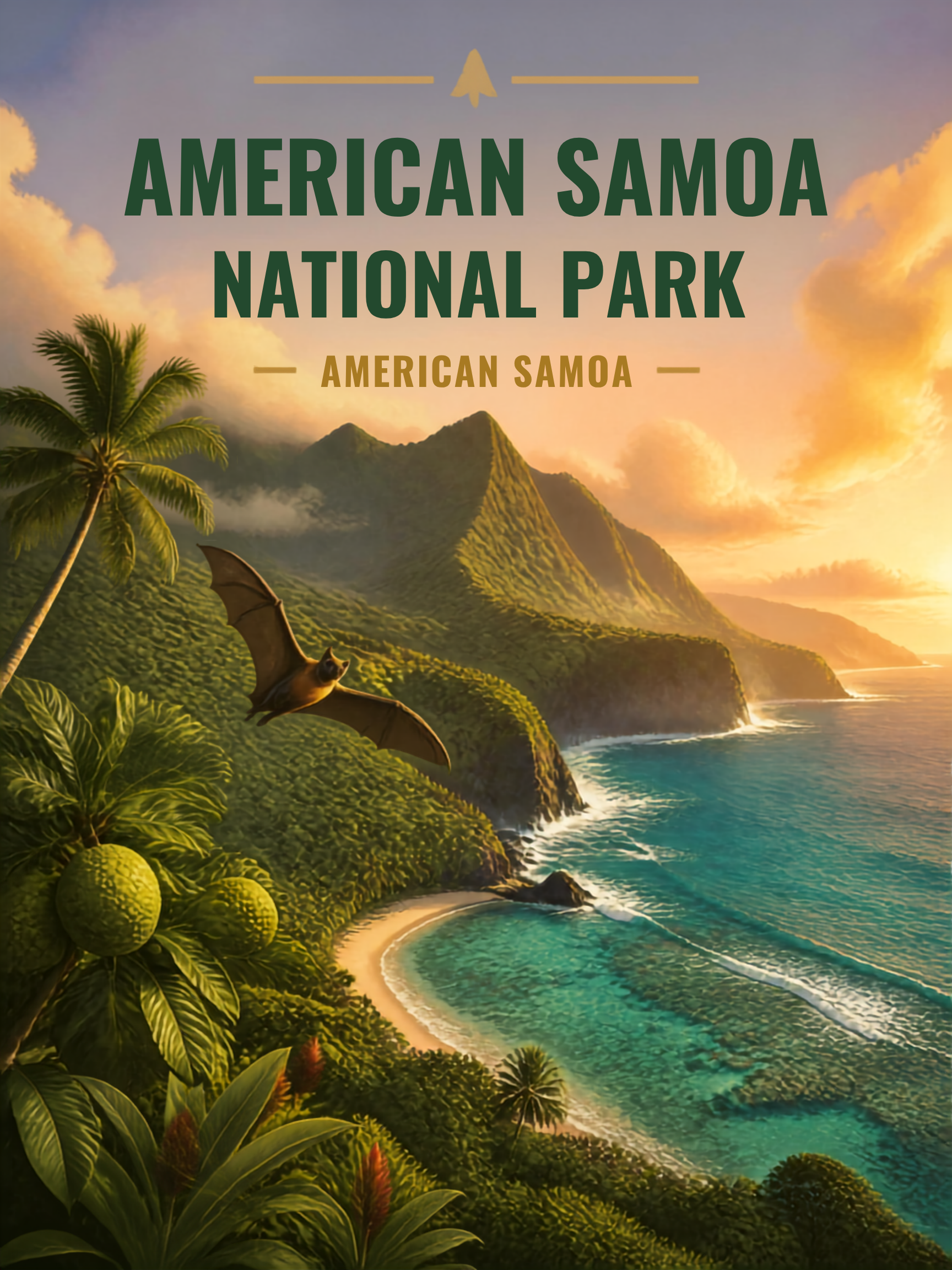
Welcome to the National Park of American Samoa, one of the most remote and culturally unique parks in the entire U.S. National Park System and a stunning tropical paradise of coral reefs, volcanic mountains, and lush rainforests located in the South Pacific Ocean. This remote park protects pristine island ecosystems, vibrant coral reefs, and a unique Polynesian culture that has shaped the landscape for thousands of years.
The park spans three islands Tutuila, Ofu, and Taʻū and offers visitors breathtaking scenery, rare wildlife, and the opportunity to experience one of the most culturally unique units of the U.S. National Park System.
In addition to its rainforest-covered mountains, the park also protects extensive coral reef ecosystems, making it one of the few U.S. national parks with significant tropical marine environments.

Did You Know?
- The National Park of American Samoa is the only U.S. national park located in the Southern Hemisphere.
- The park was established partly to protect the Samoan fruit bat, also known as the flying fox, which has a wingspan of up to 3 feet.
- Unlike most U.S. national parks, the land is not owned by the federal government. Instead, it is leased from Samoan village chiefs, allowing the park to protect nature while preserving traditional land ownership that has existed for more than 3,000 years.
- Because of this arrangement, the park is managed through a partnership between the National Park Service and local villages, making it one of the most culturally integrated parks in the entire system.

My Personal Experience
Please raise your hand if you know anyone who spent their honeymoon in American Samoa. Well you do now.
My wife and I spent our honeymoon in Hawaiʻi and American Samoa. The park is the most remote national park in the United States and the only one located in the Southern Hemisphere. Hawaiian Airlines operates direct flights from Honolulu to Pago Pago, which takes about six hours.
American Samoa truly feels like a tropical island in the middle of the South Pacific. We stayed near Pago Pago Harbor and hiked into the park from there. One of the main trails climbs up to a ridge above the harbor, where you suddenly find yourself in the middle of a lush tropical rainforest. The trail also passes several World War II fortifications.
It was an incredible hike, but also one of the few times I found myself in a genuinely dangerous situation. We were not prepared for how quickly tropical weather can change. Suddenly a storm rolled in. It didn’t just rain it poured. Within minutes the soil became extremely slippery while we were still walking along the ridge with steep slopes on both sides.
We could hear the sounds of Pago Pago below us, but we couldn’t immediately find our way down. At one point I slipped and slid several feet down a muddy slope before grabbing a root and pulling myself back up. Fortunately, I only ruined a new pair of shorts and escaped without injury.
We were extremely relieved when we finally found the path back to town. The next day we planned to explore the coastal part of the park, but a group of rather unfriendly stray dogs sitting directly on the trail convinced us that we had probably had enough adventure for one trip.
Make sure to visit the park visitor center to learn more about Samoan culture. And when the day is over, wind down at Tisa’s Barefoot Bar. We enjoyed Samoa tremendously.

Basic Facts
Address:
National Park of American Samoa
Pago Pago, AS 96799
Operation Hours and Seasons:
The park is open year-round, 24 hours a day.
Visitors:
Fewer than 20,000 per year (2022)
Entrance Fees:
The park does not charge an entrance fee
Website:
nps.gov/npsa
Map:
nps.gov/npsa/planyourvisit/maps.htm
Additional Information:
For additional local information, visit americansamoa.travel.

Best Time to Visit
The best time to visit is during the dry season from June through September, when rainfall and humidity are lower. Other months can bring heavier rain and the possibility of tropical storms.

Recommended Time
Most visitors travel a long distance to reach American Samoa, so it makes sense to spend several days exploring the islands.
2-3 Days: Most visitors arrive on the island of Tutuila, which contains the largest section of the park. Popular activities include hiking the Mount ʻAlava Trail, visiting the National Park Visitor Center in Pago Pago, and exploring the scenic coastline near Vatia. If time allows, consider visiting Ofu and Taʻū islands, located about 60 miles east. These islands are accessible by small aircraft or boat, so plan accordingly.

Getting There
The main gateway is Pago Pago International Airport (PPG).
From the airport, visitors can reach park areas on Tutuila Island by car or taxi. Access to park areas on Ofu and Taʻūrequires either a small aircraft flight or boat transportation.

Weather
The National Park of American Samoa has a tropical climate with warm temperatures year-round and high humidity.
- March to May: 75–88°F (24–31°C). Warm, humid, and increasingly dry as the wet season ends.
- June to August: 75–88°F (24–31°C). Typically the driest period of the year, with excellent conditions for hiking, snorkeling, and exploring the islands.
- September to November: 76–89°F (24–32°C). Warm and humid with increasing rainfall and the possibility of tropical storms.
- December to February: 76–88°F (24–31°C). The wettest season, with frequent rain showers and occasional heavy downpours.
Rain can occur at any time of year, particularly in the mountainous rainforest areas. Trails can become muddy and slippery very quickly, even after short but intense tropical storms.

Hiking
The park offers a range of trails through rainforest, along coastal cliffs, and across volcanic ridges:
Easy:
- Pola Island Trail:A short trail near Vatia offering spectacular views of Pola Island, one of the most iconic rock formations in American Samoa.
Moderate:
- Lower Sauma Ridge Trail – 0.6-mile round trip: A short climb offering scenic views of Pola Island and the dramatic coastline.
- Fagatele Bay Trail: Leads to one of the park’s most beautiful bays, where visitors can enjoy views of coral reefs and marine life.
- Oge Oge Trail: A rugged trail through rainforest terrain with panoramic views of the surrounding islands.
- Tafuna Ridge Trail – 2-mile round trip: A rainforest hike leading to viewpoints overlooking the southern coast of Tutuila.
Strenuous:
- Mauna Ulu Trail – 2.5-mile round trip: A hike across lava flows to the Mauna Ulu eruption site with views of volcanic landscapes and lava tree molds.
- Crater Rim Trail – up to ~11 miles (sections vary): A long trail around Kīlauea Caldera offering views of craters, steam vents, and lava landscapes. Some sections remain closed due to volcanic activity.
Snorkeling and Diving
The park’s marine areas protect vibrant coral reefs and tropical fish. Snorkeling and diving provide excellent opportunities to explore the underwater ecosystems surrounding the islands.
Cultural Tours
Visitors can learn about Samoan culture, traditional villages, and local customs. Community-led tours and cultural demonstrations provide insight into a culture that has thrived in the region for thousands of years.

Scenic Drives
Driving is possible on Tutuila, but many visitors rely on family buses or taxis, which are common forms of transportation across the island.

Best Viewpoints
- Vatia Village: Offers stunning views of Pola Island and the surrounding coastline.
- Ofu Beach: One of the most beautiful beaches in the entire National Park System.
- Laufuti Falls (Taʻū Island): A scenic waterfall located within the rainforest.

Wildlife Viewing
he National Park of American Samoa protects a remarkable collection of tropical wildlife rarely found elsewhere in the U.S. National Park System.
The most iconic species is the Samoan fruit bat, or flying fox, which can often be seen gliding above the rainforest canopy during the late afternoon and evening. Smaller insect-eating bats are also common. Along the coast and coral reefs, visitors may encounter sea turtles, colorful reef fish, giant clams, and a variety of tropical marine species. Seabirds frequently soar above the cliffs and offshore islands.
The park’s combination of rainforest, coastline, and coral reef habitats makes it one of the most biologically diverse national parks in the Pacific.

Photography
Photography in American Samoa is defined by tropical colors, dramatic coastlines, and cultural landscapes.
- Pola Island: The park’s most recognizable landmark rises dramatically from the ocean and is one of the most photographed locations in American Samoa.
- Rainforest Ridges: Trails such as Mount ʻAlava offer elevated views across Pago Pago Harbor, volcanic peaks, and dense tropical forest.
- Ofu Beach: Frequently ranked among the most beautiful beaches in the National Park System, featuring white sand, turquoise water, and vibrant coral reefs.
- Tropical Wildlife: Flying foxes, seabirds, and marine life provide excellent wildlife photography opportunities rarely found elsewhere in the United States.
The combination of rainforest, coral reef, and volcanic scenery creates photographic opportunities unlike any other national park.

Horseback Riding
No trail riding is offered in the National Park of American Samoa.

General Aviation
Most visitors arrive via commercial flights (Hawaiian Airlines). The main airport is:
Pago Pago International Airport (NSTU) in Pago Pago, AS:
- Commercial service from Honolulu
- Rental cars available
Small aircraft and commuter flights provide connections to the other islands.

Nearby Attractions
- Pago Pago Harbor: One of the finest natural harbors in the South Pacific and the cultural and commercial center of American Samoa.
- Jean P. Haydon Museum: A small museum in Pago Pago showcasing Samoan history, culture, and traditional artifacts.
- Tisa’s Barefoot Bar: A well-known local gathering place offering food, ocean views, and a relaxed island atmosphere.
- Ofu Island: Home to spectacular beaches, coral reefs, and some of the most pristine scenery in American Samoa
Visitors traveling this far often combine the park with other destinations in the Pacific. Possible additions to an itinerary include: Hawaiʻi, Fiji, or New Zealand.

Important Tips
- Weather: Tropical rainstorms can develop rapidly and turn trails into slippery mud within minutes.
- Transportation: Travel between Tutuila, Ofu, and Taʻū requires advance planning. Flights and boat schedules can change due to weather.
- Respect Local Culture: Many park lands remain under traditional Samoan stewardship. Be respectful of villages, customs, and local practices.
- Water & Humidity: Hiking in tropical humidity can be surprisingly demanding. Carry plenty of water even on shorter hikes.
- Limited Services: American Samoa is remote. Lodging, transportation, and supplies should be arranged well in advance.
- Reef Protection: When snorkeling or swimming, avoid touching coral reefs, which are extremely fragile and slow to recover from damage.
Traveling to the National Park of American Samoa requires a bit of dedication, but visitors are rewarded with one of the most unique destinations in the entire National Park System. Between lush rainforests, pristine coral reefs, and a deeply rooted Polynesian culture, the park offers an unforgettable experience far from the typical tourist routes.


