Alaska and Pacific Northwest Region
KOBUK VALLEY NATIONAL PARK
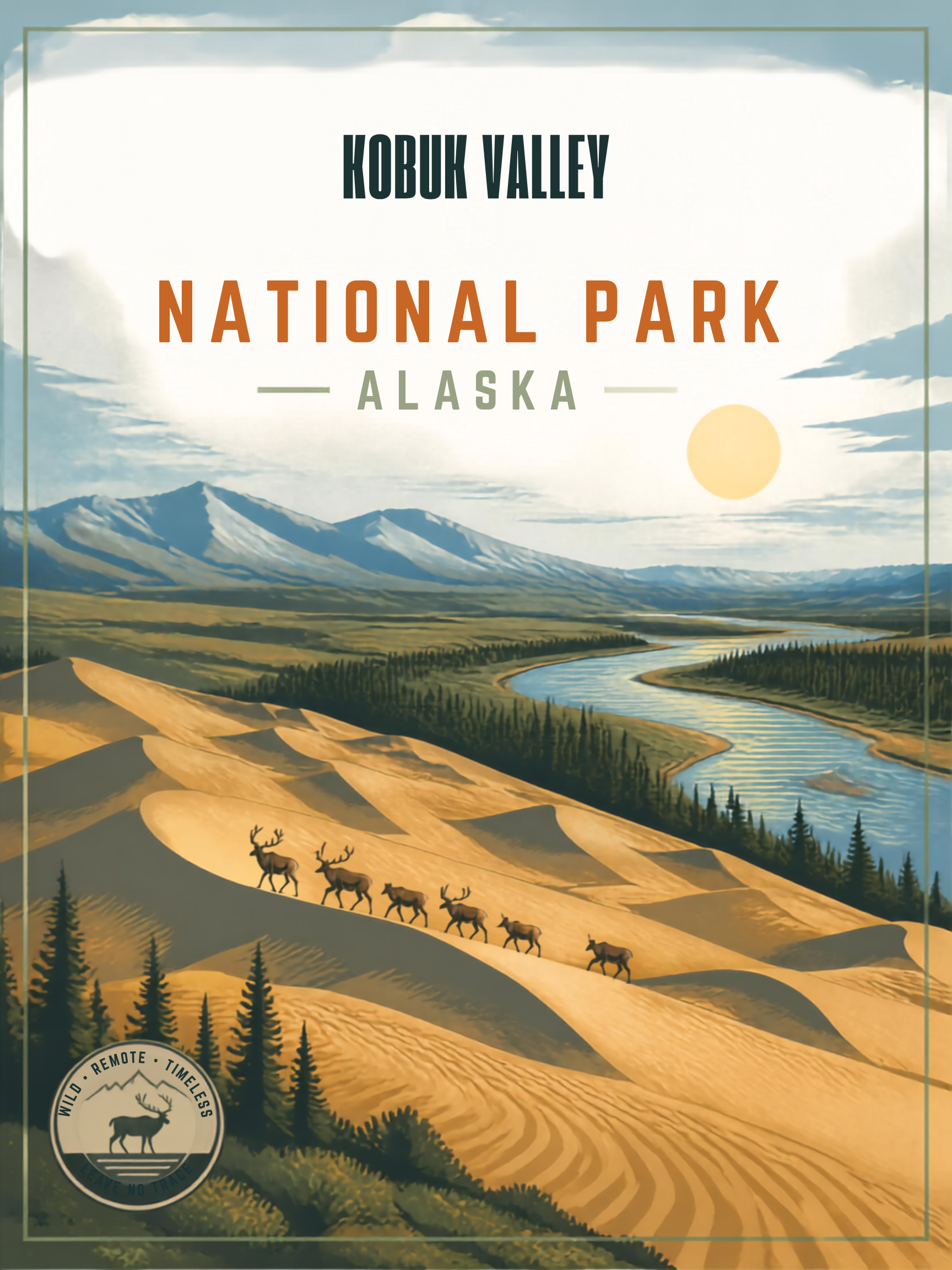
Welcome to Kobuk Valley National Park, a remote Arctic wilderness located in northwestern Alaska. Known for its massive sand dunes and one of the largest caribou migrations on Earth, this park offers a truly unique combination of desert-like landscapes and untouched tundra.

Did You Know?
- The Western Arctic Caribou Herd, numbering up to 500,000 animals, migrates through the park twice each year.
- The Great Kobuk Sand Dunes cover more than 20,000 acres, with dunes rising up to 100 feet high.
- Archaeological evidence shows human presence in the region dating back over 10,000 years.

My Personal Experience
Kobuk Valley is one of the least-visited parks in the entire National Park System and for good reason: there are no roads leading into it.
My wife and I spent a few days in Kotzebue and took a flightseeing tour with a local outfitter. Landing on the sand dunes in the middle of the Arctic is something you simply don’t expect. It feels surreal like you’ve been dropped into a desert, except you’re hundreds of miles above the Arctic Circle. The dunes are massive, and walking across them is a completely unique experience. It’s hard to connect that landscape with Alaska. We didn’t see the caribou migration, but honestly, the scenery alone made the trip worthwhile. The same outfitter also offered multi-day wilderness trips dropping you off along the Kobuk River to kayak back over several days. That’s a level of adventure we’ll save for another time.
We visited in summer 2020, and unfortunately the Northwest Arctic Heritage Center was closed. If it’s open during your visit, don’t miss it. It’s considered one of the best visitor centers in the entire park system. We combined this trip with visits to Gates of the Arctic National Park and Cape Krusenstern National Monument, all accessed by bush plane.

Basic Facts
Address:
Kobuk Valley National Park
171 3rd Ave
Kotzebue, AK 99752
Operation Hours and Seasons:
The park is open year-round, but accessibility is limited in winter.
Visitors:
Fewer than 20,000 per year (2022)
Entrance Fees:
There are no entrance fees.
Website:
nps.gov/kova
Map:
nps.gov/kova/planyourvisit/maps.htm
Additional Information:
For additional local information, visit explorenorth.org.

Best Time to Visit
Summer (June–August) is the only practical time for most visitors. Expect long daylight hours, milder temperatures, and the best access via bush plane. Late summer and early fall increase your chances of witnessing the caribou migration, though timing varies year to year.

Recommended Time
1 Day: he average visitor will take the air taxi tour into the park. The Northwest Arctic Heritage is arguably one of the best in the whole National Park System. A visit is a must.
5-7 Days: Needed for a backcountry expedition like rafting or kayaking the Kobuk River.

Getting There
The closest hub is Kotzebue, Alaska. Fly commercially to Kotzebue and from there, access the park via chartered bush plane or air taxi. There are no roads, no infrastructure, and no easy alternatives.

Weather
Kobuk Valley experiences a harsh Arctic climate with extreme seasonal variation:
- Spring (March to May): -20s to 30s°F (-29 to 1°C). Snow and ice dominate; travel remains difficult.
- Summer (June to August): 40s to 70s°F (4–21°C). Short but relatively mild season with continuous daylight.
- Fall (September to November):-10s to 40s°F (-23 to 4°C). Rapid cooling, early snow, and increasingly unstable conditions.
- Winter (December to February): -20s to 0°F (-29 to -18°C). Extreme cold and near-total inaccessibility.
Even in summer, expect sudden weather changes, wind, and heavy mosquito activity. Build flexibility into your schedule. Weather can delay flights for days.

Hiking
There are no maintained trails in Kobuk Valley National Park. Visitors explore entirely off-trail using maps, GPS devices, and traditional wilderness navigation skills. The Great Kobuk Sand Dunes offer some of the easiest walking in the park, while tundra, river corridors, and wetlands can be significantly more challenging.
Hiking here is a true wilderness experience. There are no trail signs, boardwalks, campgrounds, or visitor facilities once you leave your aircraft behind. Visitors should be comfortable with route finding, river crossings, rapidly changing weather, and complete self-sufficiency.
Because of the park’s remoteness, many visitors choose to explore with experienced guides or as part of organized wilderness expeditions.
Flightseeing
For most visitors, this is the highlight.
- Flights depart from Kotzebue
- Many tours include a landing on the dunes
- Offers the best chance to see the vast scale of the park and caribou migration

Scenic Drives
There are no maintained roads in the park. Your “scenic drive” is the flight from Kotzebue.

Best Viewpoints
- Great Kobuk Sand Dunes: The park’s signature landscape. Standing atop the dunes provides sweeping views across a surprising Arctic desert surrounded by mountains, tundra, and boreal forest.
- From the Air: Flightseeing offers the most dramatic perspective of the park, revealing the immense scale of the sand dunes, the winding Kobuk River, and the surrounding wilderness.
- Kobuk River: Multi-day river trips provide constantly changing views of dunes, tundra, and distant mountain ranges while experiencing one of Alaska’s classic wilderness rivers.

Wildlife Viewing
Wildlife sightings in Kobuk Valley are highly dependent on timing, weather, and a bit of luck. The park is best known for the Western Arctic Caribou Herd, one of the largest caribou migrations on Earth. During migration periods, thousands of animals may pass through the park. Grizzly bears, wolves, foxes, moose, and numerous migratory bird species also inhabit the region. Unlike parks such as Katmai or Denali, wildlife viewing here is rarely predictable, which makes every encounter feel especially rewarding.

Photography
Kobuk Valley offers unique and unexpected photography opportunities:
- Sand Dunes: The contrast of golden dunes against Arctic tundra is unlike anywhere else in the U.S.
- Aerial Photography: Flightseeing provides dramatic compositions of dunes, rivers, and vast wilderness.
- Lighting: Endless summer daylight allows for extended shooting opportunities, especially during low-angle “midnight sun” conditions.
- Caribou Migration: Visitors fortunate enough to witness the migration may have opportunities to photograph one of North America’s great wildlife spectacles as thousands of caribou move across the Arctic landscape.
Bring extra batteries and protection for gear. Sand, wind, and remote conditions can be tough on equipment.

Horseback Riding
Due to the remote and undeveloped nature of the park, horseback riding is not available.

General Aviation
Ralph Wien Memorial Airport (PAOT) in Kotzebue, AK is the closest airport to the park.
- 6,300 ft longest runway
- 100 LL available
- Primary access point for the region
Fly commercial to Kotzebue and take an air taxi into the park unless you are an experienced bush pilot.
Weather is often the biggest challenge when flying in northwestern Alaska. Low ceilings, fog, strong winds, and rapidly changing conditions can delay flights for hours or even days. Pilots and visitors alike should build flexibility into their schedules and avoid tight connections.

Nearby Attractions
If you’ve made it to Kotzebue, you’re in a unique position to explore multiple remote park units:
- Bering Land Bridge National Preserve: Remnant of the ancient land bridge connecting Asia and North America; includes hot springs.
- Cape Krusenstern National Monument: Known for coastal lagoons and muskoxen.
- Noatak National Preserve: Home to one of the largest undisturbed river basins in the world.
These sites are all accessible only by bush plane, making this region one of the most remote and adventurous in the entire park system.

Important Tips
- Weather: Build buffer days into your itinerary. Flights into and out of Kotzebue are frequently delayed by weather.
- Mosquitoes: Summer mosquitoes can be intense. Bring head nets, insect repellent, and appropriate clothing.
- Navigation: There are no trails, signs, or developed facilities within the park. GPS devices, maps, and wilderness navigation skills are essential.
- Logistics: Air taxis are expensive and should be booked well in advance, especially during the short summer season.
- Safety: Carry satellite communication equipment and emergency supplies. Rescue assistance may be many hours or even days away.
Kobuk Valley is not a park you “visit”, it’s a park you commit to. If you make the effort to get there, you’ll experience one of the most remote and unique landscapes in the United States. Whether you walk across Arctic sand dunes or witness a caribou migration, this park offers something few others can: true isolation and untouched wilderness.


