Alaska and Pacific Northwest Region
DENALI NATIONAL PARK
AND PRESERVE
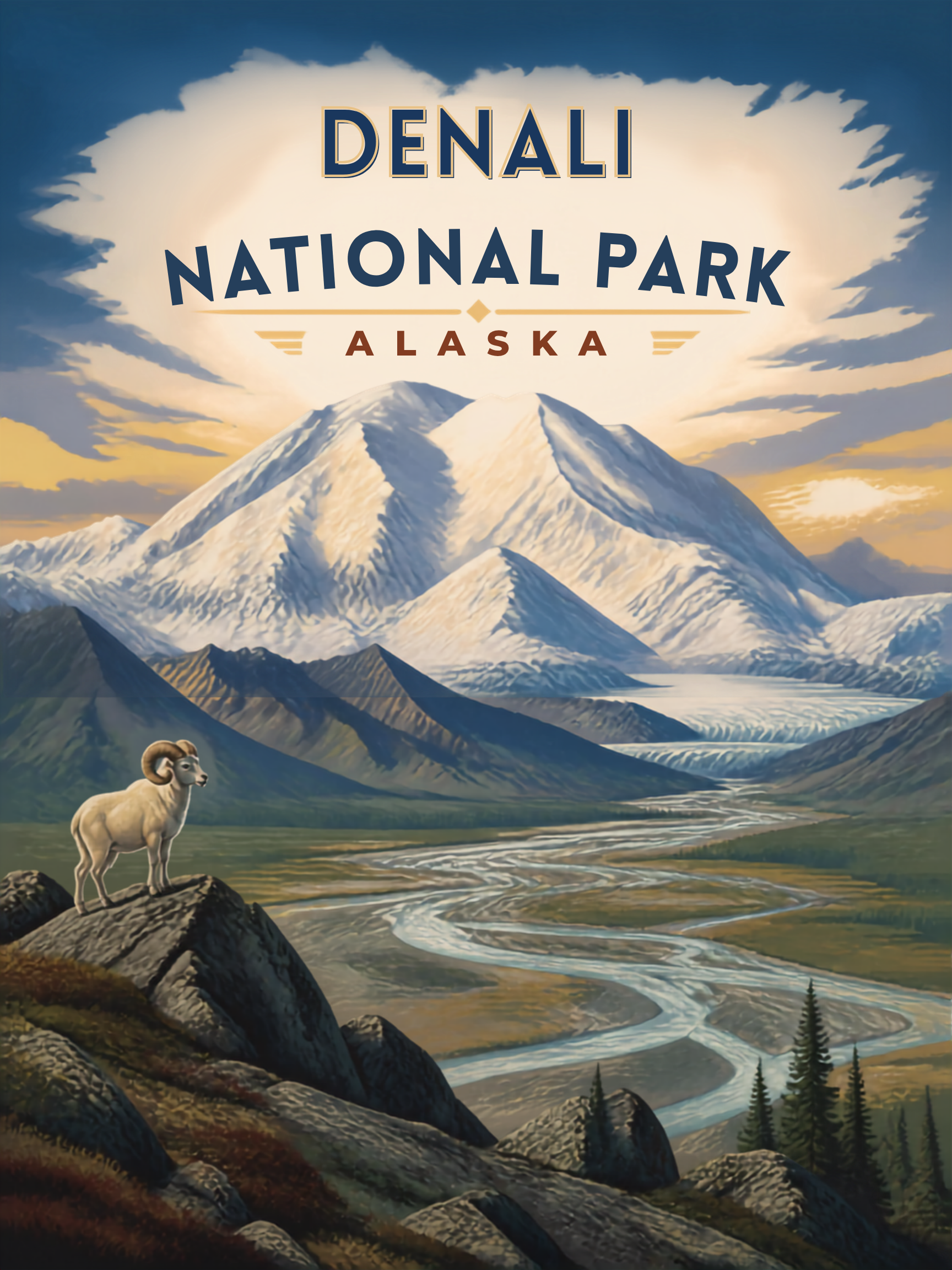
Welcome to Denali National Park and Preserve, home to North America’s highest peak, Denali, located in south-central Alaska. The park protects vast wilderness landscapes, towering mountains, glaciers, and abundant wildlife, making it one of the most spectacular and wild places in the United States.

Did You Know?
- Denali National Park and Preserve covers more than 6 million acres, making it larger than the entire state of New Hampshire.
- The park is the only U.S. national park that maintains a working sled dog kennel, where rangers still use sled dogs to patrol the wilderness in winter.
- About 15% of the park is covered by glaciers, and nearly half of the land is underlain by permafrost.

My Personal Experience
You will be extremely lucky if you actually see Denali during your visit. If you do, you will be stunned by the sight of North America’s tallest mountain rising above the Alaska Range. I visited the park twice and never saw the mountain while inside the park boundaries.
On my first visit, I finally caught a glimpse of Denali from the airplane on the flight from Fairbanks to Anchorage. On my second trip, I saw the mountain the next day from the highway again on my way to Anchorage. Still, visiting the park is an incredible experience even without seeing Denali itself. The landscape is rugged and vast, and wildlife sightings are common.
There is only one road into the park, and private vehicles are allowed on the first few miles only. Beyond that point, visitors must travel on foot, by bicycle, or by shuttle or tour bus. I took the all-day bus tour twice, and it was absolutely worth it. Even if Denali stays hidden behind clouds, chances are high that you will see grizzly bears, Dall sheep, caribou, or moose. Dress for the weather. It can be sunny one moment and pouring rain the next. And bring mosquito repellent…like lots of it. Alaska has more than 100 mosquito species, and it sometimes feels like you will meet every single one of them.
The longest tours travel about 70 miles one way, depending on road conditions. If you prefer hiking, the first few miles of the park road offer access to several trailheads near the visitor center.

Basic Facts
Address:
Denali National Park and Preserve
Mile 237 Highway
Denali Park, AK 99755
Operation Hours and Seasons:
The park is open year-round, with visitor centers and facilities having seasonal hours.
Visitors:
Over 600,000 per year (2022)
Entrance Fees:
Per Person: $15.00
Website:
nps.gov/dena
Map:
nps.gov/dena/planyourvisit/maps.htm
Additional Information:
For additional local information, visit discoverdenali.org.

Best Time to Visit
Most visitors come between late May and mid-September, when the Denali Park Road is open and shuttle buses operate.
Summer offers long daylight hours and the best wildlife viewing opportunities.

Recommended Time
The biggest catch is that you could spend a whole week without even seeing the mountain but due to limited available lodging, you need to book well in advance
1 Day: Take a park bus tour, the best way to explore deeper sections of the park and see wildlife.
2-3 Days: Add hikes near the visitor center or consider rafting the Nenana River just outside the park entrance.

Getting There
The closest major city is Anchorage, Alaska. From Anchorage, drive north on AK-3 (George Parks Highway) for about 237 miles to reach the park entrance.
The park can also be reached from Fairbanks, about 120 miles to the north.

Weather
Weather in Denali is famously unpredictable. It is not unusual to experience sunshine, rain, wind, and low clouds all within a single day:
- Spring (March to May): 20s–40s °F (-6 to 4°C). Snow may linger well into spring while lower elevations gradually thaw.
- Summer (June to August): 50s–70s °F (10–21°C). Mild temperatures, nearly endless daylight, and the best conditions for wildlife viewing and bus tours.
- Fall (September to November): 20s–50s °F (-6 to 10°C). Brilliant tundra colors, fewer visitors, and the possibility of early snowfall.
- Winter (December to February): 0s–20s °F (-18 to -6°C). Deep snow, limited services, and extreme cold dominate the landscape.
Even during summer, visitors should be prepared for rain, wind, and cool temperatures. Clear views of Denali are never guaranteed and often disappear quickly as weather systems move through the Alaska Range.

Hiking
Only a few maintained trails exist in Denali. Much of the park encourages off-trail wilderness hiking. Climbing Denali, however, requires a considerable amount of training and a respective permit:
Easy:
- Horseshoe Lake Trail – 2 miles roundtrip: A scenic trail through spruce forest leading to a peaceful lake where moose are often spotted.
- McKinley Station Trail – 3.2 miles roundtrip: A pleasant walk through a historic railroad area with interpretive signs.
Moderate:
- Mount Healy Overlook Trail – 5.4 miles roundtrip: A steady climb that rewards hikers with sweeping views across the Nenana River valley.
Strenuous:
- Triple Lakes Trail – 9.5 miles roundtrip: Denali’s longest maintained trail, passing forests, lakes, and alpine scenery.

Scenic Drives
Denali Park Road: This 92-mile road runs deep into the park toward Kantishna. Private vehicles are allowed only on the first 15 miles, while the remainder is accessible via park shuttle buses, guided tours, bicycles, or hiking.

Best Viewpoints
These locations along the park road offer some of the best chances to see Denali when the weather cooperates:
- Primrose Ridge (Mile 17): One of the earliest locations along the park road offering expansive views of the Alaska Range.
- Sable Pass (Mile 38): One of the best locations in the park for spotting wildlife, particularly grizzly bears, caribou, and Dall sheep.
- Polychrome Overlook (when accessible): Spectacular views of colorful volcanic landscapes and broad tundra valleys.
- Reflection Pond (Mile 85): Famous for mirror-like reflections of Denali on calm days, although currently inaccessible due to road limitations (buses do not travel beyond mile 43).
Note: road conditions sometimes limit access to deeper sections of the park.

Wildlife Viewing
Denali is one of the premier wildlife destinations in North America and one of the few places where visitors regularly encounter large mammals in an intact wilderness ecosystem. Grizzly bears, moose, caribou, Dall sheep, and wolves collectively known as the park’s “Big Five” are the animals most visitors hope to see.
Wildlife sightings are often best along the Denali Park Road, particularly during longer shuttle or tour bus trips. Dall sheep are commonly spotted on steep mountain slopes, while grizzly bears and caribou frequently roam the open tundra. Moose are often seen near wetlands and forested areas closer to the park entrance. Although wolves remain the most elusive of the Big Five, lucky visitors occasionally spot them far from the road in the vast backcountry.

Photography
Denali offers incredible photography opportunities:
- Denali itself: Clear views of North America’s tallest peak are rare but unforgettable. Early morning and late evening often provide the best chances for unobstructed views.
- Wildlife: Longer bus tours significantly increase opportunities to photograph grizzly bears, moose, caribou, and Dall sheep in their natural habitat.
- Tundra Landscapes: Vast open valleys, braided rivers, and colorful tundra create classic Alaska scenery, particularly during fall when the vegetation turns vibrant shades of red, orange, and gold.
- Glaciers & Mountains: The Alaska Range provides dramatic backdrops throughout much of the park, even when Denali itself remains hidden by clouds.

Horseback Riding
Horseback riding is not offered within the park.

General Aviation
A small airstrip is located next to the park entrance.:
McKinley National Park (INR) (PAIN)
- 3000 ft gravel runway
- No fuel services
Nearby Healy River (HRR) (PAHV) offers fuel
- 2,910 ft asphalt runway
- 100LL available
Airports in Anchorage (PANC) and Fairbanks (PAFA) seem to be the only ones with reliable rental car options.
Many visitors choose flightseeing tours departing from Talkeetna (PATK), which offer spectacular views of Denali, glaciers, and the Alaska Range.
Mountain weather can change rapidly and often creates challenging flying conditions. Strong winds, turbulence, low ceilings, and rapidly developing cloud cover are common around the Alaska Range. Pilots should carefully monitor weather conditions and allow significant flexibility in their schedules.

Nearby Attractions
- Denali Highway: One of Alaska’s most scenic drives, traversing remote tundra landscapes with spectacular mountain views and excellent wildlife viewing opportunities.
- Talkeetna: A charming historic town that serves as the primary base for Denali climbing expeditions and flightseeing tours.
- Nenana River: Known for whitewater rafting, scenic float trips, and dramatic canyon scenery just outside the park entrance.
- Fairbanks: Alaska’s second-largest city offers museums, riverboat tours, and excellent opportunities to view the northern lights during winter.

Important Tips
- Weather: Conditions can change rapidly. Bring warm layers, rain gear, and waterproof footwear regardless of season.
- Wildlife: You are in bear country. Carry bear spray when hiking and follow all wildlife safety guidelines.
- Reservations: Bus tours, accommodations, and campground reservations often sell out months in advance.
- Navigation: Cell service is limited or nonexistent beyond the park entrance area. Carry maps and be prepared for remote conditions.
- Mosquitoes: During summer, mosquitoes can be abundant. Insect repellent and head nets can significantly improve your experience.
- Alaska Tip: Do not plan your visit around seeing Denali itself. The mountain is visible only about 30% of the time. Consider it a bonus if the clouds cooperate.
Denali National Park and Preserve protects more than six million acres of pristine wilderness surrounding North America’s tallest peak. Even if the mountain hides behind clouds as it often does the vast tundra landscapes and incredible wildlife encounters make Denali one of the most unforgettable parks in the National Park System.


