Alaska and Pacific Northwest Region
KENAI FJORDS NATIONAL PARK
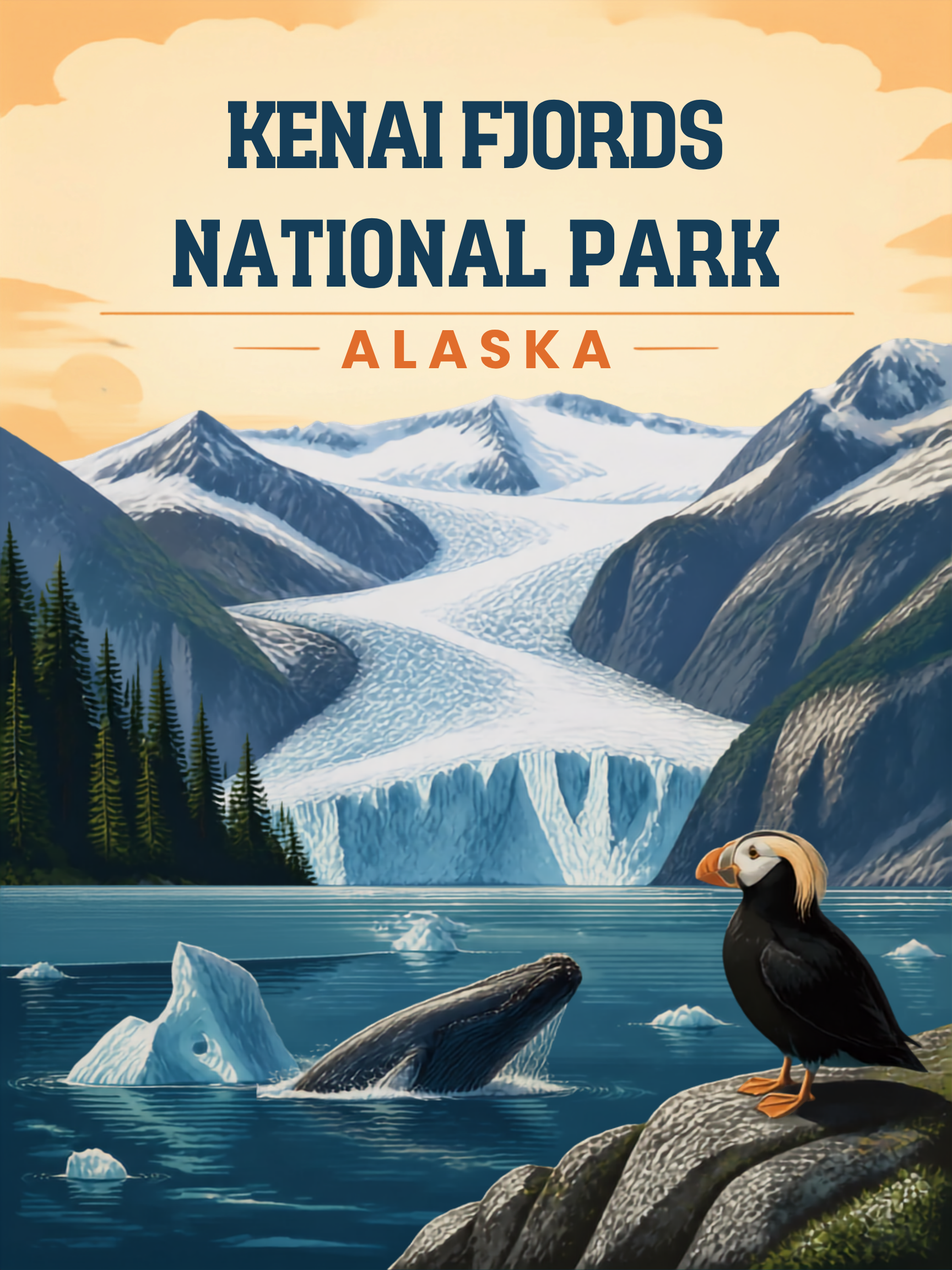
Welcome to Kenai Fjords National Park, a stunning coastal wilderness located on the Kenai Peninsula in south-central Alaska. Known for its tidewater glaciers, rugged fjords, and abundant marine life, this park offers one of the most accessible and rewarding ways to experience Alaska’s coastal wilderness.

Did You Know?
- The Harding Icefield covers over 700 square miles and feeds more than 30 glaciers.
- A major earthquake around 1170 AD helped shape the dramatic fjords seen today.
- More than 20 species of seabirds nest along the coastline, including puffins.

My Personal Experience
Good news for any Alaska visitor: you can actually drive to Kenai Fjords, making it one of the most accessible parks in the state.
The park is about 2.5 hours south of Anchorage, and the drive along the Seward Highway is spectacular in its own right. I visited in 2009 and again in 2020, focusing both times on Exit Glacier like many visitors. The difference between those visits was striking. In 2009, the trail ended right at the glacier. You could touch it, hear it crack, and truly feel its presence. Even with your eyes closed, you knew something massive was right in front of you. Fast forward eleven years, and the glacier had retreated significantly. Standing at the same spot, it was now far in the distance. Walking the valley and passing the signs marking the glacier’s position over the decades makes the change very real.
The hike up to the Harding Icefield is no joke about 3,000 feet of elevation gain over four miles. I almost attempted it on my first visit, but a bear sighting on the trail changed those plans. Let’s just say I stayed close to a park ranger after that. Friends of mine took the “bougie” option – a helicopter ride to the icefield. I’ll stick with hiking… maybe next time.

Basic Facts
Address:
Kenai Fjords National Park
PO Box 1727
Seward, AK 99664
Operation Hours and Seasons:
The park is open year-round, with peak visitation in the summer.
Visitors:
Over 300,000 per year (2022)
Entrance Fees:
The park does not charge an entrance fee.
Website:
nps.gov/kefj
Map:
nps.gov/kefj/planyourvisit/maps.htm
Additional Information:
For additional local information, visit seward.com.

Best Time to Visit
Mid-June through mid-August offers the best combination of weather, access, and wildlife activity. Boat tours are in full operation, and trails are generally snow-free.
The shoulder seasons (May and September) can be excellent for fewer crowds, but weather becomes less predictable and some services may be limited.

Recommended Time
1 Day: Visit Exit Glacier and, if you’re up for it, hike part (or all) of the Harding Icefield Trail.
2-3 Days: Add a wildlife cruise or kayaking trip to fully experience the fjords.

Getting There
The closest major city is Anchorage, Alaska. From Anchorage, drive south on the Seward Highway (AK-1) for about 125 miles. Seward serves as the gateway town to the park.

Weather
Kenai Fjords has a cool, maritime climate shaped by the Gulf of Alaska. Expect moisture, clouds, and rapidly changing conditions.
- Spring (March to May): 30s–50s°F (0–10°C). Snow begins to melt, but trails may still be muddy or partially snow-covered.
- Summer (June to August): 50s–60s°F (10–16°C). Mild temperatures, long daylight hours, and ideal conditions for boat tours though rain and fog are common.
- Fall (September to November): 30s to 50s°F (0-10°C). Cooling temperatures and increased rainfall. Fewer visitors but more unpredictable weather.
- Winter (December to February): 20s to 40s°F (-6 to 4°C). Cold and wet with limited access. Most park activities are unavailable.
Even in summer, dress in layers and be prepared for wind, rain, and sudden temperature drops especially on the water.

Hiking
Kenai Fjords National Park’s maintained trails are concentrated around the Exit Glacier area, making them easily accessible while still showcasing the park’s glacial landscapes:
Easy:
- Glacier View Loop – 1.2 miles loop trail: A short walk across the outwash plain with excellent views of Exit Glacier and the valley it carved. Interpretive signs help visitors understand the glacier’s retreat and the landscape it continues to shape
Moderate:
- Exit Glacier Overlooks – 2 miles round trip: A gradual climb through alder and cottonwood forests to several viewpoints overlooking Exit Glacier. Along the way, markers show where the glacier stood in previous decades, providing a striking illustration of climate-driven change.
Strenuous:
- Harding Icefield Trail – 8.2 miles round trip: One of Alaska’s premier day hikes. The trail climbs more than 3,000 feet through forests, meadows, and alpine terrain before revealing the immense Harding Icefield, a seemingly endless expanse of ice stretching to the horizon.
Boat Tours and Kayaking
This is where Kenai Fjords truly shines.
- Boat tours: take you deep into the fjords to see calving glaciers and marine wildlife
- Kayaking offers a quieter, more immersive experience along the coastline
If you only do one activity beyond Exit Glacier. make it a boat tour.

Scenic Drives
The access road to Exit Glacier is the only road in the park. However, the drive from Anchorage to Seward along the Seward Highway is one of the most scenic routes in Alaska, with views of mountains, glaciers, and coastal inlets.

Best Viewpoints
- Exit Glacier Overlook: One of the best locations to appreciate the scale of Exit Glacier and observe how dramatically it has retreated over recent decades.
- Harding Icefield: The reward for completing the park’s signature hike. The view reveals hundreds of square miles of interconnected icefields and glaciers stretching across the Kenai Mountains.
- From the Water: Boat tours provide the most spectacular perspectives in the park, including close-up views of tidewater glaciers, steep fjord walls, and abundant marine wildlife.

Wildlife Viewing
Kenai Fjords is one of the best places in Alaska to observe marine wildlife. Boat tours frequently encounter humpback whales, orcas, sea otters, harbor seals, Steller sea lions, and numerous seabirds including puffins. On land, black bears and mountain goats are occasionally seen, particularly near Exit Glacier and along the coastal mountains. Wildlife sightings are generally most reliable on the water, where the nutrient-rich fjords support an exceptionally diverse ecosystem.

Photography
Kenai Fjords offers a mix of glacier, wildlife, and coastal photography:
- Glaciers: Exit Glacier is ideal for documenting glacial retreat over time, while boat tours provide dramatic shots of calving tidewater glaciers.
- Wildlife: Fast-moving marine mammals require quick autofocus and patience. Boat tours are your best chance.
- Atmosphere: Fog, low clouds, and moody coastal light create dramatic and unique compositions not found in inland parks.

Horseback Riding
Due to the remote and maritime nature of the park, horseback riding is not offered. However, some guided tours outside the park may offer similar experiences.

General Aviation
Seward Airport (PAWD) in Seward, AK is just about 10 miles from the Exit Glacier Nature Center:
- 4,249 feet longest runway
- 100LL available
The airport sits a sea level but sharp rising terrain on each side makes take-offs and landings challenging. Coastal weather is often the primary challenge when flying into Seward. Marine fog, low ceilings, strong winds, and rapidly changing conditions are common throughout the year. Pilots should monitor weather closely and maintain flexibility in their travel plans..

Nearby Attractions
Nearby attractions center around Seward:
- Seward: The gateway community to Kenai Fjords, offering lodging, restaurants, fishing charters, and a picturesque harbor.
- Alaska SeaLife Center: A marine research, rehabilitation, and education center where visitors can observe many of Alaska’s marine species up close.
- Resurrection Bay: A spectacular fjord-like inlet known for wildlife cruises, kayaking, and dramatic coastal scenery.
- Kenai Peninsula: One of Alaska’s premier outdoor destinations, offering world-class fishing, hiking, wildlife viewing, and scenic drives beyond the national park.

Important Tips
- Weather: Rain gear is essential. Even during summer, conditions can change rapidly from sunshine to fog, wind, and rain.
- Boat Tours: Most visitors experience the heart of the park from the water. Reserve tours early, particularly during peak summer months.
- Wildlife: Black bears are occasionally encountered near Exit Glacier. Make noise while hiking and follow all wildlife safety guidelines.
- Glacier Safety: Never walk onto glaciers without proper equipment and training. Ice conditions can be unstable and dangerous.
- Layering: Temperatures on boat tours often feel significantly colder than in Seward due to wind and proximity to glaciers
Kenai Fjords offers a rare combination: true Alaska wilderness that’s still relatively easy to access. Even if you never set foot on a long trail, seeing Exit Glacier up close and experiencing the fjords by boat will give you a powerful sense of Alaska’s scale and beauty. And if you’re up for the challenge, the Harding Icefield Trail delivers one of the most unforgettable hikes in the United States.


