Western Region
JOSHUA TREE NATIONAL PARK
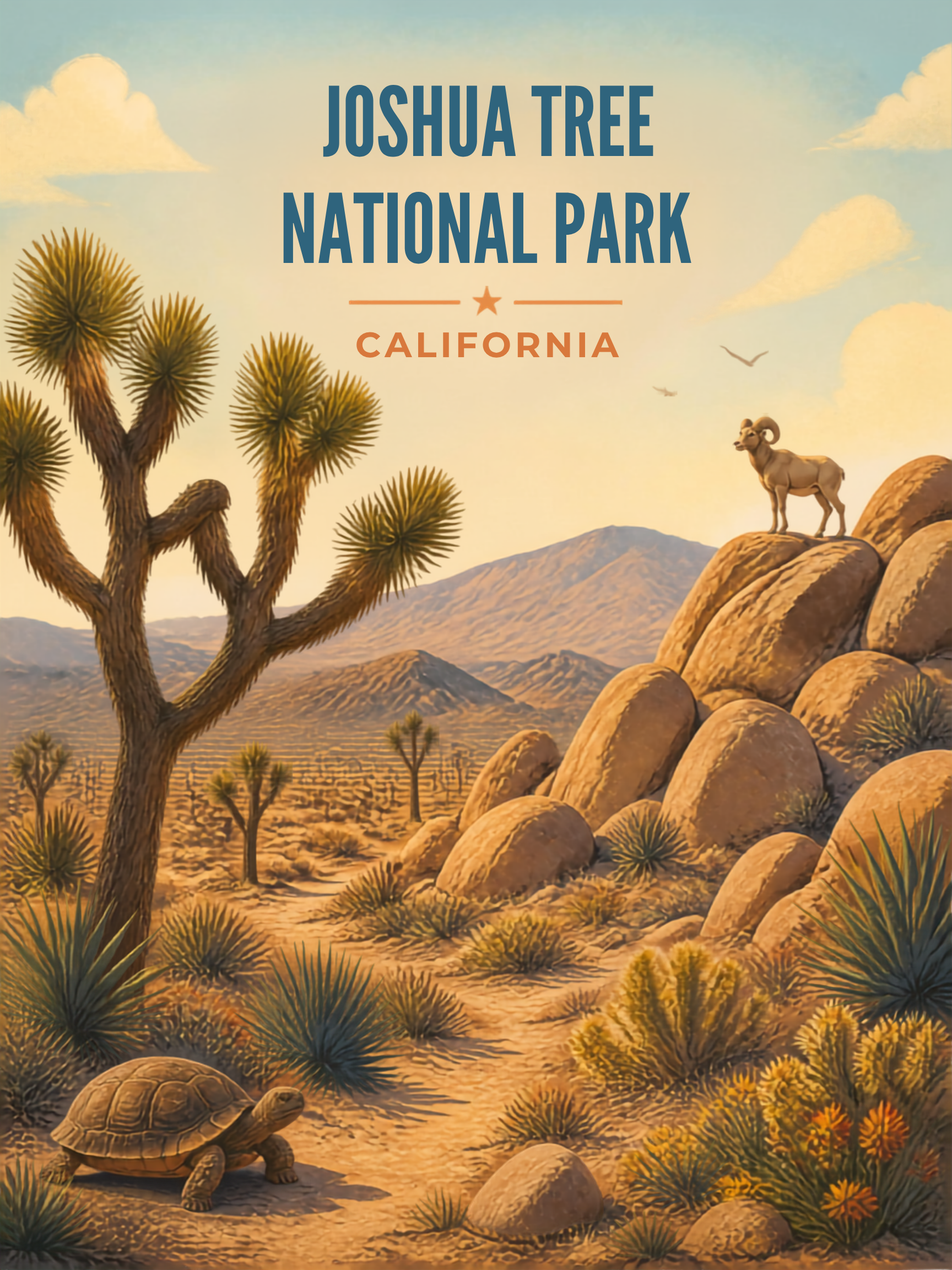
Welcome to Joshua Tree National Park, a striking desert landscape in Southern California where the Mojave Desert meets the Colorado Desert. Famous for its whimsical Joshua trees, massive granite rock formations, and exceptionally dark night skies, the park offers a unique blend of geology, ecology, and outdoor adventure.
Joshua Tree has become a favorite destination for hikers, climbers, photographers, and stargazers alike. Despite its popularity, the park still offers vast open spaces where visitors can experience the quiet beauty of the desert.

Did You Know?
- The Joshua Tree is not actually a tree. It’s the largest species of yucca, related to lilies and agave.
- Joshua Trees can live for more than 150 years and may take 70 years before they grow their first branches.

My Personal Experience
My first visit to Joshua Tree National Park was in the summer of 2002 with a friend. At the time, I didn’t really know what a Joshua tree was or how it got its name. I had seen it on the cover of a U2 album, and that was about it.
Well, it turns out that the Joshua tree is the largest species of yucca, native to the southwestern United States. Mormon settlers supposedly named the tree because its silhouette reminded them of the biblical Joshua raising his arms in prayer.
We entered the park through the West Entrance and drove Park Boulevard, which conveniently connects the West and North entrances. There are plenty of pullouts along the road with scenic views and access to trailheads. Geology Tour Road also begins off Park Boulevard. This 18-mile route leads to several trailheads and includes numerous stops that highlight the geology of the Mojave and Colorado Deserts. The first few miles can be driven with a regular passenger car, but completing the full road requires a high-clearance 4WD vehicle.
We didn’t hike much on that first visit because August heat in the desert can be intense. My second visit, in February, allowed me to log several hikes since temperatures were much cooler. If you enjoy rugged desert landscapes and are curious about the unique geology where two deserts meet, Joshua Tree is the perfect destination or perhaps you’re simply a U2 fan who wants to see the real Joshua trees.

Basic Facts
Address:
Joshua Tree National Park
74485 National Park Drive
Twentynine Palms, CA 92277
Operation Hours and Seasons:
The park is open year-round, 24 hours a day.
Visitors:
Over 2.8 million per year (2022)
Entrance Fees:
- Private Vehicle: $30.00 (admits one private, non-commercial vehicle and all its occupants for seven days)
- Per Person: $15.00 (when entering on foot or bicycle, valid for seven days)
Website:
nps.gov/jotr
Map:
nps.gov/jotr/planyourvisit/maps.htm
Additional Information:
For additional local information, visit visitgreaterpalmsprings.com.

Best Time to Visit
arch–May and October–November
Spring and fall offer the most comfortable temperatures for hiking and exploring the desert. Summer temperatures can be dangerously hot, while winter provides pleasant daytime hiking conditions but cool nights.

Recommended Time
1 Day: Drive Park Boulevard and explore a few short trails.
2-3 Days: Hike several trails, explore Geology Tour Road, and enjoy the park’s famous night skies.

Getting There
The closest major city is Palm Springs, California. From Palm Springs, take CA-62 East toward either Joshua Tree or Twentynine Palms, both of which provide convenient access to the park’s main entrances.

Weather
Joshua Tree experiences a typical desert climate with large day-night temperature swings.
- Spring (Mar–May): 50s–80s°F (10–27°C). One of the best seasons to visit, with comfortable hiking temperatures and occasional wildflower blooms.
- Summer (Jun–Aug): 90s–100+°F (32–38°C). Extremely hot; outdoor activities should be limited to early morning or evening.
- Fall (Sep–Nov): 50s–80s°F (10–27°C). Pleasant temperatures and fewer crowds.
- Winter (Dec–Feb): 50s–60s°F (10–16°C). Cool days and chilly nights; ideal for hiking and photography.

Hiking
Joshua Tree offers trails ranging from short interpretive walks to long backcountry routes.
Easy:
- Hidden Valley Trail – 1 mile loop: A scenic walk through a rock-enclosed valley filled with Joshua trees and striking granite formations. This trail is one of the park’s most popular introductions to its landscape.
- Barker Dam Trail – 1.1 mile loop: This trail leads to a historic cattle dam and often provides opportunities to spot wildlife. Petroglyphs and interesting rock formations can also be found along the route.
Moderate:
- Mastodon Peak Trail – 3 miles round trip: A scenic hike in the southern part of the park that climbs gradually to a granite peak. From the summit, hikers enjoy expansive views of the surrounding desert landscape.
- Lost Horse Mine Trail – 4 miles round trip: This historic trail leads to one of the best-preserved gold mines in Joshua Tree. Interpretive signs explain the mining history that once shaped this region.
Strenuous:
- Ryan Mountain Trail – 3 miles round trip: A steep climb to one of the park’s most accessible summits. The reward is a sweeping panorama across the Mojave Desert and the park’s rocky landscape.
- Boy Scout Trail – 16 miles round trip: A long wilderness hike that travels through remote desert terrain and extensive Joshua tree forests. This trail offers a quiet backcountry experience far from the main roads.
- Fortynine Palms Oasis Trail – 3 miles round trip: Despite its relatively short distance, this hike climbs steeply over a ridge before descending to a lush desert oasis filled with native palm trees. The oasis provides a dramatic contrast to the surrounding desert environment.
Because you are hiking in a desert environment, even experienced hikers can run into serious trouble. Carry plenty of water, inform someone about your plans, and avoid hiking during the hottest part of the day especially between 10 AM and 5 PM in summer. Do not attempt an of the strenuous hikes in the heat.

Scenic Drives
Park Boulevard: The main road through the park connecting the West and North entrances. Numerous pullouts provide scenic views and access to trailheads.
Geology Tour Road: An 18-mile scenic route showcasing fascinating desert geology. The first few miles are accessible by passenger car, but the full route requires high-clearance 4WD.

Best Viewpoints
- Keys View: The park’s most famous overlook with sweeping views across the Coachella Valley, the San Andreas Fault, and the Salton Sea on clear days.
- Cap Rock: A classic Joshua Tree rock formation easily accessible from the road.
- Ryan Mountain Summit: One of the best panoramic views in the entire park.

Wildlife Viewing
Joshua Tree supports a surprising variety of wildlife despite its harsh desert environment. Visitors may encounter desert bighorn sheep in the park’s more rugged and mountainous areas, particularly near water sources and remote canyons. Coyotes are common throughout the park and are most active during the cooler hours of the day. Black-tailed jackrabbits, kangaroo rats, and numerous lizard species are frequently seen along trails and roadsides.
Birdwatchers can spot roadrunners, cactus wrens, hawks, and a variety of migratory species depending on the season. Wildlife activity is generally highest during the early morning and evening hours, especially during warmer months when many animals avoid the midday heat.

Photography
Joshua Tree offers some of the most distinctive desert photography in the United States.
- Joshua Trees: The park’s namesake plants create instantly recognizable silhouettes and are especially photogenic in Hidden Valley, Jumbo Rocks, and along Park Boulevard. Their unusual shapes make excellent foreground subjects.
- Granite Monoliths: Massive rock formations throughout the park provide dramatic textures, patterns, and compositions. Hidden Valley, Skull Rock, and Jumbo Rocks are particularly rewarding locations.
- Keys View: One of the best landscape photography locations in the park. On clear days, photographers can capture the Coachella Valley, the San Andreas Fault, and even the distant Salton Sea.
- Night Skies: As an International Dark Sky Park, Joshua Tree offers exceptional opportunities for astrophotography. The combination of dark skies, unusual rock formations, and Joshua trees creates unique foreground elements for Milky Way photography.

Horseback Riding
Horseback riding has long been a traditional way to explore Joshua Tree, and the park maintains over 250 miles of equestrian trails. Horses are allowed only on designated trails to protect fragile desert ecosystems. Riders must keep animals at least 200 feet from water sources, and detailed regulations and trail maps are available on the park’s website: nps.gov/jotr/planyourvisit/horseback-riding.htm. Guided tours are available from outfitters located outside the park.

General Aviation
General aviation pilots have several options when visiting Joshua Tree National Park.
Palm Springs International Airport (KPSP) in Palm Springs, CA:
- Often the most practical airport for visiting the park.
- Longest runway: approximately 10,000 feet
- 100LL available
- Rental cars readily available
- Numerous lodging and dining options nearby
- Approximately 45 minutes from the West Entrance
Bermuda Dunes Airport (KUDD) in Palm Springs, CA:
- A convenient alternative for pilots seeking a smaller general aviation environment.
- Longest runway: approximately 5,000 feet
- 100LL available
- Limited on-airport services compared to Palm Springs
- Approximately 30 miles from the park
Twentynine Palms Airport (KTNP) in Twentynine Palms, CA:
- The closest airport to the North Entrance.
- Longest runway: approximately 5,500 feet
- 100LL available
- Limited rental car options
- Convenient access to the northern portion of the park
Flying in the desert requires attention to density altitude, especially during late spring, summer, and early fall. Afternoon temperatures can significantly reduce aircraft performance even at relatively modest field elevations. Pilots should also be prepared for turbulence and strong surface winds, particularly near mountain ridges and passes surrounding the Coachella Valley.

Nearby Attractions
Joshua Tree can easily be combined with several other destinations in Southern California.
- Mojave National Preserve: Located north of Joshua Tree, this vast preserve features Joshua tree forests, sand dunes, lava tubes, and some of the most remote desert scenery in Southern California.
- Palm Springs Aerial Tramway: One of California’s most unique attractions, transporting visitors from the desert floor into the cool forests and mountain scenery of Mount San Jacinto State Park.
- Salton Sea: California’s largest lake offers unusual desert landscapes, birdwatching opportunities, and fascinating environmental history.
- Anza-Borrego Desert State Park: California’s largest state park protects rugged desert canyons, wildflower displays, and scenic drives through the Sonoran Desert.

Important Tips
- Heat & Hydration: Desert temperatures can become dangerous very quickly. Carry more water than you think you’ll need and avoid strenuous hikes during the hottest part of the day.
- Navigation: Joshua Tree’s landscape can appear deceptively uniform. Carry a map and know your route before leaving established roads and trails.
- Cell Service: Mobile coverage is limited throughout much of the park. Do not rely solely on your phone for navigation or emergencies.
- Desert Flora: Many desert plants are armed with sharp spines. Wear sturdy footwear and watch where you place your hands when scrambling over rocks.
- Night Driving: Wildlife is often active after sunset. Drive carefully on park roads, particularly during dawn and dusk.
- Dark Skies: If you plan to stay after dark for stargazing or astrophotography, bring a flashlight or headlamp and extra layers, as temperatures can drop quickly after sunset.
Joshua Tree National Park is a place where rugged desert landscapes, unusual vegetation, and vast open skies come together in a truly distinctive way. Whether you’re hiking among surreal rock formations, watching the sun set behind forests of Joshua trees, or gazing up at the Milky Way in a perfectly dark sky, the park offers an experience that feels both peaceful and unforgettable.


