Rocky Mountain Region
CAPITOL REEF NATIONAL PARK
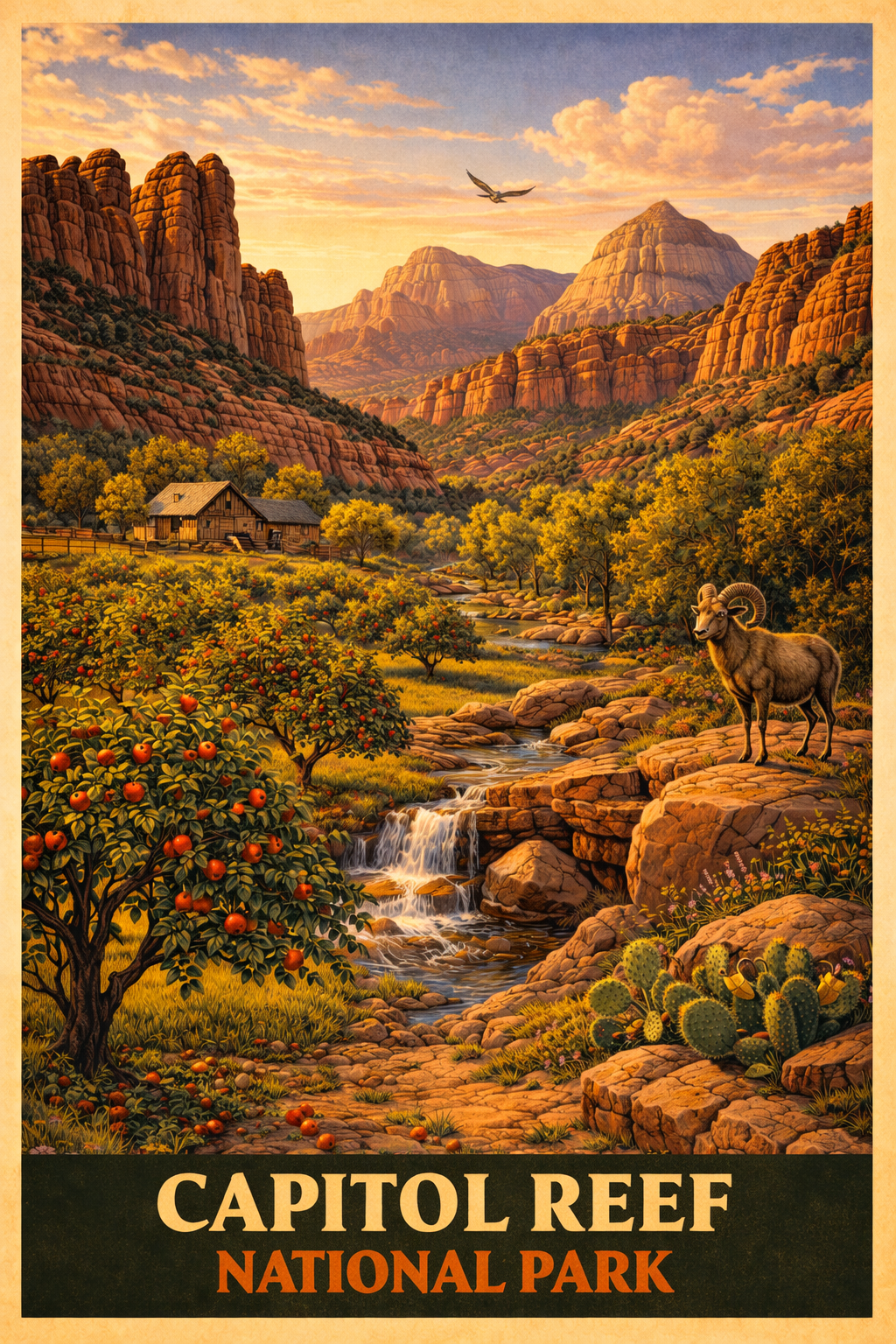
Welcome to Capitol Reef National Park, a hidden treasure located in the heart of Utah. Known for its colorful canyons, ridges, buttes, and monoliths, this national park offers stunning geological features and rich cultural history.

My personal experience
Capitol Reef is one of Utah’s “Mighty Five” National Parks and lies between Bryce Canyon National Park and Canyonlands National Park. For reasons I don’t quite know, I always skipped this park on my first four visits to Utah. Well, fifth time’s a charm—I finally visited Capitol Reef. It ranked “4 out of 5” in popularity among the mighty five parks. In most parks you’ll have to step out of your car to see something major. Not so here. Drive the scenic road and you’ll pass remarkable sights almost without leaving your vehicle. That said—do get out of your car and walk a bit; you’ll thank yourself (and your logbook will too). One of the highlights: visit the orchards planted by Mormon settlers and harvest fruit like cherries, apples, apricots, peaches, and pears for a small fee. As the day fades, stay for the stars—the Milky Way here is astonishing. Capital Reef is one of the dark skies parks.

Basic Facts
Address:
Capitol Reef National Park
52 Scenic Drive
Torrey, UT 84775
Operation Hours and Seasons:
The park is open 24 hours a day, year-round. The visitor center has seasonal hours.
Visitors:
Approximately 1.2 million per year (2022). more recent data indicates over 1.4 million in 2024.
Entrance Fees:
- Private Vehicle – $20.00 admits one private, non-commercial vehicle and all its occupants (valid 7 days)
- Per Person (walk/bike) – $10.00 (valid 7 days)
Website:
nps.gov/care
Map:
nps.gov/care/planyourvisit/maps.htm
Additional Information:
For additional local tourism information, visit visitutah.com
Check for road conditions and closures, especially in the winter and during rainy seasons when flash floods can occur.

Getting there
The closest town is Torrey, Utah. From Torrey, drive east on UT-24 for about 10 miles to reach the park entrance.

Weather
The weather at Capitol Reef National Park varies throughout the year. Prepare for weather swings and limited shade.
- Spring (March to May): Temperatures: Average highs range from 60s °F (15-20°C) to 70s °F (20-25°C). Spring is mild with occasional rain showers, perfect for hiking and exploring.
- Summer (June to August): Temperatures: Highs often reach 90s °F (32-37°C). It’s hot and dry, so staying hydrated is crucial. Early mornings and late evenings are best for exploring.
- Fall (September to November): Temperatures: Highs range from 60s °F (15-20°C) to 70s °F (20-25°C). Fall foliage is beautiful, and the weather is pleasant.
- Winter (December to February): Temperatures: Highs in the 30s to 50s °F (0-10°C), and nights often drop below freezing. Snow is possible, offering a serene landscape with fewer crowds.
Let’s dive into the various activities you can enjoy during your visit:
Hiking
Capitol Reef National Park offers a variety of hiking trails catering to different skill levels and interests. Here are some recommended hikes.
Easy:
- Capitol Gorge Trail: A 2-mile round trip through a narrow canyon with historic inscriptions on the rock walls.
- Grand Wash Trail: A 2.2-mile round trip through a scenic canyon with towering cliffs.
Moderate:
- Hickman Bridge Trail: A 1.8-mile round trip to a natural rock bridge with panoramic views.
- Cohab Canyon Trail: A 3.4-mile round trip offering views of the Fremont River and Fruita Historic District.
Strenuous:
- Chimney Rock Loop: A 3.5-mile loop with steep climbs and stunning views of the Waterpocket Fold.
- Navajo Knobs Trail: A 9.4-mile round trip with a challenging ascent and rewarding views from the summit.
Scenic Drives
- Scenic Drive: This 8-mile paved road offers access to beautiful viewpoints, trailheads, and the historic Fruita area.
- Cathedral Valley Loop: A 57-mile loop requiring a high-clearance vehicle, showcasing unique rock formations like the Temples of the Sun and Moon.
Historical Sites
- Fruita Historic District: Explore the remnants of a pioneer settlement, including a schoolhouse, blacksmith shop, and orchards.
- Petroglyph Panels: View ancient rock art along the main highway and throughout the park.
Camping
The park offers several camping options:
- Fruita Campground: Open year-round, this developed campground offers sites with amenities like picnic tables and restrooms.
- Backcountry Camping: For a more primitive experience, obtain a free backcountry permit from the visitor center.

Photography
Capitol Reef National Park is a photographer’s dream
- Golden Hour: Capture the vibrant colors of the rocks during sunrise and sunset.
- Orchards: The historic orchards in Fruita provide beautiful backdrops, especially in bloom or harvest seasons.
- Petroglyphs: Photograph ancient rock art created by the Fremont Culture along UT-24

Horseback Riding
The most traditional way to visit Capitol Reef National Park might on horseback. Horses and other pack animal are generally allowed throughout the park with some exceptions. Please check the park’s website nps.gov/care/planyourvisit/horsepack.htm for the most recent information. You will also find regulations on protecting fragile desert resources. The following rides are recommended:
– Halls Creek
– South Desert
– South Draw River

General Aviation
Private pilots can fly into Wayne Wonderland Airport (38U), about 11 miles to the west of the park. 100LL seems to be available but I would certainly call ahead. The one asphalt runway is 5,693ft long. Hanksville (HVE) is 40 miles to the east and does not offer any fuel. I could not find any car rental options close to these airport. The closest I found was in the town of Ephraim (Manti-Ephraim Airport 41U), 112 miles to the north of the park.

Important Tips
- Weather & Hydration: High desert environment — bring plenty of water, sun protection, and layer clothing.
- Permits: Required for backcountry camping and certain pack-animal use.
- Respect Nature: Stay on marked trails; do not disturb wildlife or fragile desert resources.
- Navigation: Cell service is limited; carry a map and inform someone of your plans.
- Seasonal Hazards: Flash floods in narrow washes; high heat in summer; snow and icy roads in winter.
Capitol Reef National Park is a uniquely beautiful and under-visited gem among the Utah parks. From the surprisingly lush orchards of Fruita to the dramatic folds of the Waterpocket Fold, you’ll find a landscape that defies expectations. Whether you’re walking through a sandstone canyon, photographing historic farmed peaches against red cliffs, or driving a remote gravel loop in the early morning light — you’ll come away with memories that linger. Let’s all do our part to protect and preserve this delicate desert paradise for future generations to enjoy.


