Rocky Mountain Region
ROCKY MOUNTAIN NATIONAL PARK
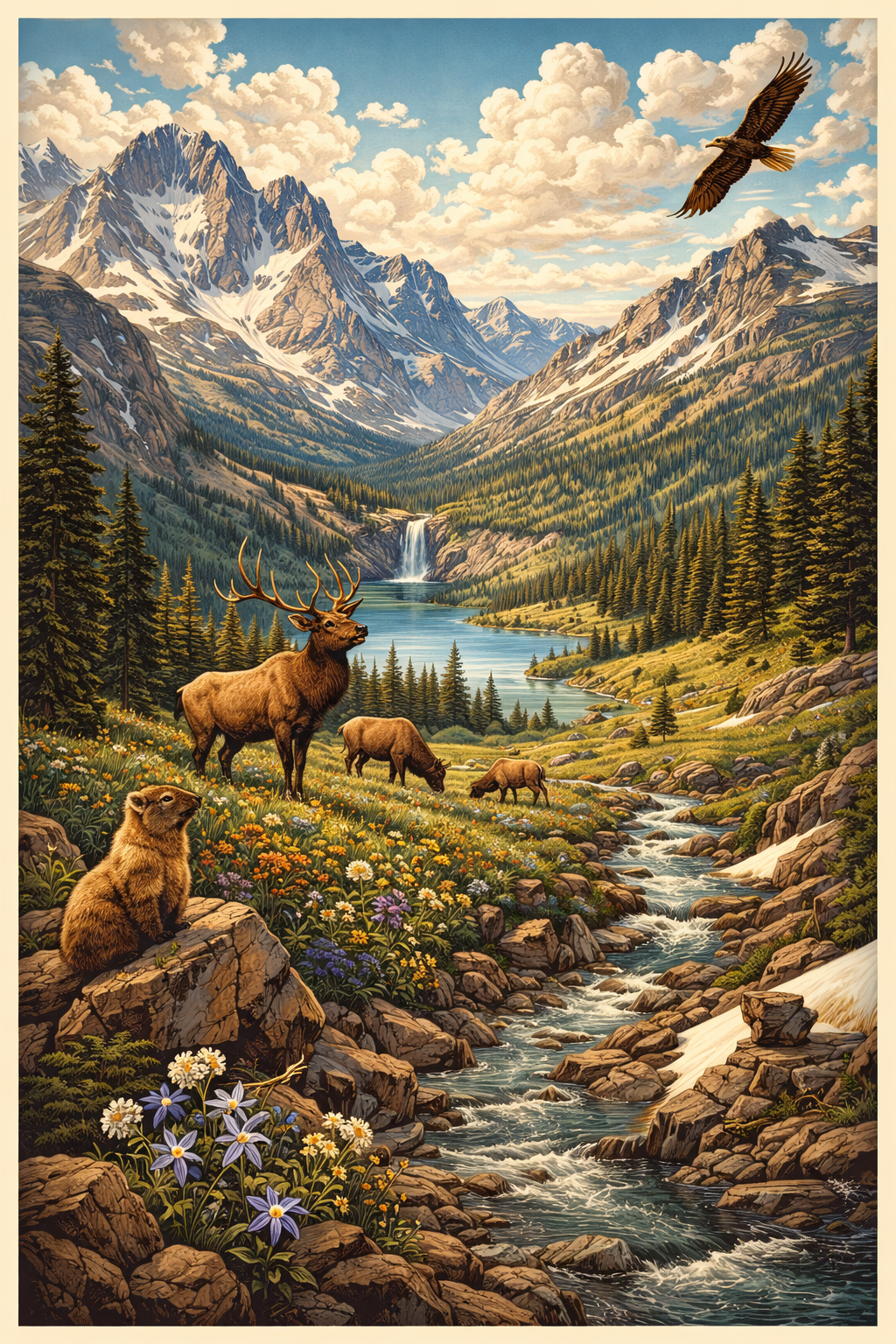
Welcome to Rocky Mountain National Park, a stunning expanse of alpine landscapes, soaring peaks, and pristine lakes in northern Colorado. The park is a crown jewel of the American West, drawing more than 4.5 million visitors annually with its sweeping vistas, diverse ecosystems, and endless recreational opportunities.
From lush montane valleys to windswept tundra, Rocky Mountain National Park showcases the dramatic elevation range of the Rockies — with peaks topping out above 14,000 feet. It is a place to hike, climb, watch wildlife, and simply breathe in the mountain air.

My personal experience
The first time I drove Trail Ridge Road, John Denver’s “Rocky Mountain High” was stuck in my head — and perhaps that’s unavoidable. Ever since I was a child visiting the Austrian Alps with my parents, I’ve thought of the mountains as my quiet refuge. Rocky Mountain National Park feels like that kind of place, though in peak season it is far from quiet! But if the mountains are calling, I must go. Memorial Day through mid-October is your chance to drive Trail Ridge Road, a 48-mile highway crossing the park east to west. It is the highest continuous paved road in the United States, cresting at 12,183 feet. Even in July, I found snow at the Alpine Visitor Center and weather that shifted by the minute. But the panoramic views were unforgettable — and so was the wildlife. On that first trip I saw bull elk, bighorn sheep, deer, and even a coyote and a marmot. I might have seen an eagle fly – Rocky Mountain High – and…. back in your head.
Another visit over Thanksgiving weekend was different entirely. My wife and I hiked to Bear Lake, which was frozen solid. Some brave souls were walking across the ice — we were not! Instead, we kept to the trail and were rewarded with a moose sighting as the daylight faded.
If it’s your first visit in summer, I recommend driving Trail Ridge Road for the full alpine experience, then picking a hiking trail suited to your fitness level. With over 355 miles of trails, there is truly something for everyone. Remember, though: park elevations range from 7,500 to 12,000+ feet. Even fit visitors from lower elevations — “flatlanders” — may feel the effects of altitude. Drink plenty of water and take it slow.

Basic Facts
Address:
Rocky Mountain National Park
1000 US Hwy 36
Estes Park, CO 80517
Operation Hours and Seasons:
The park is open year-round, 24 hours a day. Some facilities and roads are closed in winter due to snow.
Visitors:
Over 4.5 million per year (2022)
Entrance Fees:
- Private Vehicle: $35.00 (admits one private, non-commercial vehicle and all its occupants for one day)
- Per Person: $15.00 (when entering on foot or bicycle, valid for one day)
Timed entry: From mid-May to mid October you need to make a timed entry reservation if you want to enter the park between 9am – 2pm. The timed entry does not include access to Bear Lake Road. If you would like access to Bear Lake Road as well, you would need the Timed Entry+ to enter between 5am – 6pm. Reservations can only be made on recreation.gov. Make your reservation in advance as only a limited amount of reservation is made available at 7pm Mountain Time the day before your arrival date. There is a $2 non-refundable processing fee and you can arrive within a two-hour window. Once you are in the park, you can stay as long as you like.
Website:
nps.gov/romo
Map:
nps.gov/romo/planyourvisit/maps.htm
Additional Information:
For additional local information, visit visitestespark.com
Getting there
The closest major city is Denver, Colorado (about 70 miles). From Denver, follow US-36 West to Estes Park, which serves as the main eastern gateway to the park. On the western side, Grand Lake provides access to a quieter entrance.
Weather
Rocky Mountain National Park experiences varied weather throughout the year:
- Spring (March to May): Temperatures range from 30s to 60s°F (0-15°C). Snow begins to melt, and wildflowers bloom.
- Summer (June to August): Highs range from 60s to 80s°F (15-27°C). Mild weather with clear skies; ideal for hiking and outdoor activities.
- Fall (September to November): Temperatures range from 30s to 60s°F (0-15°C). Crisp, clear days with vibrant fall foliage.
- Winter (December to February): Highs in the 20s to 40s°F (-6 to 4°C). Cold with heavy snowfall; ideal for winter sports.
Rocky Mountain National Park experiences significant temperature fluctuations between day and night throughout the year. It’s advisable to check the specific weather forecast before planning a trip and to be prepared for sudden changes in weather conditions.and cross-country skiing.
Let’s dive into the various activities you can enjoy during your visit:
Hiking
Rocky Mountain National Park offers a variety of trails for all levels:
Easy:
- Bear Lake Trail: A 0.6-mile loop around a scenic alpine lake.
- Sprague Lake Trail: A 0.8-mile loop with stunning views of the surrounding peaks.
Moderate:
- Emerald Lake Trail: A 3.6-mile round trip to a beautiful alpine lake with panoramic views.
- Gem Lake Trail: A 3.4-mile round trip to a picturesque lake nestled among granite cliffs.
Strenuous:
- Longs Peak Trail: A challenging 14.5-mile round trip to the park’s highest peak, offering breathtaking vistas.
- Sky Pond Trail: A 9-mile round trip through diverse landscapes to a stunning alpine lake.
Wildlife Viewing
Wildlife is abundant and often visible from roads and trails. Look for:
- Elk in Moraine Park and meadows.
- Mule deer and bighorn sheep in valleys and alpine ridges.
- Moose near willow thickets and lakeshores.
- Coyotes, black bears, marmots, and pikas.
- Birds of prey, including golden eagles
Climbing
Rocky Mountain National Park is world-renowned for technical climbing and mountaineering. From granite walls in Lumpy Ridge to alpine routes on Longs Peak, the park offers challenges for all skill levels. Permits and careful preparation are essential.

Photography
Capture the stunning alpine landscapes and diverse wildlife:
- Golden Hour: Soft sunlight enhances the dramatic scenery of the mountains and valleys. Sunrise and sunset offer the best light (no s**t). Location like Sprague Lake, Bear Lake, and Moraine Park are ideal for sunrise.
- Night Photography: The clear skies offer excellent opportunities for photographing the Milky Way and stars. New moon nights might be perfect.
Please find some ideas in the table:
| Location | Subject/Scene | Tips |
| Bear Lake | Reflections, fall foliage | Great at sunrise. Arrive early. |
| Sprague Lake | Alpenglow, lake reflections | ADA-accessible, good for sunrise/ sunset. |
| Moraine Park | Elk herds, meadow scenes | Best in fall rut season (Sept–Oct). |
| Trail Ridge Road | Panoramas, tundra, wildflowers | Shoot at pullouts. Ideal for dramatic skies. |
| Dream & Emerald Lake | Alpine lakes, peaks | Use wide-angle lens. Best at sunrise. |
| Alberta Falls | Waterfalls, long exposure | Use tripod. Go early to avoid people. |
| Sheep Lakes | Bighorn sheep (spring/summer) | Bring telephoto lens and patience. |
| Milner Pass | Continental Divide sign, reflection | Good stop for a composed landmark shot. |
Horseback Riding
Do you like to ride a horse? A mule, a pony, a burro or a llama? Rocky Mountain National Park is your place: These animals are all allowed on park trails. C One stable is within park bounders: Glacier Creek Stables and there are many more outside the park. About 80% of the park’s trails (that’s approximately 260 miles) are open to commercial and private use. heck the park’s website for details including rules and safety information: nps.gov/romo/planyourvisit/horses.htm.
General Aviation
General aviation pilots have multiple options to get to Rocky Mountain National Park. Please keep in mind that you are flying in the mountains. Weather can change rapidly and density altitude is always a factor.
East Entrance (Estes Park) – All airports sit at about 5,000 foot elevation.
- Boulder Municipal (KBDU): The airport has two 4100 ft. parallel runways and offers full service FBO with 100LL and Jet-A available. It’s a 1h 15 min drive to Estes Park.
- Vance Brand (KLMP): has one 4,799 ft. runway and offers full service FBO. It’s about an hour to get to the park
- Northern Colorado Regional (KFNL): Need a longer runway? How does 8,500 ft. in KFNL sound? The airport offers full service FBO and it should take you about 1.5 hours to get to the east entrance of the park
West Entrance (Grand Lake)
- Granby-Grand County (KGNB): Ain’t to airport high enough? How about 8,207 ft? GNB has one 5000 ft. runway and offers 100LL and Jet-A. The airport is about 20 miles from the Grand Lake entrance.
Do you want to fly with the big dogs? Consider Denver International (KDEN), about 75 miles south east of the Estes Park entrance.

Important Tips
- Weather: Be prepared for sudden weather changes and carry appropriate gear. Plan for varying conditions and high elevation. Winter hiking conditions in May and June in areas above 9,000 feet? Likely!
- Altitude: Stay hydrated, ascend gradually, and take it easy if you feel light-headed
- Permits: Required for backcountry camping and certain activities. Check with the visitor center.
- Respect Nature: Practice Leave No Trace principles and avoid disturbing wildlife.
- Safety: Inform someone of your travel plans and carry a map.
Rocky Mountain National Park is a land of soaring peaks, quiet valleys, and unforgettable experiences. Whether you’re watching elk bugle in autumn, snowshoeing past frozen lakes, or summiting a rugged 14,000-foot peak, the park delivers a true mountain adventure. For me, the Rockies are both exhilarating and grounding — a reminder that the mountains really are calling, and we must go.


