Alaska and Pacific Northwest Region
MOUNT RAINIER NATIONAL PARK
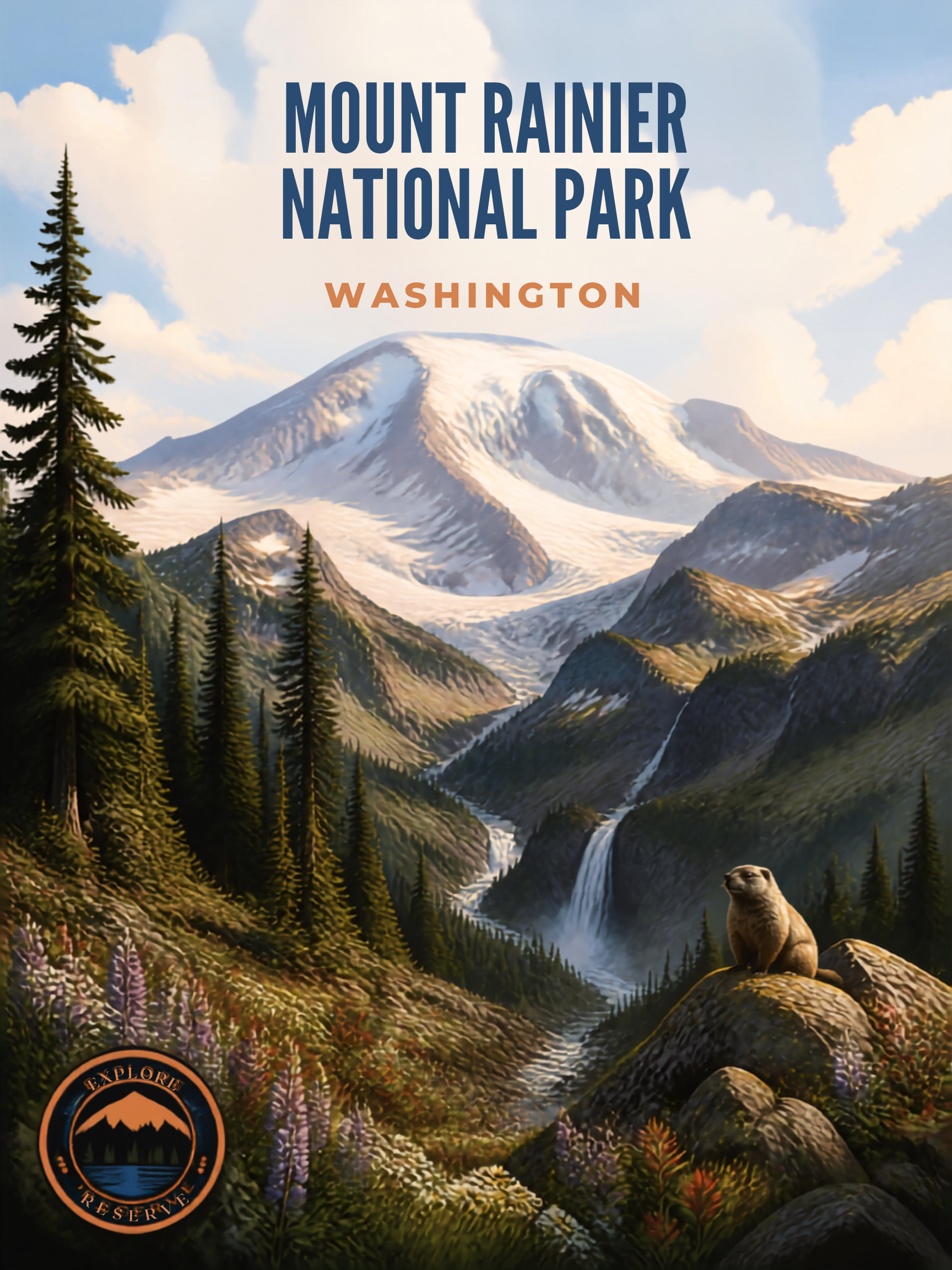
Welcome to Mount Rainier National Park, home to the iconic Mount Rainier, an active stratovolcano and the tallest peak in Washington State. This park offers stunning alpine scenery, diverse ecosystems, and numerous recreational opportunities.
Mount Rainier is part of the Pacific Northwest region, known for its dramatic volcanic landscapes, dense forests, and rapidly changing mountain weather.

Did You Know?
- The park is famous for extreme snowfall, averaging up to 50+ feet annually at higher elevations.
- Mount Rainier has the largest glacier system in the contiguous United States.
- It is an active volcano and considered one of the most closely monitored and potentially hazardous in the U.S.

My Personal Experience
Mount Rainier is the tallest mountain in Washington and dominates the southeastern horizon of the Seattle–Tacoma area on clear days even though it’s about 60 miles away. Locals respectfully call it “The Mountain.”
On my visit, I entered through the White River Entrance and drove up to the Sunrise Visitor Center, which is only open seasonally. The area offers several short hikes, all with breathtaking views of Mount Rainier.
Unless you want to add more hikes to your personal logbook, you could also combine a visit with nearby Mount St. Helens. Even more than 40 years after the 1980 eruption, you can clearly see the destructive forces that reshaped the landscape.
I also visited the park in winter, which was a completely different experience fog, snow-covered roads, and limited access. Personally, I still prefer visiting in the summer when the mountain is fully visible and trails are open.

Basic Facts
Address:
Mount Rainier National Park
55210 238th Avenue East
Ashford, WA 98304
Operation Hours and Seasons:
The park is open year-round, 24 hours a day. Some facilities and roads are closed in winter due to snow.
Visitors:
Over 2 million per year (2022)
Entrance Fees:
- Private Vehicle: $30.00 (admits one private, non-commercial vehicle and all its occupants for seven days)
- Per Person: $15.00 (when entering on foot or bicycle, valid for seven days)
Website:
nps.gov/mora
Map:
nps.gov/mora/planyourvisit/maps.htm
Additional Information:
For additional local information, visit visitrainier.com.

Best Time to Visit
Mid-July through September offers the best conditions for snow-free trails and access to areas like Sunrise. Summer is peak season – weekdays are preferable to avoid crowds.

Recommended Time
1 Day: Focus on either Sunrise or the Paradise area.
2-3 Days: Explore both areas and optionally combine it with a visit to Mount St. Helens.

Getting There
The closest major city is Seattle, Washington. From Seattle, take I-5 South and connect to WA-7 South toward the park.
This park combines well with other Pacific Northwest destinations such as Olympic National Park and North Cascades National Park.

Weather
Mount Rainier National Park experiences highly variable weather throughout the year, and conditions can differ dramatically between lower elevations and alpine areas.
- Spring (March to May): 30s–60s °F (0–15°C). Snow gradually melts at lower elevations while higher trails often remain buried under deep snow. Waterfalls are at their most impressive.
- Summer (June to August): 60s–80s °F (15–27°C). The best season for hiking, wildflowers, and access to high-elevation areas such as Paradise and Sunrise. Afternoon clouds can develop quickly around the mountain.
- Fall (September to November): 30s–60s °F (0–15°C). Crisp air, fewer visitors, and excellent visibility often make September one of the best months to visit.
- Winter (December to February): 20s–40s °F (-6 to 4°C). Heavy snowfall limits access to many areas, but creates outstanding opportunities for snowshoeing and winter recreation.
Mount Rainier creates its own weather patterns, and conditions can change rapidly at any time of year. Even during summer, temperatures at higher elevations may be significantly cooler than in nearby lowland communities. Always carry layers and be prepared for sudden changes in visibility and weather.

Hiking
Mount Rainier National Park offers outstanding alpine hiking with dramatic views of glaciers and wildflower meadows:
Easy:
- Grove of the Patriarchs Trail – 1.2 miles loop: A peaceful walk through an old-growth forest featuring massive ancient trees and suspension bridges.
- Nisqually Vista Trail – 1.2 miles loop: An accessible trail in the Paradise area with stunning views of Mount Rainier and surrounding meadows.
Moderate:
- Glacier Basin – 5 miles round trip: A gradual climb through forest and open terrain leading toward glaciers and alpine landscapes.
- Sourdough Ridge – 3 miles loop: A high-elevation hike near Sunrise with panoramic views and access to sections of the Wonderland Trail.
Strenuous:
- Skyline Trail – 5.7 miles loop: One of the park’s premier hikes, offering close-up views of glaciers, waterfalls, and Mount Rainier itself.
- Tolmie Peak Lookout Trail – 4.8 miles round trip: A rewarding climb to a historic fire lookout with spectacular views of the mountain reflected in Eunice Lake.

Scenic Drives
- Sunrise Road: A 17-mile drive to the highest vehicle-accessible point in the park.
- Paradise Valley Road: Leads to the historic Paradise area, known for wildflowers and iconic views.
- Stevens Canyon Road: Connects the east and west sides of the park through diverse landscapes.

Best Viewpoints
- Sunrise Area: The highest vehicle-accessible area in the park, offering sweeping views of Mount Rainier, glaciers, alpine meadows, and surrounding mountain ranges.
- Reflection Lakes: One of the park’s most iconic viewpoints, famous for mirror-like reflections of Mount Rainier during calm weather.
- Myrtle Falls: A classic Paradise-area viewpoint where a picturesque waterfall is framed by Mount Rainier in the background.

Wildlife Viewing
Mount Rainier’s subalpine meadows and forests support a surprising variety of wildlife.
Marmots are among the park’s most recognizable residents and are commonly seen in the Paradise and Sunrise areas during summer. Black-tailed deer and elk frequently graze in meadows and forest openings, while black bears may occasionally be spotted feeding on berries in late summer and early fall.
Birdwatchers should watch for Clark’s nutcrackers, gray jays, and mountain bluebirds in higher elevations. Mountain goats are not native to Mount Rainier and have largely been removed from the park to protect fragile alpine ecosystems.

Photography
Mount Rainier is one of the most photogenic mountains in North America, but successful photography often depends on weather and visibility.
- The Mountain: Clear conditions are essential for capturing the volcano’s glaciers, ridges, and immense scale. Early mornings often provide the clearest views.
- Wildflower Meadows: Paradise and Sunrise are famous for their spectacular summer wildflower displays, typically peaking between late July and mid-August.
- Reflection Lakes: One of the park’s classic photography locations, offering mirror-like reflections of Mount Rainier during calm conditions.
- Fall & Winter: Fall colors and snow-covered landscapes provide entirely different photographic opportunities, often with far fewer visitors.

Horseback Riding
Saddle and pack animals are allowed on the Pacific Crest Trail and on the Laughingwater Creek Trail from State Route 123 to the Pacific Crest Trail near Carlton Pass. Check the park’s website nps.gov/mora/planyourvisit/stock-use-guidelines.htm for details. Guided tours are available outside the park near the Nisqually River.

General Aviation
While there are smaller airfields close to the park, larger airports offer more reliable fuel an rental car options. Nearby airports are:
Olympia Regional Airport (KOLM) in Olympia, WA::
- West of the park
- Longest runway is 5,500 feet
- 100LL available
Yakima Air Terminal / McAllister Field Airport (KYKM) in Yakima, WA:
- East of the park
- Longest runway is 7,604 feet
- 100 LL available
Mount Rainier rises to 14,411 feet and dominates the surrounding landscape. Pilots should carefully consider mountain weather, turbulence, cloud development, and visibility around the volcano. Conditions can change rapidly, even when nearby lowland airports report favorable weather.

Nearby Attractions
- Mount St. Helens National Volcanic Monument: Explore the aftermath of the 1980 eruption and learn about one of the most significant volcanic events in modern U.S. history.
- Northwest Trek Wildlife Park: A large wildlife park near Eatonville featuring native Pacific Northwest animals including bison, elk, bears, and wolves.
- Pioneer Farm Museum: A small local museum preserving the history of early settlers and farming communities in the Mount Rainier region.

Important Tips
- Weather: Conditions can change rapidly, especially at higher elevations. Always carry layers, even during summer.
- Wildflowers: Stay on designated trails and boardwalks to protect fragile alpine meadows.
- Snow: Many roads and trails remain snow-covered well into summer. Always check current conditions before visiting.
- Permits: Required for backcountry camping and all summit-climbing attempts.
- Wildlife: Give bears and elk plenty of space and never approach wildlife for photographs.
- Navigation: Cell coverage is limited throughout much of the park. Carry a map and know your route.
- Pacific Northwest Tip: Weather can change quickly, and travel times are often longer than expected due to terrain. Always allow extra time and be prepared for rain even in summer.
Mount Rainier National Park offers a classic Pacific Northwest experience: glaciers, wildflower meadows, and one of the most iconic mountains in North America. Whether you’re hiking the Skyline Trail or simply admiring “The Mountain” from a distance, this park leaves a lasting impression.


