Midwest Region
INDIANA DUNES NATIONAL PARK
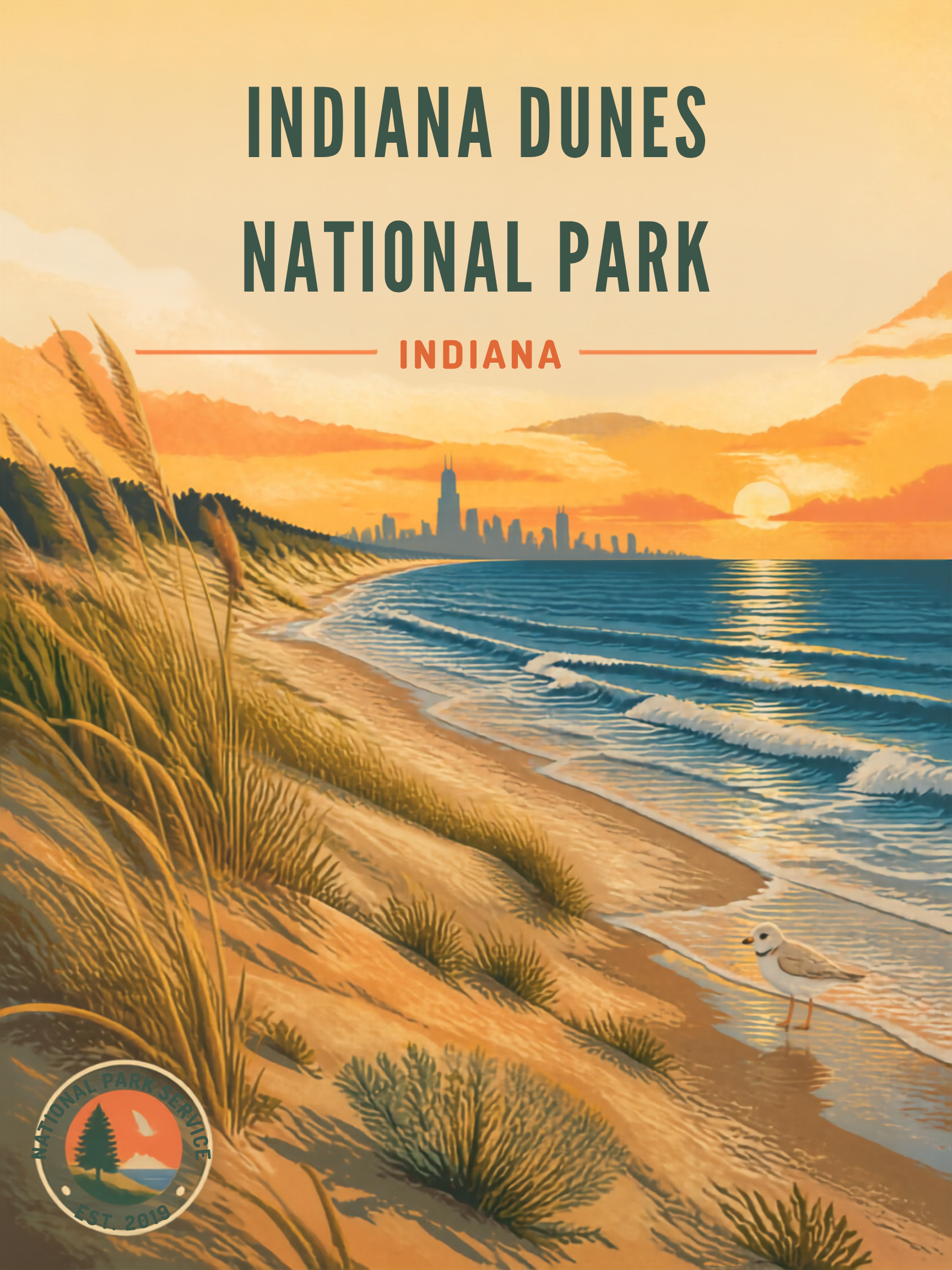
Welcome to Indiana Dunes National Park, a surprisingly diverse landscape of sandy beaches, towering dunes, wetlands, prairies, forests, and oak savannas located along the southern shore of Lake Michigan. Despite its relatively small size, the park protects one of the most biologically diverse areas in the National Park System and offers an easily accessible outdoor escape near Chicago.

Did You Know?
- Indiana Dunes contains 28 native orchid species which is more than the entire state of Hawaii.
- Despite being one of the smaller national parks, it ranks among the most biodiverse.
- Mount Baldy is a “living” dune that moves several feet each year.

My Personal Experience
I am a little torn on Indiana Dunes National Park.
The park had only recently been redesignated from a national lakeshore to a national park when we visited in summer 2019, and the National Park Service was still in the process of replacing signs throughout the park. There is no question that it is beautiful. We visited the beaches, climbed dunes, and even had some nice wildlife sightings. Sitting directly on the southern shore of Lake Michigan makes it a fantastic getaway from city life. You can spend time on the beach, hike through the dunes, and simply relax near the water.
At the same time, I have to admit that it did not leave the same lasting impression on me as many other parks did. Perhaps that was partly because of expectations. When people hear “national park,” they often think of giant mountains, canyons, or geothermal wonders. Indiana Dunes is more subtle. Its beauty is found in ecosystems, biodiversity, shoreline scenery, and accessibility rather than dramatic scale. Still, I absolutely think the park deserves another visit. I would especially like to spend more time hiking and exploring nearby Indiana Dunes State Park, which is adjacent to the national park and offers some excellent dune trails.

Basic Facts
Address:
Indiana Dunes National Park
1100 North Mineral Springs Road
Porter, IN 46304
Operation Hours and Seasons:
The park is open year-round, 24 hours a day.
Visitors:
Over 2 million per year (2022)
Entrance Fees:
- Private Vehicle: $25.00 (admits one private, non-commercial vehicle and all its occupants for seven days)
- Per Person: $15.00 (when entering on foot or bicycle, valid for seven days)
Website:
nps.gov/indu
Map:
nps.gov/indu/planyourvisit/maps.htm
Additional Information:
For additional local information, visit indianadunes.com.

Best Time to Visit
Best time to visit depends on your planned activities. Late spring or early fall offer comfortable temperatures, making this time best for hiking. The summer months are ideal for beaches, swimming, and water activities. Winter is quiet and scenic with opportunities for snowshoeing and cross-country skiing.

Recommended Time
1 Day: Spend time at one of the beaches, hike through the dunes, and visit Mount Baldy or West Beach. Add a short scenic drive or sunset stop along Lake Michigan.
2-3 Days: Ideal for exploring multiple ecosystems including beaches, forests, wetlands, and historic areas like Chellberg Farm and Bailly Homestead. This also gives you time to visit nearby Chicago or Indiana Dunes State Park.

Getting There
The closest major city is Chicago, Illinois. From Chicago, take I-90 East to IN-49 North to the park entrance areas. The park is spread out over multiple units along the Lake Michigan shoreline.

Weather
Indiana Dunes experiences a classic Great Lakes climate with warm summers and cold winters:
- Spring (March to May): 40s–70s°F (4–21°C). Wildflowers bloom throughout the dunes and wetlands. Conditions can still feel cool and windy near the lake.
- Summer (June to August): 70s–90s°F (21–32°C). Warm and humid with busy beaches and ideal swimming conditions.
- Fall (September to November): 40s–70s°F (4–21°C). Excellent hiking weather with colorful foliage and fewer visitors.
- Winter (December to February): 20s–40s°F (-6 to 4°C). Cold, windy, and occasionally snowy. Frozen dunes and icy shoreline scenery can be surprisingly beautiful.
Weather can change quickly, especially near Lake Michigan. Strong winds, sudden temperature changes, fog, and lake-effect weather can affect both beach activities and hiking conditions.

Hiking
Lake Michigan strongly influences conditions. Temperatures near the shoreline are often cooler than inland areas:
Easy:
- Portage Lakefront and Riverwalk Trail – 0.9 miles round trip: An easy walk with views of Lake Michigan, dunes, and, on clear days, the Chicago skyline across the water. Excellent for sunrise and sunset photography.
- Great Marsh Trail – 1.3 miles round trip: A peaceful wetland trail that showcases one of the park’s most important ecosystems and offers excellent opportunities for birdwatching and wildlife photography.
Moderate:
- Dune Ridge Trail – 0.7 mile loop: A short but scenic climb through forest and dune habitats, ending with elevated views of Lake Michigan and the surrounding shoreline.
- Bailly Homestead, Chellberg Farm, and Little Calumet River Trail – 3.4 mile loop: Combines natural scenery with historic sites that tell the story of early settlement and farming in the Indiana Dunes region.
Strenuous:
- West Beach Trails – 3 loops 3.4 miles total: A surprisingly challenging hike with steep dune climbs, panoramic lake views, and an excellent introduction to the park’s dune succession habitats.
- Cowles Bog Trail – 4.7 miles round trip: Often considered the park’s signature hike, this diverse trail passes wetlands, ponds, forests, marshes, and dunes before reaching the Lake Michigan shoreline.
Swimming and Beach Activities
Indiana Dunes offers several beaches along Lake Michigan: West Beach, Porter Beach, Kemil Beach or Central Avenue Beach. Swimming, sunbathing, picnicking, and shoreline walks are among the most popular activities during summer.
Lake Michigan can be dangerous. Rip currents and cold water conditions occur regularly even during warm weather.

Scenic Drives
- Driving Tour West Side: A 15-mile route connecting beaches, overlooks, and historic features. Allow 1–2 hours with stops.
- Driving Tour East Side: A 14-mile route showcasing dunes, forests, wetlands, and shoreline scenery

Best Viewpoints
- Mount Baldy: The park’s most famous dune. Although access to the summit varies due to safety concerns and dune movement, the area provides excellent views of Lake Michigan and surrounding dune landscapes.
- Portage Lakefront and Riverwalk: The elevated viewing area offers beautiful lake views, excellent birdwatching opportunities, and one of the best places in the park to watch the sunset.
- West Beach (Dune Succession Trail): One of the finest panoramic viewpoints in the park, showcasing dunes, beaches, Lake Michigan, and, on exceptionally clear days, the Chicago skyline.

Wildlife Viewing
ndiana Dunes supports an impressive variety of wildlife thanks to its diverse mix of beaches, wetlands, forests, prairies, and dunes. White-tailed deer are commonly seen throughout the park, while red foxes, coyotes, and numerous smaller mammals inhabit the more secluded areas. The park is internationally recognized as a birdwatching destination, particularly during spring and fall migrations when hundreds of species pass through the Lake Michigan flyway. Wetlands and marshes attract waterfowl, herons, and other wading birds, while bald eagles are occasionally observed near the shoreline. Early morning and evening typically provide the best wildlife viewing opportunities.

Photography
Indiana Dunes offers a mix of shoreline, dune, forest, and urban-edge photography opportunities.
- Golden Hour: Warm evening light dramatically enhances dune textures and Lake Michigan scenery
- Chicago Skyline: On clear days, the skyline is visible across the lake from several western viewpoints.
- Beach & Dune Landscapes: The combination of sand, grasses, and lake scenery creates surprisingly varied compositions.
- Wildflowers & Orchids: Spring and early summer bring colorful blooms, including some of the park’s remarkable native orchid species.
- Wildlife & Wetlands: Wetland areas are excellent for bird and wildlife photography, especially during migration seasons.

Horseback Riding
The Glenwood Dunes Trail is the park’s only equestrian trail. Horseback riding is permitted from March 16 to December 14 on a specified portion of the Glenwood Dunes Trail System. There are no horse rental concessions and further information including trail maps and regulations can be found the park’s website at nps.gov/indu/planyourvisit/horse.htm.

General Aviation
Several airports provide convenient access to the park and offer reliable rental car services. The list provides examples and is not exhaustive.
Michigan City Municipal-Philips Field (KMGC) in Michigan City, IN:
- 16 miles to the East
- 4,099 feet asphalt runway
- 100LL available
Gary/Chicago International Airport (KGYY) in Gary, IN:
- 25 miles to the West
- Longest runway 8,859 feet
- 100LL available
Hobart Sky Ranch Airport (3HO) in Hobart, IN:
- 15 miles to the Southwest
- 3,125 asphalt runway
- 100 LL available
- Privately owned
Note that your are near Lake Michigan which can generate significant lake-effect weather, including sudden fog, low ceilings, and strong crosswinds. Conditions may differ substantially from airports located farther inland. Pilots might consider an airfield located inland and away from the shore. The busy airports of Chicago O’Hare and Chicago Midway are nearby. Watch for traffic and pay attention to not accidentally fly into controlled airspace.

Nearby Attractions
- Pullman National Historic Park: Historic planned industrial community on Chicago’s South Side
- Indiana Dunes State Park: Home of the famous “3 Dune Challenge”
- Valparaiso: Small Midwestern city with museums, restaurants, and cultural attractions
- Chicago: Easy day-trip option for museums, architecture, and food
- Michigan City: Historic Lake Michigan community featuring a lighthouse, marina, beaches, and restaurants along the waterfront.

Important Tips
- Beach Safety: Lake Michigan is powerful and dangerous. Always check for rip current warnings before swimming.
- Timing: Summer weekends can become crowded, especially near beaches. Arrive early for parking.
- Mosquitoes & Ticks: Wetland and forest areas can have significant insect activity during warmer months.
- Trail Conditions: Sand hiking can be more strenuous than expected. Carry water, especially during summer.
- Wildlife & Ecosystems: Stay on trails and avoid disturbing fragile dune vegetation.
- Explore Multiple Areas: The park is geographically spread out. Don’t judge it based on only one section.
Indiana Dunes National Park may not overwhelm visitors with massive mountains or dramatic canyons, but it offers something different and increasingly valuable. It is a place where beaches, forests, wetlands, dunes, and biodiversity exist side by side within easy reach of major cities. Whether you come for bird migration, a beach day, sunset photography, or simply a quiet walk along Lake Michigan, Indiana Dunes proves that even smaller parks can offer surprisingly rich experiences.


