Alaska and Pacific Northwest Region
LAKE CLARK NATIONAL PARK AND PRESERVE
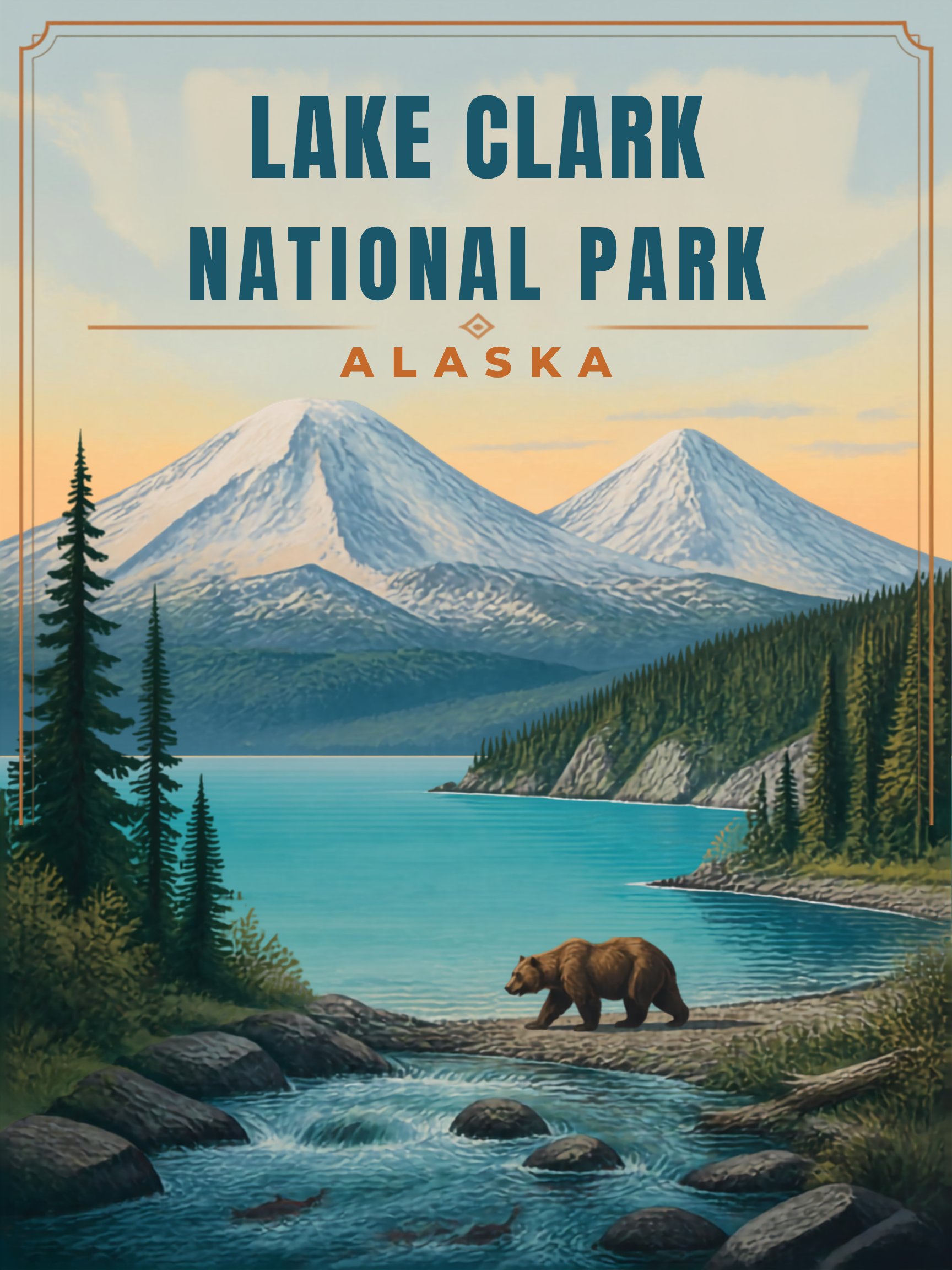
Welcome to Lake Clark National Park and Preserve, a remote and spectacular wilderness in southwestern Alaska. Known for its active volcanoes, pristine lakes, and exceptional wildlife viewing, the park blends coastal and alpine environments into one of Alaska’s most diverse landscapes.

Did You Know?
- Lake Clark National Park and Preserve spans over 4 million acres, larger than Connecticut and Rhode Island combined
- The park is home to two active volcanoes: Mount Redoubt and Mount Iliamna
- Its coastal areas have one of the highest concentrations of brown bears in the world.

My Personal Experience
Lake Clark is another truly remote park with no road access and getting there is part of the adventure.
You board a small plane in Anchorage and fly through Lake Clark Pass, often called the “Grand Canyon of Alaska.” And when I say you fly through a valley, I mean it. You are below the surrounding ridgelines, with mountains rising on both sides. At one point, we saw another aircraft flying even lower ahead of us. Not exactly comforting.
I enjoy flying in small planes, but my wife not so much. I held her hand the entire time.
We landed on a gravel runway in Port Alsworth, right next to Lake Clark and the park’s visitor center. The setting is stunning with mountains, water, and complete silence. We hiked to a waterfall with a packed lunch and very clear instructions on bear safety. There were even designated zones where food was restricted. We didn’t see any bears, but honestly, chances are high we walked closer to one than we realized.
The highlight? Sitting on the porch of our cabin in the evening, looking out over the lake in the soft light of an endless Alaskan summer day. That kind of serenity is hard to describe.

Basic Facts
Address:
Lake Clark National Park and Preserve
1 Park Place
Port Alsworth, AK 99653
Operation Hours and Seasons:
The park is open year-round, with peak visitation in the summer.
Visitors:
Over 15,000 per year (2022)
Entrance Fees:
There is no entrance fee.
Website:
nps.gov/lacl
Map:
nps.gov/lacl/planyourvisit/maps.htm
Additional Information:
For additional local information, visit travelalaska.com.

Best Time to Visit
Late June through August offers the best combination of accessible weather, long daylight hours and available visitor services. Bear viewing along the coast is typically best mid-summer through early fall, depending on salmon runs.

Recommended Time
1 Day: A flightseeing trip from Anchorage or a nearby hub is possible, but it only offers a brief glimpse of the park. You’ll experience the dramatic landscapes from the air and may land near Port Alsworth or along the coast, but you won’t fully appreciate the scale and serenity of Lake Clark.
2-3 Days: This is the ideal minimum for most visitors. Stay in or near Port Alsworth, explore maintained trails such as Tanalian Falls or Kontrashibuna Lake, and consider adding a guided boat trip or short flightseeing excursion. This timeframe allows you to experience both the landscape and the quiet rhythm of the park.
4-5 Days: Adds flexibility and depth to your visit. You can include bear viewing trips to coastal areas like Silver Salmon Creek or Chinitna Bay, which are among the best wildlife experiences in Alaska. Weather delays are common, so extra days also provide a buffer.
5-7 days: Ideal for a true wilderness experience. Multi-day activities such as kayaking, rafting, or backcountry hiking allow you to explore remote parts of the park. This is the best option if you want to experience Lake Clark beyond the Port Alsworth area and fully immerse yourself in its vast, untouched landscape.

Getting There
The closest major city is Anchorage, Alaska. From Anchorage, access is typically via bush plane or air taxi to Port Alsworth by small planes. There are no roads into the park; air access is the only realistic option.

Weather
Lake Clark’s weather is highly variable and influenced by both coastal and mountain systems.
- Spring (March to May): 30s to 50s°F (0-10°C). Melting snow, muddy trails, increasing wildlife activity.
- Summer (June to August): 50s to 70s°F (10-21°C). Mild with long daylight hour, best season to visit.
- Fall (September to November): 0s to 50s°F (0-10°C). Cooler temperatures, increased rain, and early snow at elevation.
- Winter (December to February): 20s to 40s°F (-6 to 4°C). Cold, snowy, and largely inaccessible.
Expect rapid weather changes at any time. Flights are weather-dependent, so always build buffer days into your itinerary.

Hiking
Lake Clark National Park and Preserve is a rugged wilderness and offers only some maintained trails, mostly in the Port Alsworth area with vast opportunities for true wilderness travel beyond them.
Easy:
- Tanalian Falls Trail – 4.4 miles roundtrip: A scenic hike through spruce and birch forest leading to a powerful waterfall fed by glacial runoff. The trail is well-maintained and offers an excellent introduction to the landscapes surrounding Port Alsworth.
- Beaver Pond Trail – 3.2 miles roundtrip: A peaceful walk through forest and wetland habitats shaped by beaver activity. Wildlife sightings are common, and the trail provides a good opportunity to experience the quieter side of the park.
Moderate:
- Kontrashibuna Lake Trail – 5.5 miles roundtrip: Extends beyond Tanalian Falls into designated wilderness and ends at a beautiful alpine lake surrounded by mountains. The trail offers a strong sense of solitude and showcases the remote character of Lake Clark.
Strenuous:
- Tanalian Mountain – 8.6 miles roundtrip: A steep and demanding climb that rewards hikers with spectacular panoramic views of Lake Clark, Port Alsworth, and the surrounding Chigmit Mountains. On clear days, the summit provides some of the finest vistas in the park.
- Telaquana Trail (Route) – Backcountry: An unmaintained wilderness route leading deep into the park’s interior. This is true Alaska backcountry travel requiring excellent navigation skills, self-sufficiency, and experience in remote bear country.
Outside these trails, the park is a true off-trail wilderness. Navigation skills and preparation are essential.

Scenic Drives
There are no roads within the park. Access is by plane only.

Best Viewpoints
- Tanalian Mountain: The best panoramic viewpoint in the Port Alsworth area, offering sweeping views of Lake Clark, the Chigmit Mountains, and the surrounding wilderness.
- Tanalian Falls: A picturesque waterfall surrounded by forest and one of the most accessible scenic destinations in the park.
- Silver Salmon Creek: Famous for close-up bear viewing opportunities along the coast, with mountains, beaches, and wildlife creating spectacular scenery.
- Chinitna Bay: Another premier bear-viewing location where broad tidal flats, coastal mountains, and abundant wildlife combine to create one of Alaska’s most memorable landscapes.
Coastal areas like Silver Salmon Creek are among the best bear-viewing locations in Alaska.

Wildlife Viewing
Lake Clark offers some of the best wildlife viewing opportunities in Alaska. Brown bears are the park’s most famous residents and are frequently observed along the coast at Silver Salmon Creek and Chinitna Bay, especially during salmon runs. Moose, Dall sheep, foxes, bald eagles, and numerous other bird species also inhabit the park. While wildlife can be seen throughout Lake Clark, guided coastal excursions provide the highest probability of memorable bear encounters.

Photography
Lake Clark offers some of the most diverse photography opportunities in Alaska:
- Lake Reflections: Calm mornings and evenings often create mirror-like reflections of mountains and glaciers on Lake Clark.
- Wildlife: Brown bears along the coast are a major highlight, particularly at Silver Salmon Creek and Chinitna Bay.
- Aerial Photography: Flights into the park provide spectacular perspectives of mountains, glaciers, volcanoes, lakes, and braided river systems.
- Volcanoes: On clear days, Mount Redoubt and Mount Iliamna create dramatic backdrops for landscape photography.
- Long Summer Light: Extended golden-hour conditions and late sunsets provide excellent opportunities for photographers throughout the summer months.
Weather shifts quickly. Be ready to shoot in changing light and conditions.

Horseback Riding
Horseback riding is not offered within Lake Clark National Park and Preserve. The park’s remote location, rugged terrain, and lack of road access make stock use uncommon compared to many parks in the western United States.

General Aviation
Access to the park is almost exclusively through general aviation and several vendor offers flights into the park.
The privately owned Wilder Runway Airport (05K) in Port Alsworth is the main hub into the park if your plane has wheels. Float planes can land directly on Lake Clark.
- 3,849 feet gravel runway
- 100 LL available
- Owners might charge a landing/handling fee
Flying into Lake Clark requires mountain-flying experience and careful weather planning. Conditions in Lake Clark Pass can change rapidly, and low ceilings, turbulence, and reduced visibility are common. Always carry sufficient fuel reserves and have alternate plans available. Most visitors therefore rely on commercial bush operators.

Nearby Attractions
If you’re already in this remote part of Alaska, consider combining your visit with:
- Katmai National Park and Preserve: World-famous for brown bear viewing at Brooks Falls and one of the premier wildlife destinations in North America.
- Cook Inlet: Offers spectacular views of active volcanoes, coastal landscapes, and some of Alaska’s most productive fisheries.
- Kenai Fjords National Park: Accessible from the Anchorage area and known for glaciers, fjords, marine wildlife, and scenic boat tours.
- Anchorage: Alaska’s largest city and the primary gateway for most visitors traveling to Lake Clark.
These destinations are often connected via bush plane itineraries.

Important Tips
- Weather & Flexibility: Weather in Lake Clark changes rapidly and can ground flights for hours or even days. Always build buffer time into your itinerary, especially for your return flight. A rigid schedule can easily be disrupted.
- Wildlife Safety: This is prime brown bear habitat. Carry bear spray, follow all safety instructions, and remain alert at all times especially near water sources and along salmon streams. Even if you don’t see a bear, assume they are nearby.
- Logistics & Planning: Access to the park is entirely dependent on bush planes or air taxis, which are expensive and often fully booked well in advance. Coordinate flights, lodging, and activities early, ideally months ahead of your trip.
- Lodging & Supplies: Accommodations in Port Alsworth are limited and fill quickly. There are also no large stores or extensive services, so plan ahead for essentials. Many lodges provide meals, but confirm details before arrival.
- Navigation & Communication: Outside of the Port Alsworth area, you are in true wilderness. Cell service is unreliable or nonexistent, so carry maps, GPS devices, or satellite communication if venturing farther out.
- General Aviation Considerations: If flying yourself, be prepared for mountain flying, rapidly changing weather, and limited infrastructure. Even experienced pilots should approach Lake Clark conservatively and always have alternate plans.
- Mosquitoes: Summer mosquitoes can be abundant, particularly near wetlands and lakes. Bring insect repellent and consider packing a head net for longer hikes.
Lake Clark is not a casual stop. It is an experience. From the moment you fly through Lake Clark Pass to the quiet evenings overlooking the lake, this park delivers a rare combination of adventure, solitude, and raw Alaskan beauty. If you’re willing to make the effort to get here, you will be rewarded with one of the most authentic wilderness experiences in the entire National Park System.


