North Atlantic Region
ACADIA NATIONAL PARK
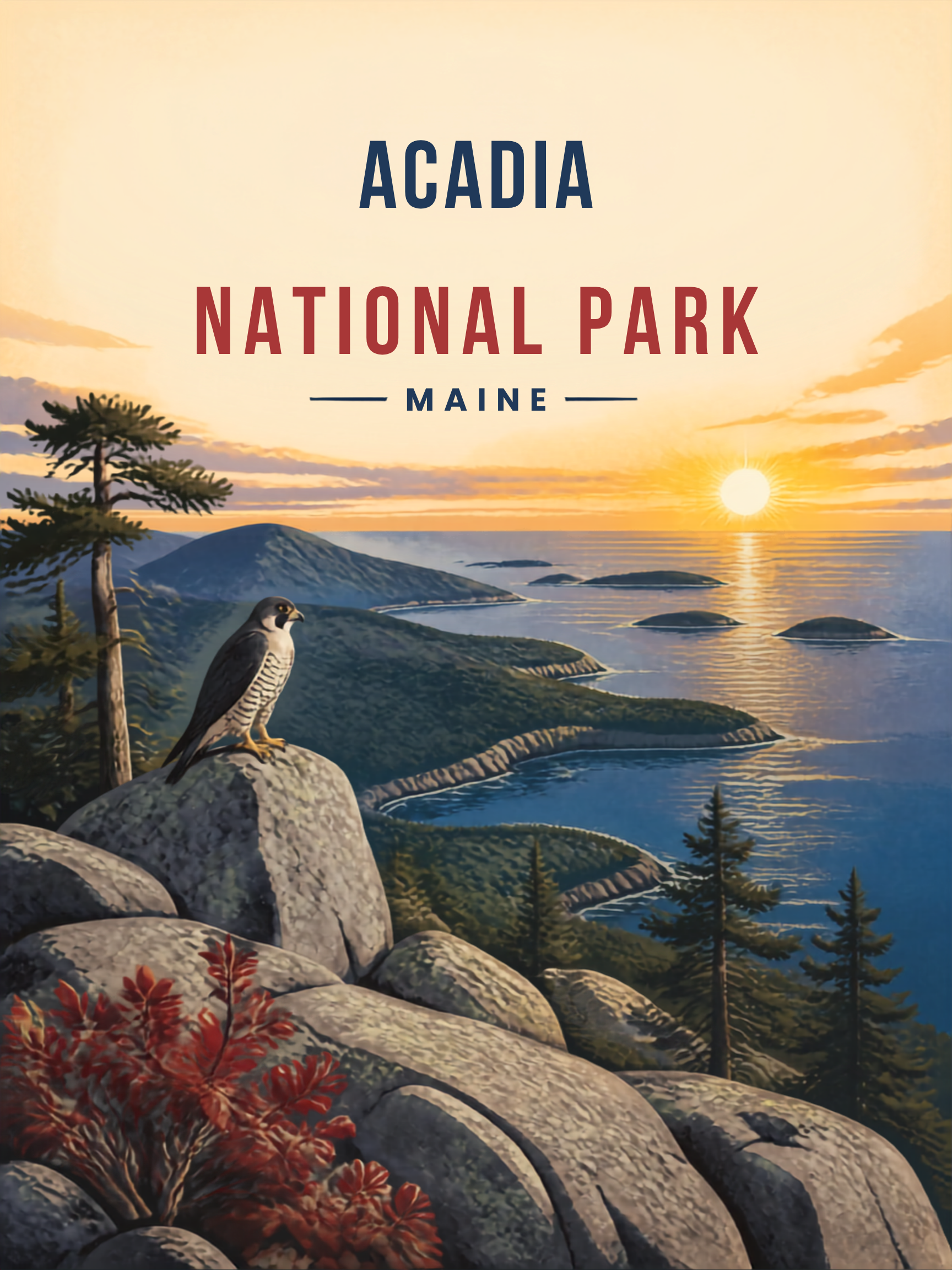
Welcome to Acadia National Park, a breathtaking coastal gem located in Maine. Known for its rugged shorelines, granite peaks, pristine lakes, historic carriage roads, and dense forests, this park offers stunning scenery, diverse wildlife, and some of the finest outdoor recreation opportunities in New England. Acadia is the crown jewel of the North Atlantic coast and the only national park in the region.

Did You Know?
- Acadia was the first national park established east of the Mississippi River.
- During portions of the year, 1,530-foot Cadillac Mountain is one of the first places in the United States to see the sunrise.
- Acadia is a birdwatcher’s paradise, with more than 330 bird species recorded within the park.
- The park protects three distinct regions: Mount Desert Island, the Schoodic Peninsula, and Isle au Haut.

My Personal Experience
Acadia National Park is a real gem in the Northeast. The main season runs from late spring through fall. We visited the park on Memorial Day weekend in 2018. Some facilities were still closed, and we were among the first visitors of the season.
It was our first trip to any of the New England states, so we were excited to explore this part of the country. Acadia did not disappoint. I am not an early bird, but the scenic view from the summit of Cadillac Mountain is remarkable even without a sunrise. We stayed in Bar Harbor and explored the park via the Park Loop Road. Driving this road takes you to beaches, Jordan Pond, Eagle Lake, the carriage roads, and, of course, Cadillac Mountain.
The hiking was exceptional. Late May was still a bit too early for swimming, but we had the opportunity to see some of the region’s famous lighthouses. Next time, I would like to return during the summer months so that we can also enjoy the park from the water and explore the other two regions of the park. There are many excellent places to watch the sunrise in Acadia besides Cadillac Mountain, but I am fairly certain I will miss it again.

Basic Facts
Address:
Acadia National Park
PO Box 177
Bar Harbor, ME 04609
Operation Hours and Seasons:
The park is open year-round, with visitor centers and facilities operating seasonally.
Visitors:
Over 3 million per year (2022)
Entrance Fees:
- Private Vehicle: $30.00 (admits one private, non-commercial vehicle and all its occupants for seven days)
- Per Person: $15.00 (when entering on foot or bicycle, valid for seven days)
The park implemented a timed entry system for Cadillac Summit Road between end of May through end of October. Obtain tickets and your timed entry slot at recreation.gov.
Website:
nps.gov/acad
Map:
nps.gov/acad/planyourvisit/maps.htm
Additional Information:
For additional local information, visit acadiamagic.com. The free(!) island explorer shuttle exploreacadia.com is a great way to explore the park without a vehicle. Service begins on a limited basis in spring and operates fully from late June through mid-October.

Best Time to Visit
- Summer (June–August): Peak season offers warm temperatures and ocean water temperatures that, while still cool, are at their most comfortable. Visitor services are fully operational including boat tours, restaurants; ideal conditions for hiking and paddling. Expect crowds, especially around Cadillac Mountain and Park Loop Road.
- Fall (September–October): One of the most beautiful times to visit. Cooler temperatures, spectacular fall foliage, and smaller crowds create excellent conditions for hiking and photography.
- Spring (May–June): A wonderful shoulder season with blooming wildflowers and lighter visitation. Some facilities and roads may still operate on limited schedules.
- Winter (November–April): A completely different experience. Most visitor services close, portions of Park Loop Road are inaccessible to vehicles, and snow sports become popular. The park is quiet, beautiful, and far less crowded.

Recommended Time
1 Day: You will need to be highly organized. Drive the Park Loop Road, visit Cadillac Mountain, stop at Jordan Pond for tea and a popover, explore several overlooks, and fit in a short hike or carriage ride.
2-3 Days: The ideal amount of time for most visitors. Spend one day exploring the highlights along Park Loop Road and use additional days for hiking, bicycling the carriage roads, kayaking, or visiting Schoodic Peninsula and Isle au Haut.

Getting There
The closest major city is Bangor, Maine. From Bangor, take I-95 South to ME-3 East to reach Bar Harbor and the park entrance. Many visitors also arrive via regional airports in Bar Harbor or by cruise ship during the summer and fall seasons.

Weather
Acadia National Park experiences a maritime climate heavily influenced by the Atlantic Ocean.
- Spring (March to May): 30s to 60s°F (0–15°C). Snow and ice gradually disappear, wildflowers begin to bloom, and many services reopen for the season.
- Summer (June to August): 60s to 70s°F (15–21°C). Comfortable temperatures, ocean breezes, and occasional fog create ideal conditions for outdoor activities.
- Fall (September to November): 30s to 60s°F (0–15°C). Crisp air and vibrant foliage make fall one of the park’s most popular seasons.
- Winter (December to February): 20s to 40s°F (-6 to 4°C). Snow, ice, and strong coastal winds are common.
Weather can change rapidly throughout the year. Layers and rain gear are recommended regardless of season.

Hiking
Acadia offers more than 140 miles of hiking trails ranging from easy coastal walks to challenging climbs involving iron rungs and ladders.
Easy:
- Ocean Path – 4.4 miles round trip: One of the park’s most popular walks, passing Thunder Hole, Otter Cliff, and dramatic sections of coastline.
- Summit Path – 0.4 miles round trip: A short paved trail around the summit of Cadillac Mountain with spectacular panoramic views.
Moderate:
- Gorham Mountain Trail – 1.8 miles round trip: Outstanding coastal views with connections to several additional trails, connects to Beehive, The Bowl, and Cadillac Cliffs.
- Jordan Pond – 3.2 miles loop: A beautiful walk around one of the park’s most photographed lakes.
- The Bubbles Trail – 2.2 miles round trip: A popular hike leading to North and South Bubble with excellent views over Jordan Pond and one of Acadia’s most famous photographic locations, Bubble Rock.
Strenuous:
- Precipice Trail – 2.5 miles round trip: One of the most challenging hikes in the park, utilizing ladders and iron rungs to climb a sheer cliff face.
- Beehive Trail – 1.6 miles round trip: A steep climb featuring iron rungs and exposed ledges with exceptional views
Biking
Acadia’s 45-mile carriage road system is one of the finest cycling networks in the National Park System. Built by John D. Rockefeller Jr., these crushed-stone roads feature elegant stone bridges, scenic lakes, forest landscapes, and minimal vehicle traffic. Bicycle rentals are available in nearby communities.

Scenic Drives
Park Loop Road: This 27-mile scenic drive is the heart of the Acadia experience. The route connects mountains, lakes, forests, beaches, and coastline while providing access to many of the park’s most popular attractions, including Cadillac Mountain, Jordan Pond, Sand Beach, Thunder Hole, and Otter Cliff. Many visitors spend an entire day exploring the overlooks and trailheads along this route.

Best Viewpoints
- Cadillac Mountain: The highest point on the Atlantic coast of the United States offers spectacular 360-degree views of the Atlantic Ocean, nearby islands, and Mount Desert Island.
- Jordan Pond: One of Acadia’s iconic scenes, featuring reflections of the North and South Bubble mountains.
- Bass Harbor Head Lighthouse: Perhaps the most photographed lighthouse in Maine, perched dramatically atop rugged coastal cliffs.
- Otter Cliff: One of the tallest headlands on the Atlantic coast, offering dramatic ocean views and excellent photography opportunities.

Wildlife Viewing
Acadia protects a remarkable variety of wildlife. Visitors may encounter white-tailed deer, red foxes, beavers, porcupines, harbor seals, and occasionally black bears. Birdwatchers are especially drawn to the park during spring and fall migrations when hundreds of species pass through the North Atlantic Flyway. Peregrine falcons, bald eagles, ospreys, and numerous seabirds are regularly observed throughout the park.

Photography
Acadia is one of the premier photography destinations in the eastern United States:
- Sunrise Photography: Cadillac Mountain is the most famous sunrise location in the park. Arrive well before dawn, especially during peak season.
- Coastal Landscapes: Thunder Hole, Otter Cliff, and the rugged shoreline provide endless opportunities for dramatic seascape photography.
- Jordan Pond Reflections: Calm mornings often produce mirror-like reflections of the Bubble Mountains.
- Lighthouse Photography: Bass Harbor Head Lighthouse is one of New England’s most iconic photographic subjects and should not be missed.
- Fall Colors: Fall transforms the park into a showcase of vibrant reds, oranges, and yellows, creating some of the best foliage photography opportunities in New England.
- Fog and Atmosphere: Morning fog frequently rolls in from the Atlantic, creating dramatic and often ethereal coastal scenes.
- Night Photography: Acadia became the first International Dark Sky Park in the northeastern United States. Although coastal fog occasionally limits visibility, clear nights provide excellent opportunities for Milky Way photography above the Atlantic coastline.

Horseback Riding
Explore the park’s carriage roads on horseback. You could either join a carriage ride with Wildwood Stables (acadiabycarriage.com) or on your own horse. Horses are permitted with some restrictions. Check the park’s website for details: nps.gov/acad/planyourvisit/horsebackriding.htm. Brown Mountain parking lot and Wildwood Stable provide adequate space to park your trailer. Reservations are recommended for guided rides during peak season.

General Aviation
Pilots arriving in their own plane have two major options near Bar Harbor, ME and Bangor, ME.
Hancock Country / Bar Harbor Airport (KBHB) in Trenton, ME:
- 10 miles to the north of the park
- Longest runway 5,200 feet
- 100LL available
- Rental cars available and convenient access to the free ‘island explorer’ shuttle during summer months
Bangor International Airport (KBGR) in Bangor, ME:
- 48 miles to the northwest of the park
- Longest runway 11,440 feet
- 100 LL available
- Reliable rental car options
Flying along the Maine coast presents several challenges like coastal fog, rapidly changing weather, strong ocean winds, and reduced visibility near the shoreline. Pilots should monitor marine forecasts carefully. Fortunately, terrain is generally forgiving compared to many western parks, making Acadia one of the more accessible coastal national parks for general aviation pilots.

Nearby Attractions
- Bar Harbor: The primary gateway community to Acadia. Visitors enjoy fresh seafood, local boutiques, historic inns, whale-watching tours, and a vibrant waterfront atmosphere.
- Katahdin Woods and Waters National Monument: A vast wilderness area offering remote hiking, paddling, dark skies, and outstanding views of Maine’s highest mountain and northern terminus of the Appalachian Trail, Mount Katahdin.
- Saint Croix Island International Historic Site: Preserves the location of one of the earliest French settlements in North America and tells the story of early European exploration.
- Schoodic Peninsula: Part of Acadia National Park itself but often overlooked by visitors. It offers a quieter experience with dramatic rocky coastlines and significantly fewer crowds than Mount Desert Island.

Important Tips
- Reserve Cadillac Summit Road Early: Timed-entry reservations can sell out quickly during peak season.
- Use the Island Explorer: The free shuttle system reduces parking challenges and allows visitors to explore much of the park without a vehicle.
- Expect Crowds in Summer: Popular destinations such as Cadillac Mountain, Jordan Pond, and Sand Beach become very busy. Many popular trailheads and attractions reach capacity by mid-morning during summer and fall. Early starts are highly recommended.
- Prepare for Weather Changes: Coastal weather can change rapidly. Carry rain gear and layers.
- Arrive Early for Sunrise: If sunrise photography is important to you, arrive well before dawn.
- Watch the Tides: Coastal exploration, photography, and boating activities are heavily influenced by tides. Check local tide charts before visiting shoreline locations.
- Book Lodging Early: Hotels, campgrounds, and vacation rentals in Bar Harbor frequently sell out months in advance during peak season.
- Respect Wildlife: Observe wildlife from a distance and never feed animals.
- Explore Beyond Mount Desert Island: Many visitors never visit Schoodic Peninsula or Isle au Haut, yet both offer outstanding scenery and fewer crowds.
Nestled in the northeastern corner of the United States, Acadia National Park offers a little bit of everything. The park combines the tallest mountain on the Atlantic coast, pristine lakes, forests, wetlands, rugged shorelines, historic carriage roads, and charming coastal communities into one unforgettable destination. Whether you come for the hiking, photography, wildlife, ocean views, or simply to experience New England at its finest, Acadia National Park is a fitting centerpiece for the North Atlantic Region


