Southeast Region
DRY TORTUGAS NATIONAL PARK
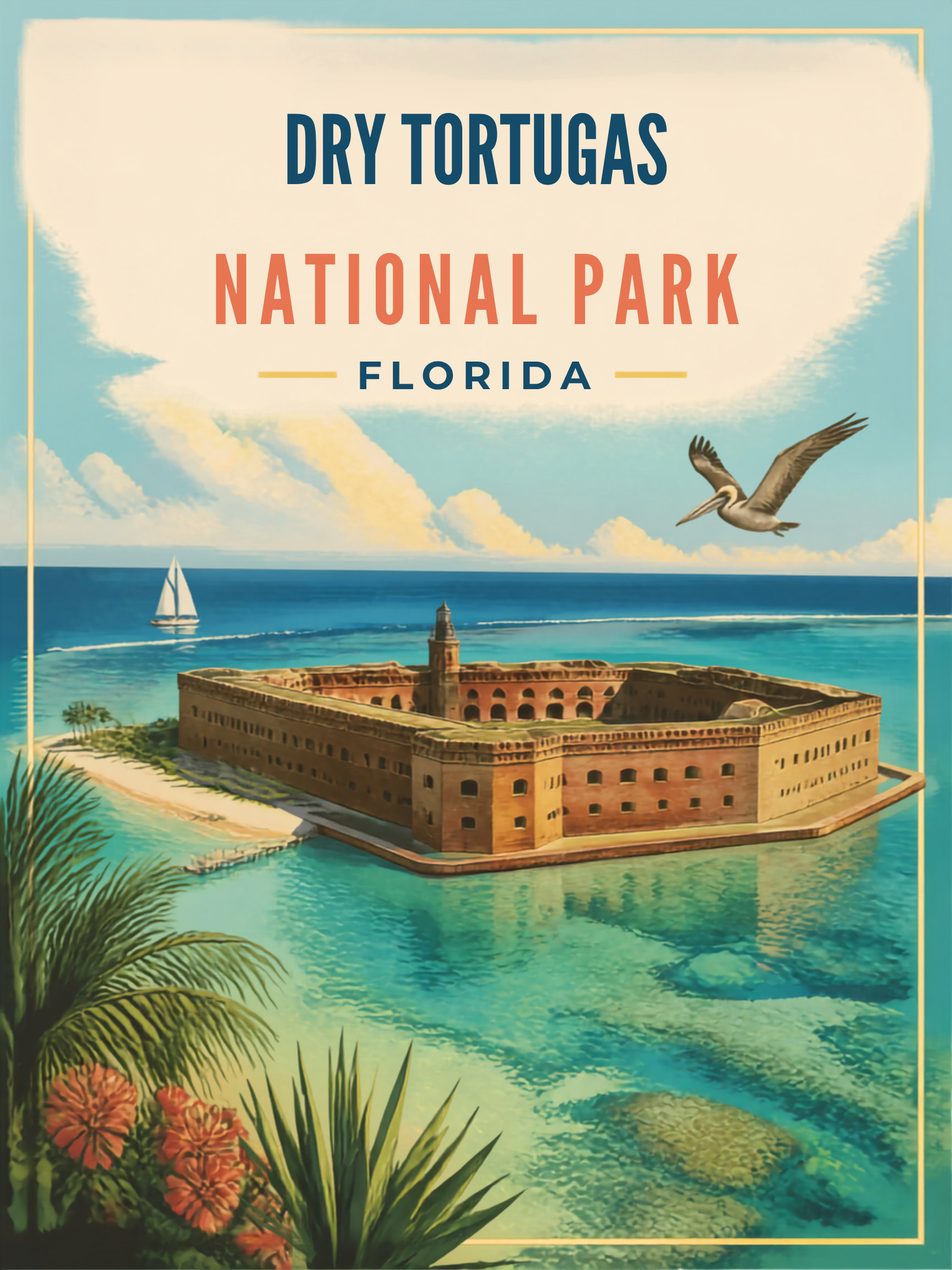
Welcome to Dry Tortugas National Park, a remote tropical marine park located about 70 miles west of Key West in the Gulf of Mexico. Famous for its turquoise waters, coral reefs, birdlife, historic Fort Jefferson, and incredible isolation, the park offers one of the most unique and remote national park experiences in the continental United States.

Did You Know?
- “Tortugas” means “turtles” in Spanish, named for the many sea turtles encountered by early explorers
- The word “Dry” was later added to warn sailors that the islands contained no fresh water
- The shallow reefs surrounding the islands wrecked hundreds of ships over the centuries
- Fort Jefferson contains more than 16 million bricks, making it one of the largest masonry structures in the Americas.

My Personal Experience
Dry Tortugas National Park is another national park without road access. You either arrive by boat or by seaplane. I stayed several days in Key West during a South Florida trip and used that as my base to visit the park. Just getting to Key West is already part of the adventure. Driving the Overseas Highway from Key Largo to Key West is one of the most scenic road trips in the United States. But even once you arrive in Key West, the park is still 70 miles offshore with nothing but open water in between. The seaplane reaches the islands in roughly 40 minutes and offers spectacular aerial views of reefs, shipwrecks, and turquoise shallows, but it is considerably more expensive than the ferry. I decided on the boat instead.
Check-in at the ferry terminal started around 7 a.m., and the crossing itself took a little more than two hours each way. Once you arrive, you can join a guided fort tour, snorkel, swim, explore the island or relax on the beaches. Since snorkeling has never really been my thing, I spent most of the day wandering around the fort, enjoying the tropical scenery, taking pictures, eating lunch, and simply relaxing. Honestly, it became one of the most laid-back and peaceful national park visits I have ever had. There was something special about spending a warm October day on a tiny island in the Gulf of Mexico, surrounded by turquoise water, and watching birds circle above the fort. Sometimes that is all you really need to be happy.

Basic Facts
Address:
Dry Tortugas National Park
40001 State Road 9336
Homestead, FL 33034 (Administrative Office)
Access is only possible via ferry or seaplane from Key West.
Operation Hours and Seasons:
The park is open year-round, 24 hours a day.
Visitors:
Over 80,000 per year (2022)
Entrance Fees:
Park Entrance Fee: $15.00 (per person, valid for seven days)
Website:
nps.gov/drto
Map:
nps.gov/drto/planyourvisit/maps.htm
Additional Information:
For additional local information, visit drytortugas.com.

Best Time to Visit
- May and October are the ‘sweet spot’ with warm temperatures, calmer seas, manageable humidity and fewer crowds.
- The Dry season from November through April provides cooler temperatures, lower humidity, and more comfortable sightseeing conditions.
- Summer months offer the calmest, warmest water temperatures, and best underwater visibility. However, summer also brings intense heat, strong UV exposure, and tropical storms and hurricane risks

Recommended Time
1 Day: Most visitors experience Dry Tortugas as a full-day excursion from Key West. Ferry crossings take approximately 2–2.5 hours each way, while seaplanes reduce travel time to roughly 40 minutes.
2-3 Days: Ideal for camping, snorkeling, kayaking, fishing, diving, and experiencing the islands after the last ferry departs. Having Fort Jefferson and the surrounding beaches almost to yourself is a completely different experience.

Getting There
The park is accessible only by ferry, private boat or seaplane.
The closest major gateway is Key West, Florida. Most visitors use Yankee Freedom III ferry service or Key West Seaplane Adventures. Advance reservations are strongly recommended.

Weather
Dry Tortugas National Park experiences a tropical marine climate.
- Spring (March to May): 70s to 80s°F (21-27°C). Warm temperatures with generally pleasant boating conditions.
- Summer (June to August): 80s to 90s°F (27-32°C). Hot, humid conditions with excellent water temperatures and frequent thunderstorms.
- Fall (September to November): 70s to 80s°F (21-27°C). Warm conditions with fewer visitors but elevated tropical storm risks.
- Winter (December to February): 60s to 80s°F (15-27°C). Milder temperatures and drier weather make winter the busiest season.
Conditions on the open Gulf of Mexico can change rapidly. Seas may become rough unexpectedly. Winter generally offers the most reliable sightseeing weather, while summer often provides the calmest water and best snorkeling conditions.

Hiking
99% of Dry Tortugas is water and the park is therefore not a traditional hiking destination. The park experience revolves around history, boating, snorkeling, marine life, and island exploration.
Easy:
- Fort Jefferson Grounds: Walking the massive brick fortress and surrounding seawalls is the park’s primary land-based activity. Exploring the fort’s casemates, stairways, parade grounds, and elevated viewpoints can easily occupy several hours.
- Garden Key Paths: Short sandy paths connect beaches, camping areas, viewpoints, and the historic harbor while offering frequent opportunities to observe seabirds.
Exploring Fort Jefferson
Fort Jefferson is one of the largest coastal forts ever built in the United States. Highlights of the fort are its massive brick architecture, historic cannons, spiral staircases, moat walls, and panoramic rooftop views. Ranger-guided tours provide fascinating insight into Civil War history, coastal defense systems and prison history, including Dr. Samuel Mudd. Construction began in 1846 and, despite its immense size, the fort was never fully completed.
Snorkeling and Scuba Diving
Dry Tortugas offers some of the clearest water in the National Park System perfect for reef snorkeling, shipwreck diving, and coral reef exploration. Snorkelers will be fascinated by tropical fish, rays, sea turtles, nurse sharks and coral formations.
The surrounding reefs and wrecks are world-class snorkeling and diving destinations.
Boating, Kayaking, and Sailing
Private boaters frequently visit the park to enjoy sailing, sea kayaking, fishing, and multi-day boat trips. Rentals and guided tours are available. Open-water navigation experience is highly recommended due to the park’s remote location.
Fishing
Enjoy saltwater fishing in designated areas. Proper permits and adherence to fishing regulations are required.
Camping
Camping on Garden Key is one of the park’s most unique experiences. Permits are required and facilities are extremely limited. There is no fresh water, no fuel, no food service, minimal shade and campers must bring all supplies with them.
However, staying overnight allows visitors to experience incredible stargazing, quiet beaches after day visitors leave, and sunrise and sunset solitude.

Scenic Drives
There are no roads in Dry Tortugas National Park. The park is entirely experience on foot, on the water or underwater.

Best Viewpoints
- Fort Jefferson Rooftop: The best viewpoint in the park, offering panoramic views of Garden Key, Bush Key, surrounding reefs, and seemingly endless turquoise water in every direction.
- Moat Wall: Excellent elevated perspective of the turquoise water surrounding the fort.
- Bush Key: Accessible seasonally depending on bird nesting closures. When open, the walk to Bush Key provides beautiful shoreline scenery and unique perspectives of Fort Jefferson from a distance.

Wildlife Viewing
Dry Tortugas National Park protects an important marine and bird sanctuary far from the mainland. Dolphins are frequently seen during ferry crossings, while sea turtles, rays, reef fish, and occasional nurse sharks inhabit the surrounding waters. The islands also support significant seabird nesting colonies, including magnificent frigatebirds and sooty terns. Spring migration can be particularly rewarding, as exhausted songbirds often stop on the islands after crossing the Gulf of Mexico.

Photography
Dry Tortugas is spectacular for tropical and marine photography:
- Golden Hour: Soft sunlight dramatically enhances the turquoise water and brick fort walls.
- Night Photography: The remote location and minimal light pollution create exceptional stargazing opportunities.
- Wildlife Photography: Birdlife and marine species provide excellent subjects throughout the park.
- Architectural Photography: Fort Jefferson itself is incredibly photogenic from nearly every angle.
- Aerial Photography: Visitors arriving by seaplane enjoy extraordinary opportunities to photograph coral reefs, sandbars, shipwrecks, and the dramatic geometry of Fort Jefferson from above.

Horseback Riding
Horseback Riding is not available in the park.

General Aviation
Fly into Key West International Airport (KEYW). From there, take a ferry or seaplane to Dry Tortugas National Park.
Key West International Airport (KEYW) in Key West, FL:
- 5,076 feet asphalt runway
- 100LL available
Seaplane tours from Key West provide one of the most spectacular ways to reach the park. Visitors can dramatically reduce their travel time and enjoy aerial views of reefs and island and excellent sightseeing opportunities.
Overwater flying requires careful planning. Tropical weather changes rapidly and afternoon thunderstorms are common. Strong winds and turbulence may occur near weather systems.

Nearby Attractions
- Truman Little White House: Historic presidential retreat where Harry S. Truman spent working vacations
- Duval Street: Located in the historic district of Key West, famous for galleries, bars, and the Ernest Hemingway Home & Museum
- Key West Historic Seaport: waterfront seafood restaurants, boutique shops, tours to Fort Jefferson depart here
- Florida Keys: Scenic island chain connected by the Overseas Highway

Important Tips
- Reserve Transportation Early: Ferry and seaplane trips frequently sell out.
- Bring Sun Protection: Shade is extremely limited outside portions of Fort Jefferson. A wide-brimmed hat is often more valuable than visitors expect.
- Pack Water & Snacks: Services on the islands are minimal.
- Motion Sickness: Ferry crossings can become rough depending on sea conditions.
- Snorkeling Gear: Bringing your own equipment can improve flexibility and comfort.
- Weather Awareness: Conditions may change rapidly on the open water.
Dry Tortugas National Park feels more like a tropical expedition than a traditional national park visit and that is precisely what makes it so memorable.
The combination of remote islands, turquoise water, coral reefs, seabirds, and the massive brick walls of Fort Jefferson creates one of the most unique destinations in the National Park System. Whether you arrive by ferry, seaplane, or private boat, the journey itself becomes part of the experience. Dry Tortugas rewards visitors with solitude, history, marine beauty, and the unforgettable feeling of standing on a tiny island surrounded by endless blue water.


