Western Region
KINGS CANYON NATIONAL PARK
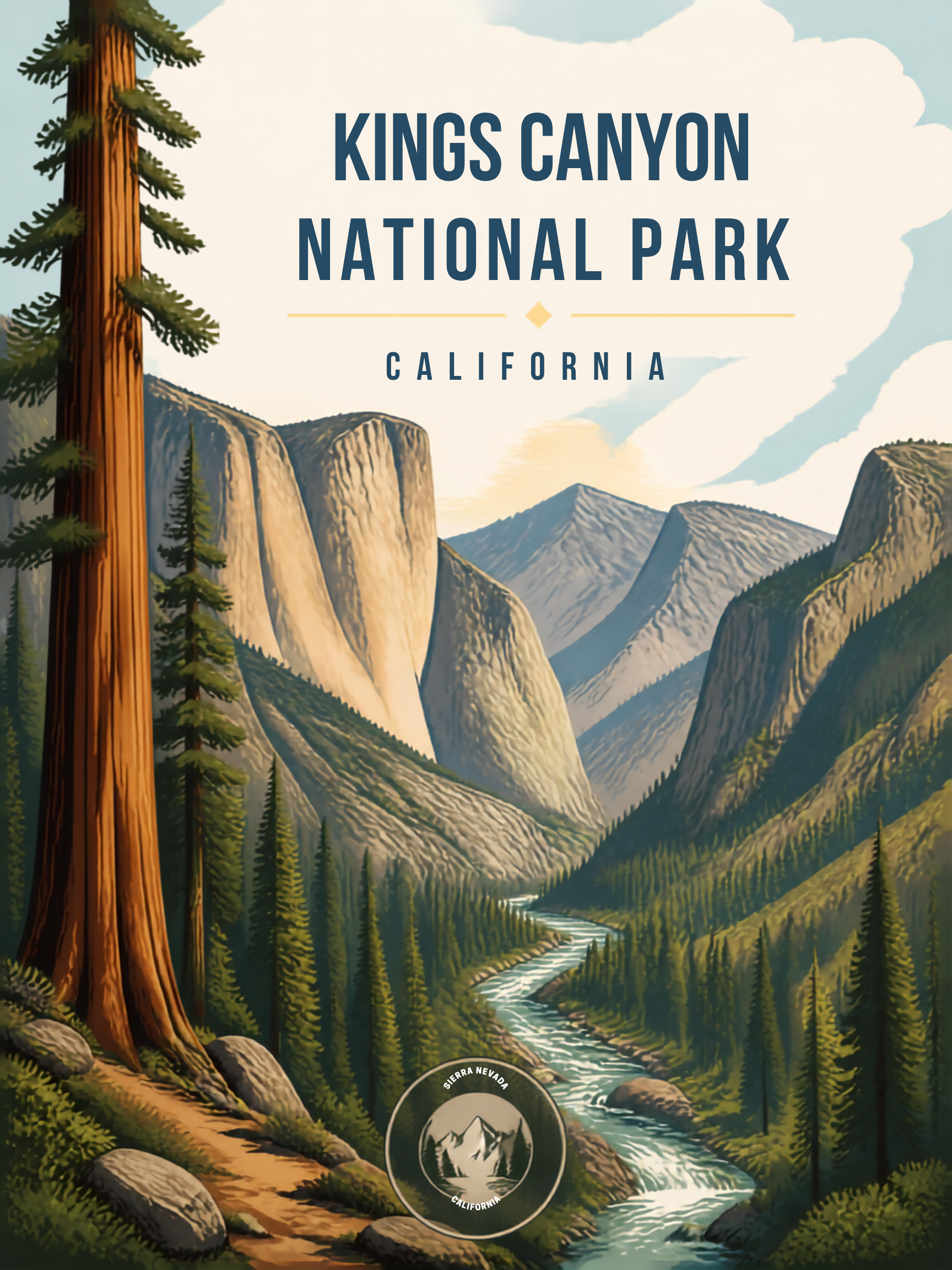
Welcome to Kings Canyon National Park, a dramatic landscape of deep glacial valleys, towering granite walls, roaring rivers, and high-elevation wilderness in California’s southern Sierra Nevada. Often visited together with neighboring Sequoia National Park, Kings Canyon protects one of the deepest canyons in North America and offers a quieter, more contemplative mountain experience than many of California’s better-known parks.

Did You Know?
- Kings Canyon contains one of the deepest canyons in North America, with relief exceeding that of the Grand Canyon in some areas.
- The park protects part of the largest contiguous wilderness area in the lower 48 states when combined with adjacent wilderness areas.
- General Grant Tree, located in Grant Grove, is considered the Nation’s Christmas Tree.
- Kings Canyon and Sequoia National Parks are jointly managed by the National Park Service.
- More than 800 miles of trails provide access to some of the most remote wilderness in California.

My Personal Experience
Kings Canyon National Park sits right next to Sequoia National Park, and most visitors experience the two together. Kings Canyon is often treated as Sequoia’s smaller sibling, and at times it feels like the overlooked stepchild. It doesn’t have its own standalone National Park Service website or a dedicated Unigrid brochure, which does the park a bit of an injustice.
It’s one of the parks I’ve only visited once. Driving through the canyon was deeply relaxing, and the scenery was absolutely stunning, I constantly wanted to pull over and take photos. Visiting General Grant Grove and the General Grant Tree is a must. The General Grant Tree is the second-largest tree in the world by volume, surpassed only by the General Sherman Tree in nearby Sequoia National Park.
The upper parts of Kings Canyon reminded me a bit of Yosemite, with granite walls, forested slopes, and open meadows. Unfortunately, I didn’t plan enough time to explore the park more deeply. It was one of those visits that leaves you knowing you’ll have to come back.

Basic Facts
Address:
Kings Canyon National Park
83918 CA-180
Grant Grove Village, CA 93633
Operation Hours and Seasons:
The park is open 24 hours a day, year-round. Some roads are seasonally affected by snow and weather.
Visitors:
Over 600,000 per year (2022)
Entrance Fees:
- Private Vehicle: $35.00 (admits one private, non-commercial vehicle and all its occupants)
- Per Person: $20.00
Website:
nps.gov/seki
Map:
nps.gov/seki/planyourvisit/maps.htm
Additional Information:
For additional local information, visit visitsequoia.com.

Best Time to Visit
Snowmelt fills the Kings River and waterfalls reach peak flow in spring. Lower elevations become green and colorful while higher elevations remain snow-covered. Summer is the best season for accessing Cedar Grove, high-country trails, and most wilderness destinations. Warm temperatures and long days make hiking particularly enjoyable.
Fall offers comfortable temperatures, fewer visitors, and excellent hiking conditions make fall one of the best times to visit. Snow transforms Grant Grove into a winter landscape. Access to Cedar Grove and many higher-elevation areas is limited or closed.

Recommended Time
1 Day: Visit General Grant Grove, drive Kings Canyon Scenic Byway, stop at major viewpoints, and walk Zumwalt Meadow.
2-3 Days: Ideal for most visitors. Explore Cedar Grove, complete several hikes, and spend time along the Kings River.

Getting There
The closest major city is Fresno, California. From Fresno, take CA-180 East directly to the Grant Grove entrance. The drive climbs steadily from the Central Valley into the Sierra Nevada and offers increasingly scenic views.

Weather
Kings Canyon’s weather varies significantly with elevation:
- Spring (Mar–May): 40s–60s°F (4–20°C). Snow may linger at higher elevations; wildflowers bloom lower in the canyon.
- Summer (Jun–Aug): 60s–90s°F (15–32°C). Ideal hiking weather, though temperatures can be warm at lower elevations.
- Fall (Sep–Nov): 40s–70s°F (4–21°C). Crisp air, golden meadows, and fewer visitors.
- Winter (Dec–Feb): 30s–50s°F (0–10°C). Snow is common; access to some areas may be limited.

Hiking
Kings Canyon offers trails ranging from short grove walks to legendary backcountry route:
Easy:
- General Grant Tree Trail – 0.5-mile loop: A short, paved loop through General Grant Grove that leads directly to the General Grant Tree, one of the world’s largest living organisms. Ideal for all ages and a perfect introduction to giant sequoias.
- Zumwalt Meadow – 1.5-mile loop: A flat loop along the Kings River offering open meadow views framed by granite cliffs. Excellent for wildlife spotting and an easy taste of canyon scenery.
Moderate:
- Mist Falls Trail – 8 miles round trip: A scenic hike following the Kings River to one of the park’s largest and most powerful waterfalls. The trail offers constant water views and feels immersive without requiring technical skills.
Strenuous:
- Rae Lakes Loop – 41.4 miles loop: One of the Sierra Nevada’s most iconic backpacking routes, featuring alpine lakes, high passes, and sweeping granite landscapes. This multi-day trek requires a wilderness permit and solid backcountry experience.

Scenic Drives
- Kings Canyon Scenic Byway: One of California’s most underrated scenic drives. The route descends from Grant Grove into the heart of Kings Canyon, following the Kings River through increasingly dramatic mountain scenery. Numerous overlooks, picnic areas, waterfalls, and trailheads encourage visitors to stop frequently rather than simply drive through.

Best Viewpoints
- Panoramic Point: One of the finest overlooks in the park. On clear days visitors can see deep into Kings Canyon and across large portions of the Sierra Nevada.
- Kings Canyon Scenic Byway Overlooks: Numerous pullouts along Highway 180 provide dramatic views of granite walls, rivers, and forested slopes.
- Zumwalt Meadow: Offers classic views of the Kings River framed by granite cliffs and mountain scenery.
- Roaring River Falls: An easily accessible waterfall viewpoint that demonstrates the power of the Kings River.
- Cedar Grove: Provides some of the park’s most dramatic canyon scenery and serves as a gateway to the wilderness beyond.

Wildlife Viewing
Kings Canyon supports a wide variety of wildlife typical of the Sierra Nevada. Black bears are present throughout the park and are frequently observed near developed areas, particularly where visitors fail to store food properly. Mule deer are common in meadows and forest openings, while bobcats, coyotes, marmots, and numerous smaller mammals inhabit the park’s diverse ecosystems. Birdwatchers may encounter Steller’s jays, woodpeckers, hawks, owls, and many other species. Early morning and evening generally provide the best wildlife-viewing opportunities.

Photography
Kings Canyon photography is defined by depth and scale.
- Kings River Canyon: The Kings River is the defining feature of the park. The combination of whitewater, polished granite, and steep canyon walls creates outstanding photographic opportunities throughout Cedar Grove.
- Deep Canyon Landscapes: Kings Canyon’s immense scale often surprises first-time visitors. Many viewpoints reveal dramatic vertical relief and showcase why the canyon is considered one of the deepest in North America.
- General Grant Grove: While giant sequoias are more strongly associated with neighboring Sequoia National Park, General Grant Grove contains some of the park’s most famous photographic subjects, including the General Grant Tree.
- High Sierra Wilderness: Remote alpine lakes, granite peaks, and wilderness scenery dominate the park’s backcountry and provide exceptional opportunities for landscape photography.
- Rivers and Waterfalls: Roaring River Falls, Grizzly Falls, Mist Falls, and countless smaller cascades offer excellent photographic subjects, particularly during spring runoff.

Horseback Riding
Horseback riding remains one of the best ways to experience Kings Canyon’s vast backcountry. Check the park’s website for details: nps.gov/seki/planyourvisit/horsebackriding.htm for information. Visitors bringing their own stock may access many designated trails throughout the park. Day-use trips are relatively straightforward, while overnight trips require wilderness permits and compliance with stock-use regulations. Because many routes enter remote wilderness areas, riders should be comfortable with backcountry travel and changing mountain weather.
If you left your equine friend at home and are still interested in day ride, there are two stables that operate under a concessions permit. Please call them in advance for additional information. Both operators, Grant Grove Stables and Cedar Grove Pack Station typically offer tours June through mid-October.

General Aviation
There are two options for general aviation pilots:
Visalia Municipal Airport (KVIS) in Visalia, CA:
- Often the most practical airport for general aviation pilots visiting Kings Canyon and Sequoia.
- Approximately 60 miles from Grant Grove
- Longest runway: 6,006 feet
- 100LL available
- Rental cars available
- Multiple lodging options nearby
Fresno Yosemite International Airport (KFAT) in Fresno, CA:
- The most convenient full-service option.
- Approximately 80 miles from Grant Grove
- Longest runway: 9,539 feet
- 100LL available
- Multiple rental car providers
- Excellent lodging options
Rent a car or arrange ground transportation to explore the park. Options closer to the park like Reedley Municipal (O32) might not offer reliable fuel and rental car options.
Flying into the Sierra Nevada requires attention to density altitude, mountain weather, and terrain. Summer temperatures can significantly affect aircraft performance, particularly at smaller airports. Afternoon turbulence is common, and winter storms can rapidly affect mountain flying conditions.

Nearby Attractions
- Sequoia National Park: Kings Canyon’s sister park and home to the General Sherman Tree.
- Fresno: The primary gateway city for visitors arriving from California’s Central Valley.
- Mount Whitney: The highest peak in the contiguous United States.
- John Muir Wilderness: Provides access to some of the finest backcountry landscapes in the Sierra Nevada.

Important Tips
- Do Not Rush Through the Park: Many visitors stop only at General Grant Grove. The canyon itself is the true highlight of Kings Canyon National Park.
- Allow Time for the Scenic Byway: The drive into Cedar Grove takes longer than many visitors expect because of the numerous viewpoints and stops.
- Prepare for Elevation Changes: Temperatures can vary significantly between the canyon floor and higher elevations.
- Store Food Properly: Black bears are active throughout the park and food-storage regulations are strictly enforced.
- Carry Plenty of Water: Many hikes involve significant elevation changes and limited shade.
- Explore Beyond Grant Grove: The deeper you travel into the park, the fewer visitors you are likely to encounter.
Kings Canyon National Park may not receive the same attention as Yosemite or even neighboring Sequoia, but that is part of its appeal. The park rewards visitors with magnificent canyon scenery, powerful rivers, giant sequoias, and access to some of the finest wilderness in the Sierra Nevada.
Whether you are standing beneath the General Grant Tree, hiking toward Mist Falls, watching the Kings River rush through the canyon, or simply enjoying the quiet of a mountain meadow, Kings Canyon offers an experience that feels authentic and refreshingly uncrowded. For many visitors, it becomes one of California’s most pleasant surprises and one that deserves far more than a quick stop on the way to somewhere else.


