Alaska and Pacific Northwest Region
GLACIER BAY NATIONAL PARK AND PRESERVE
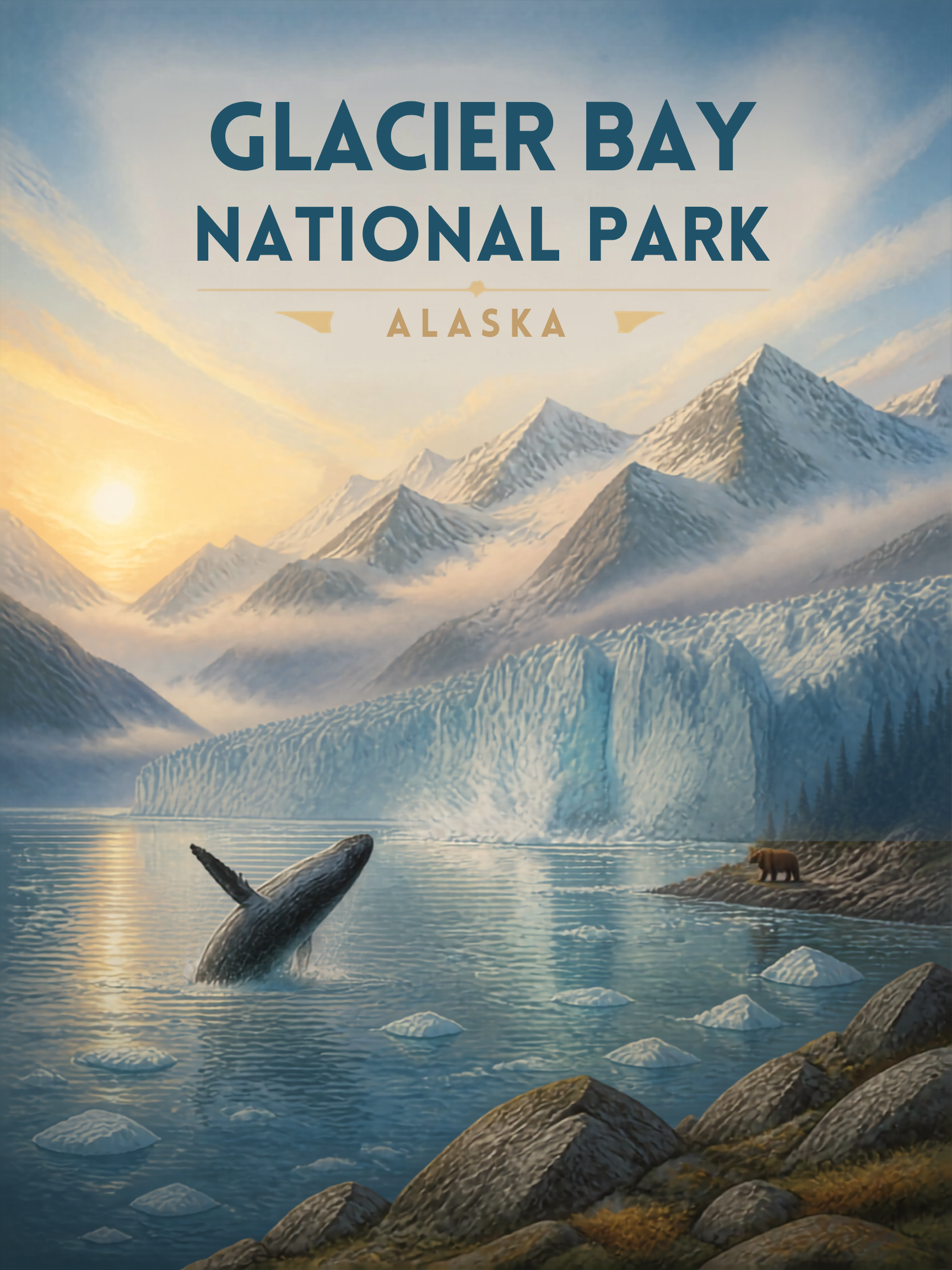
Welcome to Glacier Bay National Park and Preserve, a stunning maritime wilderness located in southeast Alaska. This park offers majestic tidewater glaciers, abundant marine life, and unforgettable exploration by boat, kayak, and air.

Did You Know?
- Just 250 years ago, the entire bay was covered by a massive glacier.
- Glacier Bay has experienced one of the fastest and most extensively documented glacial retreats in the world. Since the late 1700s, glaciers that once filled the entire bay have retreated more than 65 miles.
- Tidal fluctuations can reach up to 20+ feet between high and low tide.
- Glacial ice often appears blue because dense ice absorbs all colors of light except blue

My Personal Experience
Glacier Bay is one of the Alaska parks my wife and I visited in summer 2020. It’s remote. There are no roads so you have to fly into the small village of Gustavus. The park lodge was closed during our visit, so we stayed in a family-owned inn in a cabin. I highly recommend it: great food and exceptional hospitality.
We spent a full day on a boat tour into Glacier Bay. This is the classic experience: humpback whales, sea lions, puffins and eventually getting close to a calving glacier. Weather and sea conditions permitting, you may even get the chance to kayak near the glacier. In our case, the water was too rough, so that part was canceled.
The next day delivered something even more memorable. On our way to Bartlett Cove, a bear sow with two cubs casually walked past our van. They weren’t bothered by us at all as we slowly backed up to give them space. Later that evening, we watched another bear from the dining room while enjoying homemade cheesecake with handpicked blueberries. Not a bad way to end the day.

Basic Facts
Address:
Glacier Bay National Park and Preserve
PO Box 140
Gustavus, AK 99826
Operation Hours and Seasons:
The park is open year-round, with peak visitation in the summer.
Visitors:
Over 600,000 per year (2022)
Entrance Fees:
The park does not charge an entrance fee
Website:
nps.gov/glba
Map:
nps.gov/glba/planyourvisit/maps.htm
Additional Information:
For additional local information, visit traveljuneau.com.

Best Time to Visit
Summer (June–August) is the best time to visit. Facilities, tours, and lodging are fully operational, and wildlife viewing is at its peak.

Recommended Time
1 Day: Typical for cruise ship visits and glacier viewing
2-3 Days: Ideal for boat tours, kayaking and exploring the area around Bartlett Cove

Getting There
The closest major city is Juneau, Alaska. From Juneau, access is via small aircraft or boat to Gustavus. There are no roads into the park.

Weather
Glacier Bay National Park and Preserve has a cool maritime climate influenced by the Gulf of Alaska. Rain is possible during any season, and weather conditions can change rapidly.
- Spring (March to May): 30s–50s°F (0–10°C). Increasing daylight, active wildlife, and fewer visitors make this an excellent shoulder season.Increasing daylight, active wildlife, and fewer visitors make this an excellent shoulder season.
- Summer (June to August): 50s–60s°F (10–16°C). Mild temperatures, long daylight hours, and peak wildlife activity. This is the most popular time to visit.
- Fall (September to November): 30s to 50s°F (0-10°C). Cooler temperatures, fewer visitors, and increasing rainfall.
- Winter (December to February): 20s to 40s°F (-6 to 4°C). Cold, wet, and quiet, with limited visitor services.
Even during summer, visitors should be prepared for cool temperatures, wind, and rain. Layered clothing and waterproof gear are essential.

Hiking
Glacier Bay is not a hiking-focused park, but there are a few well-maintained trails near Bartlett Cove (all close to the visitor center and lodge):
Easy:
- Forest Trail – 1 mile loop: A pleasant walk through dense coastal rainforest filled with towering spruce and hemlock trees. Interpretive signs explain the natural history of the area, making this an excellent introduction to Glacier Bay’s ecosystems.
- Beach Trail – 1 mile round trip: A relaxing shoreline walk along Bartlett Cove with views across the bay toward distant mountains. Sea otters, harbor seals, and occasionally humpback whales can sometimes be spotted from shore.
Moderate:
- Bartlett River Trail – 4 miles round trip: A scenic hike through rainforest and wetlands leading to the Bartlett River. This is one of the park’s best trails for wildlife viewing, particularly bears, moose, and a variety of bird species.
- Bartlett Lake Trail – 7 mile round trip: A longer hike through quiet forest to a secluded lake. The trail offers a greater sense of solitude than the shorter Bartlett Cove walks and provides opportunities to experience the park beyond the shoreline.
Strenuous:
- There are no maintained strenuous hiking trails in Glacier Bay National Park. Experienced visitors seeking a more challenging adventure can explore remote backcountry areas by kayak, boat, or wilderness travel, but these trips require extensive planning, navigation skills, and proper permits.
Boat Tours and Kayaking
This is the core Glacier Bay experience:
- Boat Tours: Full-day excursions travel deep into the bay to view tidewater glaciers, marine wildlife, and some of the most spectacular scenery in Alaska. Ranger narration provides fascinating insights into the park’s geology, glaciers, and wildlife.
- Kayaking: Paddling offers a quieter and more intimate way to experience Glacier Bay. Depending on conditions, kayakers can explore sheltered coves, observe marine wildlife, and experience the park’s wilderness from water level.

Scenic Drives
There are no roads inside the park.

Best Viewpoints
- Margerie Glacier: One of the park’s most impressive tidewater glaciers and a highlight of most boat tours.
- Johns Hopkins Glacier: A spectacular glacier often surrounded by floating ice and abundant marine wildlife.
- Bartlett Cove: The primary land-access area of the park, offering scenic shoreline views and opportunities to spot wildlife.
- Flightseeing Tours: The best way to appreciate the immense scale of Glacier Bay’s glaciers, mountains, and fjords.

Wildlife Viewing
Glacier Bay is one of Alaska’s premier wildlife destinations. Humpback whales are frequently seen feeding in the bay during summer, while sea otters often float in protected coves and inlets. Harbor seals can commonly be observed resting on icebergs near glaciers, and Steller sea lions gather on rocky islands and shorelines throughout the region.
On land, black bears and brown bears occasionally forage along beaches and river mouths, particularly near Bartlett Cove. Birdwatchers may spot puffins, bald eagles, murres, and a variety of seabirds. Wildlife viewing opportunities are excellent throughout the park, whether traveling by boat, kayak, or on foot.

Photography
Photography in Glacier Bay is defined by ice, water, wildlife, and changing light:
- Tidewater Glaciers: Margerie Glacier and Johns Hopkins Glacier provide spectacular opportunities to photograph calving ice and towering glacier faces.
- Marine Wildlife: Humpback whales, sea otters, seals, and seabirds offer outstanding wildlife photography opportunities throughout the bay.
- Mountain & Fjord Landscapes: The combination of glaciers, snow-capped peaks, and deep coastal inlets creates classic Alaska scenery.
- Soft Coastal Light: Frequent clouds and long summer days often produce ideal lighting conditions for landscape photography.

Horseback Riding
Due to the remote and maritime nature of the park, horseback riding is not offered.

General Aviation
General Aviation pilots could fly into
Gustavus Airport (PAGS) in Gustavus, AK:
- Primary access point to the park
- Longest runway 6,720 feet
- 100 LL is not available
A larger regional hub is Juneau International Airport (PAJN) in Juneau, AK. Most visitors arrive via commercial or charter flights. Scenic flight tours are highly recommended for aerial views of glaciers. Flightseeing tours departing from Gustavus and Juneau provide some of the most spectacular aerial views in Alaska.
Coastal Alaska weather can change quickly. Marine fog, low ceilings, rain, and strong winds are common and may affect flight schedules. Pilots should build flexibility into their travel plans and monitor weather conditions closely.

Nearby Attractions
- Gustavus: The gateway community to Glacier Bay, known for its small-town atmosphere, local lodges, and wildlife viewing opportunities.
- Juneau: Alaska’s capital city offers whale watching, the famous Mendenhall Glacier, museums, and excellent dining options.
- Skagway: A historic Gold Rush town featuring restored buildings, scenic rail excursions, and rich Klondike history.
- Sitka: A beautiful coastal community blending Native Alaskan, Russian, and American history with abundant marine wildlife.

Important Tips
- Weather: Rain is common throughout the year. Waterproof clothing and layered gear are essential.
- Reservations: Lodging, boat tours, flights, and kayak rentals often book far in advance during summer.
- Wildlife: Maintain safe distances from bears and marine mammals. Never approach wildlife for photographs.
- Seasickness: Boat tours can encounter rough water. Visitors prone to motion sickness should plan accordingly.
- Logistics: There are no roads into the park. Transportation and accommodations should be arranged well before arrival.
- Alaska Tip: Glacier Bay is much more than a cruise-ship destination. Spending a few days in Gustavus allows you to experience the park at a slower pace and greatly increases opportunities for wildlife viewing and exploration.
Most visitors experience Glacier Bay from the deck of a cruise ship but spending time in Gustavus and exploring the park more deeply is well worth it.
Glacier Bay offers a rare opportunity to witness massive tidewater glaciers actively calving into the sea, combined with incredible marine wildlife. It’s one of the most accessible ways to experience Alaska’s wild, coastal wilderness without sacrificing comfort.


