Western Region
LASSEN VOLCANIC
NATIONAL PARK
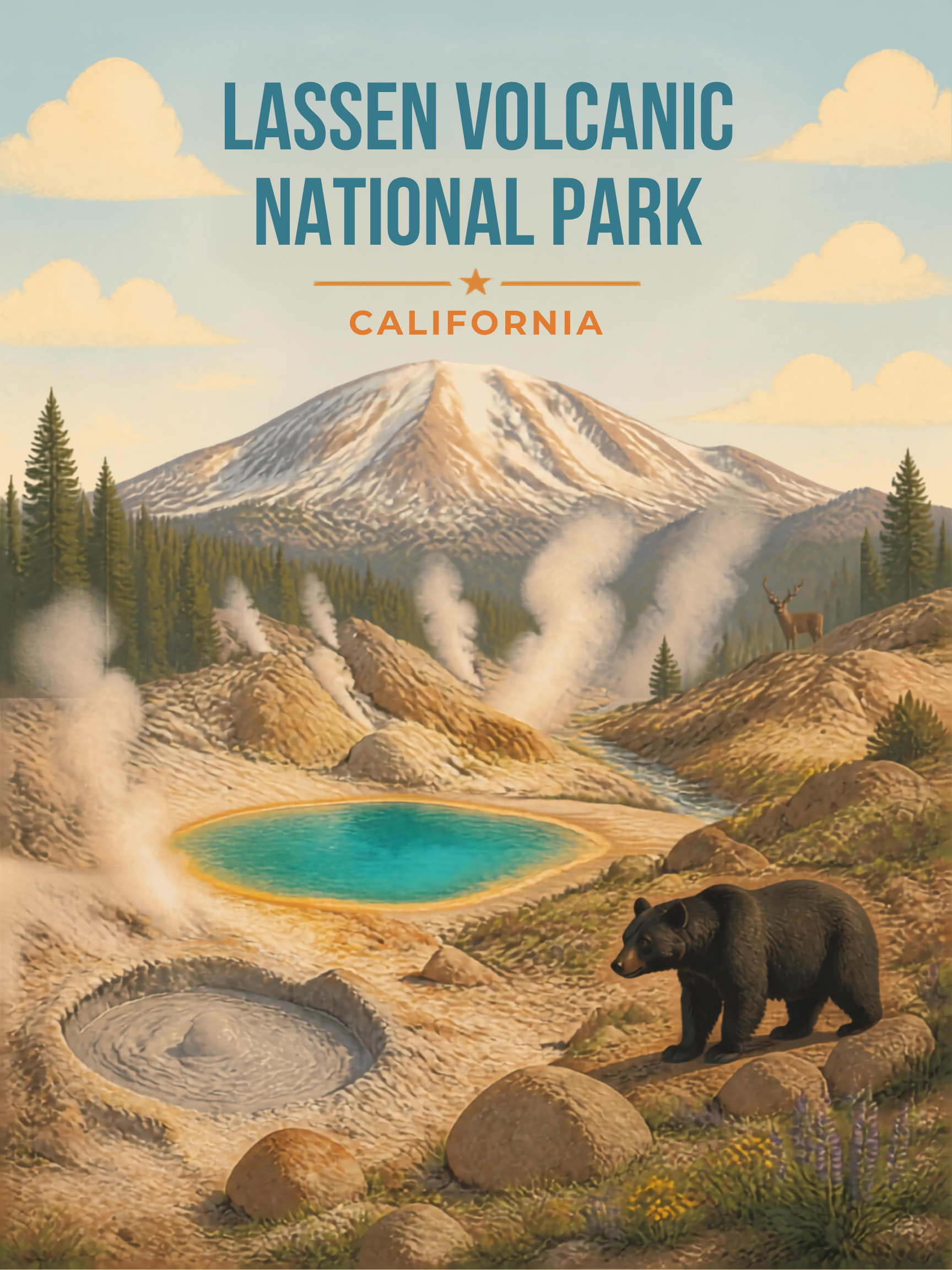
Welcome to Lassen Volcanic National Park, a remarkable landscape of geothermal wonders, volcanic peaks, alpine lakes, and pristine wilderness in Northern California. The park is unique within the U.S. National Park System because it contains all four major types of volcanoes: shield, plug dome, composite, and cinder cone. Visitors can explore bubbling mud pots, steaming fumaroles, lava fields, and high mountain scenery, all within a compact and easily accessible park.

Did You Know?
- Lassen Peak is the largest plug dome volcano in the world, rising to 10,457 ft (3,187 m) above sea level.
- During the 1915 eruption, Lassen Peak blasted an ash column more than 30,000 feet into the air, with ash falling hundreds of miles away.

My Personal Experience
My first visit to Lassen was in 2004 during a road trip to the Pacific Northwest. I remember learning about volcanic activity and the Pacific Ring of Fire in high school, but experiencing it in person is something completely different. Lassen Peak is the southernmost active volcano in the Cascade Range, and its eruptions between 1914 and 1917 made it the most recent volcanic activity in the continental United States before Mount St. Helens erupted in 1980.
I drove the Lassen Volcanic National Park Highway, a 29-mile road that winds through the park and passes most of its major features and trailheads. My favorite and a definite “do not miss”is Bumpass Hell, where visitors can walk close to boiling mud pots and steaming fumaroles. Just make sure to stay on the boardwalk and marked trails. The soil crust in geothermal areas can be extremely thin, and stepping off the trail could land you in boiling, acidic mud. That would certainly ruin your vacation.
If you have a little extra time, I recommend hiking Lassen Peak itself. The round-trip hike takes about four hours and rewards you with incredible views of the surrounding volcanic landscape.
On my second visit, I entered through the Southwest Entrance and drove the entire park highway north. Manzanita Lake, located near the north entrance, made a perfect stop at the end of a fantastic day. One thing to keep in mind: if you are pregnant or have respiratory conditions, you may want to avoid areas with strong sulfur fumes, as they can sometimes cause irritation.

Basic Facts
Address:
Lassen Volcanic National Park
PO Box 100
Mineral, CA 96063
Operation Hours and Seasons:
The park is open year-round, with visitor centers and facilities operating seasonally.
Visitors:
Over 500,000 per year (2022)
Entrance Fees:
- Private Vehicle: $30.00 (admits one private, non-commercial vehicle and all its occupants for seven days)
- Per Person: $15.00 (when entering on foot or bicycle, valid for seven days)
Website:
nps.gov/lavo
Map:
nps.gov/lavo/planyourvisit/maps.htm
Additional Information:
For additional local information, visit visitcalifornia.com.

Best Time to Visit
July through September offers the best access to the park, as the Lassen Volcanic National Park Highway is usually fully open during these months. Heavy snowfall often keeps the road closed from late fall through early summer.

Recommended Time
1 Day: Drive the park highway and explore highlights such as Bumpass Hell and Manzanita Lake.
2-3 Days: Hike Lassen Peak, explore additional geothermal areas, and visit the park’s quieter backcountry regions.

Getting There
The The closest major cities are Redding, California, and Reno, Nevada.
From Redding, take CA-44 East to reach the northwest entrance. From Reno, take I-80 West to CA-89 North, which leads to the park’s eastern access points.

Weather
Lassen Volcanic National Park experiences large seasonal temperature swings due to its elevation.
- Spring (Mar–May): 30s–60s°F (0–15°C). Snow begins melting and wildflowers start appearing at lower elevations.
- Summer (Jun–Aug): 70s–80s°F (21–27°C). Pleasant hiking weather with occasional afternoon thunderstorms.
- Fall (Sep–Nov): 30s–60s°F (0–15°C). Crisp days and fewer visitors.
- Winter (Dec–Feb): 20s–40s°F (-6–4°C). Heavy snowfall transforms the park into a winter recreation destination.

Hiking
Lassen Volcanic National Park offers trails that showcase its volcanic and geothermal landscapes.
Easy:
- Manzanita Lake Trail – 1.5-mile loop: A scenic trail around Manzanita Lake offering beautiful reflections of Lassen Peak and excellent wildlife viewing opportunities.
- Sulphur Works – 0.5 miles: A short walk to bubbling mud pots and steaming fumaroles located near the park highway.
Moderate:
- Bumpass Hell Trail – 3 miles round trip: The most popular trail in the park leads to its largest geothermal area, where boardwalks allow visitors to safely explore boiling mud pots and fumaroles.
- Kings Creek Falls Trail – 2.6 miles round trip: A scenic hike through forests and meadows leading to a beautiful waterfall cascading over volcanic rock.
Strenuous:
- Lassen Peak Trail – 5 miles round trip: A challenging climb to the summit of Lassen Peak with sweeping views of the Cascade Range and surrounding volcanic landscapes.
- Brokeoff Mountain Trail – 7.4 miles round trip: A rewarding hike to one of the park’s highest viewpoints, offering spectacular views of Lassen Peak and the surrounding wilderness.

Scenic Drives
Lassen Volcanic National Park Highway: This 30-mile scenic road connects the northwest and southwest entrances and is the main route through the park. Numerous viewpoints, trailheads, and geothermal areas are accessible directly from the highway.

Best Viewpoints
- Manzanita Lake: One of the most photographed locations in the park, famous for reflections of Lassen Peak.
- Bumpass Hell Overlook: Provides a dramatic view of the park’s largest hydrothermal basin.
- Lassen Peak Summit: Offers panoramic views across the Cascade Range and surrounding volcanic landscapes.

Wildlife Viewing
Lassen’s forests, meadows, lakes, and volcanic slopes support a surprising variety of wildlife. Mule deer are commonly seen grazing in open meadows, particularly near Manzanita Lake and along the park highway during the early morning and evening hours. Black bears inhabit the park’s forested areas, although sightings are relatively uncommon. Visitors may also encounter coyotes, foxes, marmots, pikas, and numerous bird species, including mountain bluebirds, Clark’s nutcrackers, and bald eagles near larger lakes.
Wildlife activity is typically highest during the cooler hours of the day, especially in summer when many animals seek shelter from the afternoon heat.

Photography
Lassen Volcanic National Park offers unique photographic opportunities that combine volcanic geology with classic mountain scenery.
- Geothermal Features: Bumpass Hell, Sulphur Works, and other hydrothermal areas provide dramatic scenes of steam vents, bubbling mud pots, colorful mineral deposits, and otherworldly landscapes.
- Volcanic Peaks: Lassen Peak, Brokeoff Mountain, and Cinder Cone showcase the volcanic forces that shaped the park and create striking landscape compositions.
- Manzanita Lake: One of the park’s most iconic photography locations, particularly when calm water reflects Lassen Peak and surrounding forests.
- Wildflowers & Meadows: During summer, many meadows burst into bloom, providing colorful foregrounds against volcanic peaks and alpine scenery.

Horseback Riding
More than 100 miles of trails in Lassen Volcanic National Park are open to stock use. Temporary restrictions may apply in sensitive areas, so check the park’s website for current regulations: nps.gov/lavo/planyourvisit/stock-use.htm. Guided tours are available from Drakesbad Guest Ranch in Warner Valley from mid-June through late September.

General Aviation
TGeneral aviation pilots have several practical options for visiting Lassen Volcanic National Park.
Redding Regional Airport (KRDD) in Redding, CA:
- Often the most convenient airport for park visitors.
- Longest runway: approximately 7,000 feet
- 100LL available
- Rental cars available
- Approximately 50 minutes from the northwest entrance
Red Bluff Municipal Airport (KRBL) in Red Bluff, CA:
- A popular alternative for general aviation pilots.
- Longest runway: approximately 5,400 feet
- 100LL available
- Rental cars available with advance planning
- Approximately one hour from the southwest entrance
Both airports provide easy access to the park and have good lodging options nearby.
Mountain weather can change rapidly throughout the Cascade Range, particularly during spring and fall. Afternoon turbulence is common during warmer months, and winter storms can significantly affect flying conditions. Pilots should also be aware that several airports surrounding the park sit at relatively low elevations, while the park itself rises above 10,000 feet, creating substantial terrain and weather differences between departure points and destinations.

Nearby Attractions
Several excellent destinations can be combined with a trip to Lassen Volcanic National Park.
- McArthur-Burney Falls Memorial State Park: Home to the spectacular 129-foot Burney Falls, often described as one of the most beautiful waterfalls in California.
- Whiskeytown National Recreation Area: Offers boating, swimming, waterfalls, and hiking opportunities west of Redding.
- Shasta State Historic Park: Preserves one of California’s most important Gold Rush communities and offers a glimpse into the state’s early history.
- Mount Shasta: One of California’s most iconic volcanoes, popular for sightseeing, hiking, climbing, and photography.

Important Tips
- Seasonal Access: Much of the park receives enormous snowfall, and the main park highway is often closed from late fall through early summer. Check road conditions before your visit.
- Geothermal Areas: Stay on boardwalks and designated trails. Ground temperatures can exceed the boiling point of water, and the thin crust in some areas may not support your weight.
- Altitude: Several trailheads begin above 6,000 feet, and Lassen Peak rises above 10,000 feet. Visitors arriving from lower elevations should pace themselves and stay hydrated.
- Air Quality: Sulfur fumes in geothermal areas may cause discomfort for visitors with respiratory conditions or sensitivities.
- Cell Service: Mobile coverage is limited throughout much of the park. Download maps and trail information before arriving.
Lassen Volcanic National Park is one of the most fascinating volcanic landscapes in the United States. With steaming geothermal areas, towering volcanic peaks, and peaceful alpine lakes, the park offers a remarkable glimpse into the powerful forces shaping our planet. Whether you spend a few hours exploring geothermal features or a full day hiking Lassen Peak, this underrated park rewards visitors with unforgettable scenery and a deeper appreciation for the Earth’s volcanic history.


