Western Region
PETRIFIED FOREST NATIONAL PARK
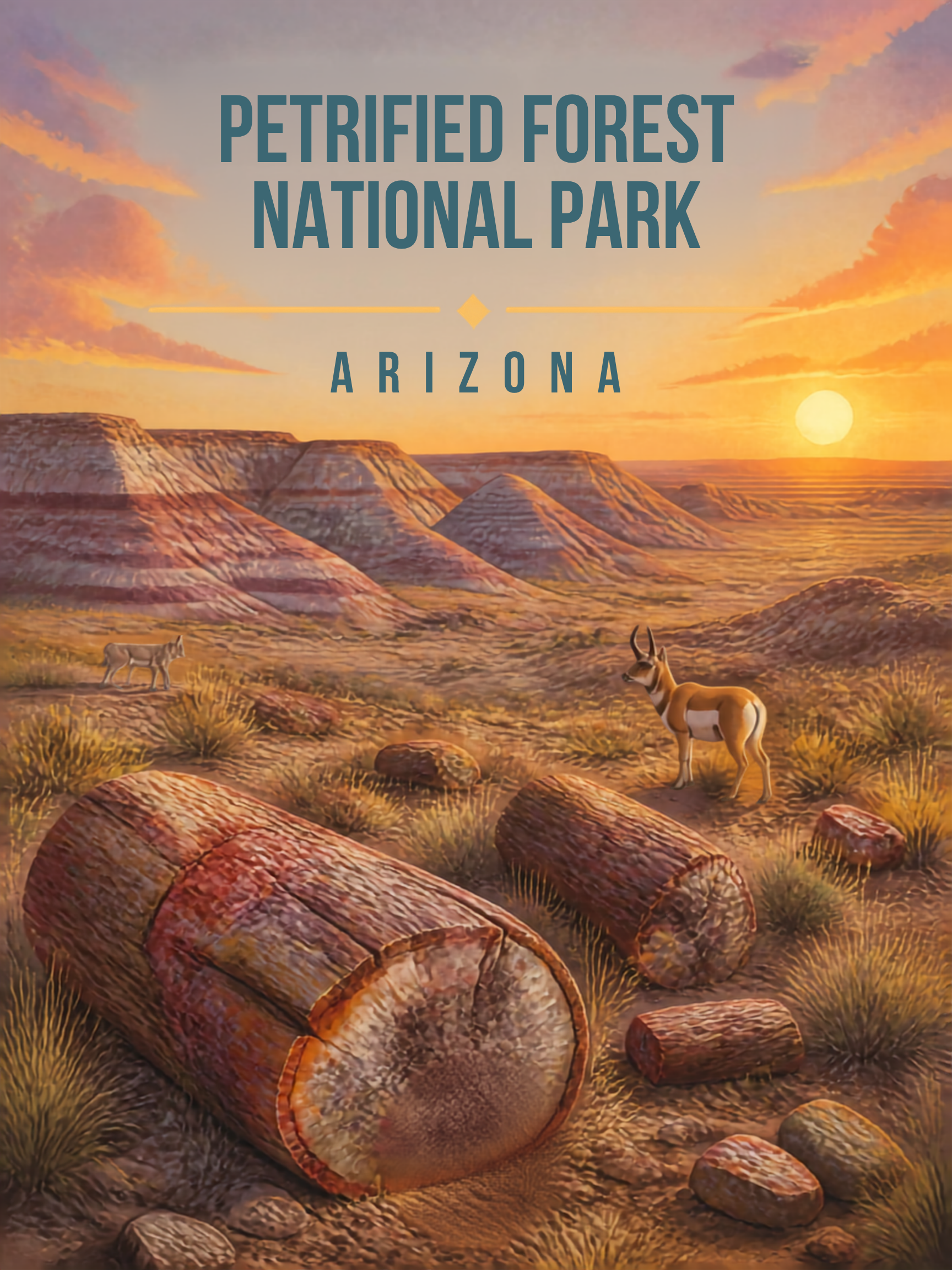
Welcome to Petrified Forest National Park, located in northeastern Arizona and renowned for its remarkable concentrations of petrified wood. This park preserves a vivid slice of deep time, where fossilized trees, colorful badlands, and sweeping desert vistas reveal what was once a lush, swampy forest more than 200 million years ago

Did You Know?
- The petrified logs found in the park are approximately 210 to 225 million years old.
- Most of the fossilized trees belonged to an extinct species related to modern conifers.
- Petrified wood forms when minerals gradually replace organic material while preserving the original structure of the tree.
- The park protects one of the world’s largest and most colorful concentrations of petrified wood.
- More than 13,000 years of human history have been documented within the park through archaeological sites, petroglyphs, and ancient settlements.

My Personal Experience
Although Interstate 40 cuts directly through the park, many visitors to the national parks of the Southwest skip Petrified Forest, making it one of the most underrated parks in the system. My first visit was with a friend on a road trip through the Southwest in July 2002. The park sits about 120 miles east of Flagstaff and yes, July in Arizona is brutally hot.
It’s hard to imagine that this arid landscape was once a dense, swampy forest, and that you missed it by about 225 million years. We drove the 26-mile park road, stopping at numerous pullouts, and especially enjoyed the changing hues of the Painted Desert as we moved between the park’s northern and southern sections. After all, it’s called “painted” for a reason.
I also enjoyed learning more about ancestral Pueblo life at Puerco Pueblo and made sure not to miss the petroglyphs. Seeing and even touching massive petrified logs scattered across the landscape is simply incredible. You can look and touch, but you absolutely must not take any petrified wood. If you want a souvenir, buy one at a visitor center instead.

Basic Facts
Address:
Petrified Forest National Park
1 Park Road
Petrified Forest, AZ 86028
Operation Hours and Seasons:
The park is open from 8 AM to 5 PM, year-round.
Visitors:
Over 600,000 per year (2022)
Entrance Fees:
- Private Vehicle: $25.00 (admits one private, non-commercial vehicle and all its occupants)
- Per Person: $15.00
Website:
nps.gov/pefo
Map:
nps.gov/pefo/planyourvisit/maps.htm
Additional Information:
For additional local information, visit discovernavajo.com.

Best Time to Visit
Spring is one of the best seasons to visit. Mild temperatures and comfortable hiking conditions make exploring the park particularly enjoyable. Excellent weather, clear skies, and fewer visitors make fall another ideal season. Hot temperatures and occasional monsoon storms create dramatic skies and unique photographic opportunities in summer. Winter is a quieter season with occasional snow that can create striking contrasts against the colorful badlands and petrified logs.

Recommended Time
1 Day: Ideal for most visitors. Explore Blue Mesa, Crystal Forest, Giant Logs, Puerco Pueblo, petroglyph sites, and the Painted Desert overlooks. If you have half a day, drive the park road from north to south, stopping at major viewpoints and short trails.

Getting There
The closest major city is Flagstaff, Arizona. From Flagstaff, take I-40 East to Exit 311, which leads directly to one of the park entrances. The park can be entered from either the north or south, making it easy to drive through from end to end.

Weather
Petrified Forest experiences wide temperature swings and a high-desert climate:
- Spring (Mar–May): 50s–70s°F (10–21°C). Mild temperatures and excellent conditions for hiking.
- Summer (Jun–Aug): 80s–90s°F (27–32°C). Hot and dry; plan hikes early or late in the day.
- Fall (Sep–Nov): 50s–70s°F (10–21°C). Clear skies and pleasant temperatures.
- Winter (Dec–Feb): 40s–50s°F (4–10°C). Cold winds and occasional snow; fewer visitors.
Significant day-to-night temperature swings are common year-round. It’s advisable to check the specific weather forecast before planning a trip and to be prepared for sudden changes in weather conditions.

Hiking
Petrified Forest has only about 7 miles of maintained trails, but they are highly rewarding and easy to combine with scenic driving:
Easy:
- Crystal Forest – 0.75-mile loop: A short loop through dense concentrations of brightly colored petrified wood and eroded badlands. One of the best introductions to the park’s geology.
- Giant Logs – 0.4-mile loop: A compact trail featuring some of the largest and most vividly colored petrified logs in the park, located near Rainbow Forest Museum.
Moderate:
- Blue Mesa – 1-mile loop: A descent into a surreal badlands landscape of blue, purple, and gray bentonite clay. One of the park’s most visually distinctive hikes.
- Painted Desert Rim Trail – 1 mile round trip: A mostly flat walk along the rim offering sweeping views of the Painted Desert’s layered colors and vast scale.
Strenuous:
There are no designated strenuous trails in Petrified Forest National Park.
Archaeology & Human History
- Puerco Pueblo: One of the park’s most significant archaeological sites, Puerco Pueblo preserves the remains of a large ancestral Puebloan community that was occupied more than 600 years ago.
- Petroglyphs: Visitors can view hundreds of ancient petroglyphs carved into rock surfaces by Indigenous peoples who lived in the region centuries ago. These remarkable cultural resources provide insight into the area’s long human history.
- Painted Desert Inn: A National Historic Landmark that combines architecture, history, and outstanding views of the Painted Desert.

Scenic Drives
Petrified Forest Road: The park’s 28-mile scenic road connects the Painted Desert in the north with the petrified wood concentrations in the south. Numerous overlooks, archaeological sites, hiking trails, and geological features encourage visitors to stop frequently rather than simply drive through. This road is the backbone of the Petrified Forest experience and one of the best scenic drives in the Southwest.

Best Viewpoints
- Painted Desert Inn Overlook: One of the park’s most iconic viewpoints and an excellent introduction to the Painted Desert.
- Tawa Point: Provides expansive views across the colorful mesas and badlands of the northern section of the park.
- Kachina Point: A classic overlook offering sweeping views of the Painted Desert.
- Blue Mesa: Perhaps the park’s most visually distinctive landscape, featuring colorful bentonite formations unlike anything else in the Southwest.
- Jasper Forest: An overlook showcasing one of the largest concentrations of petrified logs in the park.

Wildlife Viewing
Although geology receives most of the attention, Petrified Forest supports a surprising variety of wildlife. Pronghorn antelope are among the park’s most iconic residents and are frequently observed in open grasslands. Coyotes, jackrabbits, cottontails, badgers, and numerous reptiles also inhabit the park. Birdwatchers may encounter ravens, hawks, golden eagles, roadrunners, and many migratory species. Early morning and evening generally provide the best opportunities for wildlife observation.

Photography
Photography here is defined by color, texture, and open space:
- Petrified Wood: The park’s signature subject. Close-up photographs reveal intricate crystal structures, brilliant colors, and details that often resemble polished gemstones more than fossilized trees.
- Painted Desert: The layered hills, mesas, and badlands of the Painted Desert display remarkable variations in color that change throughout the day and under different weather conditions.
- Blue Mesa: Few places in the National Park System look as unusual as Blue Mesa. The blue, gray, purple, and lavender bentonite formations create striking abstract compositions.
- Ancient Landscapes: The park’s broad vistas provide opportunities to capture the immense scale of the high desert and the geologic processes that shaped it.
- Petroglyphs and Archaeological Sites: Locations such as Puerco Pueblo combine cultural history with dramatic desert scenery and offer excellent storytelling opportunities for photographers.

Horseback Riding
Horseback riding is limited to the Painted Desert Wilderness, located about two miles north of the Painted Desert Visitor Center. There are no maintained trails and no water sources, so riders must travel in dry washes only and pack all necessary water. Always check current regulations on the park’s website before planning a ride: nps.gov/pefo/planyourvisit/horseback-riding.htm.

General Aviation
Petrified Forest is best approached as a drive-through park, but several GA airports are available:
Holbrook Municipal (P14) in Holbrook, AZ:
- The closest airport to the southern entrance.
- Fuel available
- Limited services
- Ground transportation options may be limited.
St. Johns Industrial Air Park (KSJN) in St. Johns, AZ:
- A useful alternative for GA pilots.
- 100LL available
- Limited rental car availability
Winslow–Lindbergh Regional (KINW) in Winslow, AZ:
- The most practical airport for many visitors.
- Approximately 60 miles from the park
- Longest runway: approximately 7,500 feet
- 100LL available
- Rental cars generally available
- Full-service facilities
The park’s high-desert location creates excellent flying weather during much of the year. However, density altitude can become significant during summer months, and monsoon thunderstorms frequently develop during the afternoon.

Nearby Attractions
- Holbrook: A classic Route 66 community and common gateway for park visitors.
- Winslow: Famous for its Route 66 heritage and convenient access to the park.
- Meteor Crater: One of the best-preserved meteor impact sites on Earth.
- Homolovi State Park: Protects important ancestral Puebloan archaeological sites.
- Historic Route 66: Several sections of the famous highway pass through or near the park.

Important Tips
- Do Not Take Petrified Wood: Even small pieces are protected by federal law and removing them is strictly prohibited.
- Drive the Entire Park: The northern and southern portions offer very different experiences and should both be explored.
- Carry Water: The high-desert environment can be surprisingly dry and dehydrating.
- Stop at the Pullouts: Many of the park’s best features are easily missed by visitors who simply drive through.
- Learn the Story: The geology is fascinating, but understanding how petrified wood forms makes the experience much more meaningful.
- Watch the Weather: Summer monsoon storms can develop quickly and create hazardous conditions.
- Look Beyond the Logs: The Painted Desert, archaeological sites, wildlife, and geology are every bit as impressive as the petrified wood itself.
Petrified Forest National Park reminds us that the landscapes we see today are merely snapshots in an unimaginably long story. More than 200 million years ago, this was a lush environment filled with towering trees, rivers, and wildlife. Today, those ancient forests survive as brilliantly colored stone scattered across a high-desert landscape.
Whether you are walking among fossilized logs, exploring the Painted Desert, studying ancient petroglyphs, or simply driving the scenic road from one end of the park to the other, Petrified Forest offers a rare opportunity to experience deep time in a tangible way. It may not receive the attention of some of the Southwest’s larger parks, but those who take the time to explore it often discover one of the most unique and thought-provoking places in the National Park System.


