Western Region
SAGUARO NATIONAL PARK
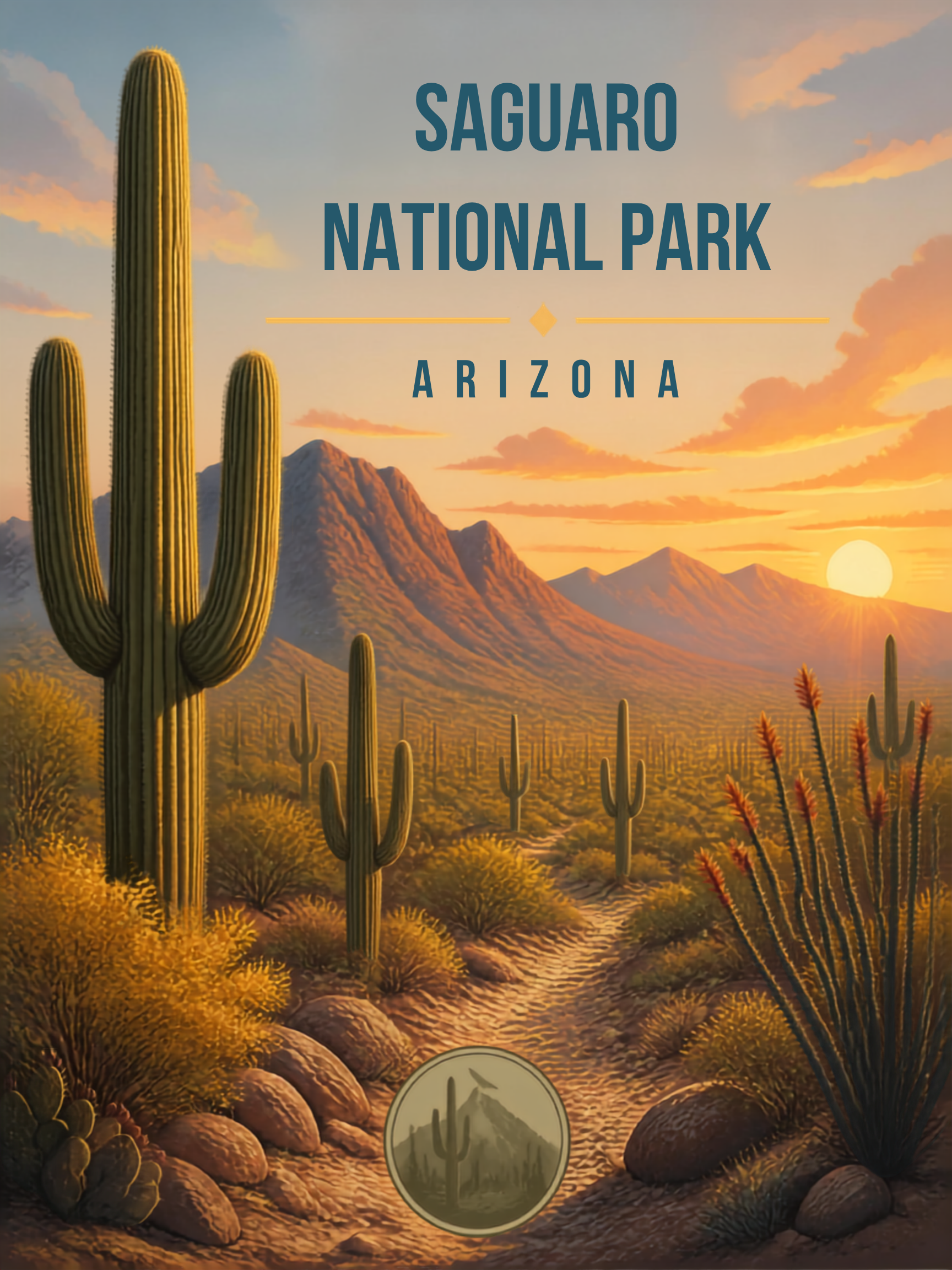
Welcome to Saguaro National Park, home to the iconic giant saguaro cactus and located in southern Arizona. Split into two distinct districts East and West by the city of Tucson, the park protects a classic Sonoran Desert landscape filled with towering cacti, rugged mountains, and surprisingly rich biodiversity.

Did You Know?
- A giant saguaro can live for more than 150 years.
- Saguaros typically do not develop their first arms until they are approximately 50 to 70 years old.
- The largest saguaros can exceed 40 feet in height and weigh several tons.
- The Sonoran Desert is the only place in the world where giant saguaros grow naturally.
- More than 350 bird species have been recorded within the park.

My Personal Experience
Tell me you’re not from Arizona without telling me you’re not from Arizona. Say saguaro and locals will know immediately. It’s pronounced suh-WAH-ro.
I have a bit of a love-hate relationship with cacti, probably rooted in childhood trauma. My mom had a rather impressive cactus collection, and I can’t count how many times she had to remove spines from my hands, fingers, or legs. Since then, I’ve kept a healthy distance from these plants just in case they decide to attack again.
When most people imagine a desert landscape, they picture saguaros. Some grow more than 40 feet tall, and they won’t develop arms until they’re around 70 years old. The park is split into an East and West Unit by the city of Tucson. Given the heat in southern Arizona, I usually stuck to driving the Cactus Forest Loop Drive in the East Unit and ventured out on shorter hikes.
Seeing a roadrunner completed the experience, though I’m still waiting to spot the coyote on roller skates carrying an anvil or an oversized magnet. I also visited the Arizona-Sonora Desert Museum, located near the King Canyon trailhead in the West Unit. While it’s not part of the National Park System, it’s a must-see. This outdoor museum, zoo, botanical garden, and aquarium focuses on interpreting the animals, plants, and natural history of the Sonoran Desert. You’ll get plenty of wildlife encounters just no coyotes on roller skates.

Basic Facts
Address:
Saguaro National Park
2700 N. Kinney Rd.
Tucson, AZ 85743
Operation Hours and Seasons:
The park is open from sunrise to sunset, year-round.
Visitors:
Over 1 million per year (2022)
Entrance Fees:
- Private Vehicle: $25.00 (admits one private, non-commercial vehicle and all its occupants)
- Per Person: $15.00
Website:
nps.gov/sagu
Map:
nps.gov/sagu/planyourvisit/maps.htm
Additional Information:
For additional local information, visit visittucson.org.

Best Time to Visit
Winter is the most comfortable season for exploring the park. Mild temperatures make hiking and wildlife viewing particularly enjoyable. Spring is also one of the best times to visit. Wildflowers bloom, temperatures remain pleasant, and the desert is especially colorful.
Fall is another excellent season with comfortable temperatures and clear skies. Summers are extremely hot. Outdoor activities should be limited to early morning and evening hours. The summer monsoon season can produce dramatic thunderstorms and lightning displays.

Recommended Time
1 Day: Drive either Cactus Forest Loop Drive or Bajada Scenic Loop and complete one or two short hikes if you have only half a day. If you have a full day, visit both districts and enjoy several trails, scenic drives, and visitor centers.
2-3 Days: Ideal for photographers, hikers, and wildlife enthusiasts who want to explore both districts in depth. Allows time to explore nearby Tucson attractions and gain a deeper appreciation for the Sonoran Desert ecosystem.

Getting There
The closest major city is Tucson, Arizona.
- For the East District, take Speedway Boulevard east.
- For the West District, take Speedway Boulevard west to Kinney Road.
Both units are easily accessible and can be visited on the same day.

Weather
Saguaro National Park’s desert climate varies by season but is defined by heat:
- Spring (Mar–May):70s–90s°F (20–32°C). Wildflowers bloom, and conditions are ideal for hiking.
- Summer (Jun–Aug): 90s–100+°F (32–38°C): Extremely hot; plan activities early or late in the day.
- Fall (Sep–Nov): 70s–90s°F (20–32°C). Clear skies and pleasant temperatures return.
- Winter (Dec–Feb): 60s–70s°F (15–21°C). Mild and excellent for outdoor exploration.

Hiking
Saguaro National Park offers short, rewarding hikes well-suited to desert conditions:
Easy:
- Cactus Garden – 300 ft: A short, self-guided stroll near the Red Hills Visitor Center introducing the park’s most common desert plants. Ideal as a quick orientation walk.
- Desert Ecology Trail – 0.5-mile loop: An interpretive loop explaining how plants and animals survive extreme desert conditions. Educational and family-friendly.
- Mica View Loop – 2 miles loop: A gentle loop through dense saguaro forest offering classic Sonoran Desert scenery and open views toward surrounding mountains.
Moderate:
- Freeman Homestead Trail 1-mile loop: A short loop combining desert scenery with remnants of early homesteading history. Offers a sense of human life in a harsh environment.
- Sendero Esperanza – 3.2 miles: A scenic trail beginning near Golden Gate Road that climbs gradually for expansive desert views, especially beautiful in late afternoon light.
Strenuous:
- Tanque Verde Ridge Trail – 11.5 miles round trip: A challenging ridge hike with sweeping views over the Rincon Mountains and the Tucson Basin. Best attempted in cooler months.
- King Canyon Trail – 6.7 miles out-and-back: A steadily climbing trail in the West Unit that transitions from saguaro forest to higher desert terrain with broad mountain vistas.

Scenic Drives
Cactus Forest Loop Drive (East District): The park’s most famous drive. The route passes through dense stands of giant saguaros and provides access to many of the East District’s most popular trails and viewpoints.
Bajada Scenic Loop (West District): A quieter and more rugged drive that highlights the Sonoran Desert’s diversity and offers excellent views toward the Tucson Mountains.

Best Viewpoints
- Cactus Forest Loop Drive: The classic Saguaro experience. Dense forests of giant saguaros stretch across the landscape with mountain backdrops in every direction.
- Signal Hill: One of the most interesting locations in the West District, featuring ancient petroglyphs and broad desert views.
- Javelina Rocks: Excellent opportunities to photograph saguaros framed by rugged mountain scenery.
- Valley View Overlook Trail: A short hike leading to expansive views across the Tucson Basin and surrounding desert.
- Tanque Verde Ridge: Provides some of the most dramatic elevated views available within the park.

Wildlife Viewing
Many visitors arrive expecting a landscape dominated solely by cacti and leave surprised by the diversity of wildlife. The park supports roadrunners, Gambel’s quail, cactus wrens, Gila woodpeckers, Harris’s hawks, and numerous other bird species. Mammals include coyotes, javelinas, bobcats, mule deer, and the occasional mountain lion. Reptiles are well represented, including lizards, rattlesnakes, and desert tortoises. Early morning and evening generally provide the best wildlife-viewing opportunities, particularly during the warmer months.

Photography
Photography in Saguaro National Park is defined by form, light, and silhouette:
- Giant Saguaros: The park’s defining subject. Individual saguaros develop unique shapes and silhouettes over decades, making every cactus seem to have its own personality.
- Saguaro Forests: Rather than focusing on individual plants, some of the strongest images capture entire forests of saguaros stretching across the desert floor.
- Sonoran Desert Biodiversity: The Sonoran Desert is surprisingly green. Palo verde trees, ocotillo, cholla, prickly pear, and numerous other desert plants create layered compositions that go far beyond simple cactus photography.
- Monsoon Storms: Summer thunderstorms can produce some of the most dramatic skies in the Southwest. Lightning, towering clouds, and rain shafts create memorable photographic opportunities from a safe distance.
- Signal Hill Petroglyphs: Ancient rock art provides an opportunity to combine cultural history with desert landscapes.
- Wildlife: Roadrunners, javelinas, cactus wrens, and hawks provide excellent wildlife photography opportunities throughout the park.

Horseback Riding
Horseback riding off-trail is prohibited in the East district of the park and livestock use is restricted from certain trails and areas entirely. Trailer parking locations are limited and you might have to park outside the park. Please consult the park’s website for the most recent information: nps.gov/sagu/planyourvisit/gettingaround.htm. Stock groups are limited to 15 animals in the West district. Similar to the East district, off-trail travel is prohibited and livestock is restricted from certain trails and areas entirely. Trailer can be parked at Cam Boh, El Camino del Cerro, and Sendero Esperanza trailheads. The Sonoran Desert presents unique challenges for riders. Water availability is limited, shade is scarce, and temperatures can become dangerous during much of the year. Cooler months provide the best riding conditions.

General Aviation
Tucson offers two options for general aviation pilots:
Ryan Field (KRYN) in Tucson AZ:
- The most convenient airport for visitors focusing on the West District.
- Approximately 10 miles from the park
- Longest runway: 5,550 feet
- 100LL available
- Rental car availability should be confirmed before arrival
Tucson International Airport (KTUS) in Tucson, AZ:
- The most practical full-service option.
- Approximately 25 miles from the East District
- Longest runway: over 10,000 feet
- 100LL available
- Rental cars readily available
- Extensive lodging options nearby
An excellent general aviation alternative northwest of Tucson is:
Marana Regional Airport (KAVQ) in Marana, AZ:
- An excellent general aviation alternative northwest of Tucson.
- Longest runway: 6,901 feet
- 100LL available
- Active GA community
- Convenient access to both park districts
Flying in southern Arizona generally means excellent weather and outstanding visibility, but summer heat can create significant density-altitude challenges. Afternoon turbulence and monsoon thunderstorms are common during the summer months.
Pilots should also consider visiting two of the region’s premier aviation attractions: the Pima Air & Space Museum and the nearby 309th Aerospace Maintenance and Regeneration Group, commonly known as the aircraft boneyard.

Nearby Attractions
- Tucson: The cultural and economic center of southern Arizona and the gateway to the park.
- Arizona-Sonora Desert Museum: One of the finest desert museums in the world and a must-see attraction for visitors to the park.
- Pima Air & Space Museum: A world-class aviation museum featuring hundreds of aircraft.
- Mission San Xavier del Bac: One of the finest examples of Spanish colonial architecture in the American Southwest.
- Sabino Canyon Recreation Area: A beautiful desert canyon offering hiking, wildlife viewing, and scenic tram rides.

Important Tips
- Start Early: Many of the park’s best experiences occur during the first few hours after sunrise.
- Carry Plenty of Water: The desert environment is unforgiving, particularly during warmer months.
- Watch Where You Step: Cactus spines, loose rocks, and wildlife all reward careful footing.
- Protect Yourself From the Sun: Wide-brimmed hats, sunscreen, and lightweight long sleeves are strongly recommended.
- Visit Both Districts: The East and West Units offer different landscapes and are both worth exploring.
- Respect Wildlife: Even seemingly harmless desert animals deserve plenty of space.
- Take Time to Learn the Desert: The Sonoran Desert may appear simple at first glance, but it is one of the most complex and diverse ecosystems in North America.
Saguaro National Park is much more than a collection of giant cacti. It is a celebration of the Sonoran Desert, one of the most biologically rich deserts on Earth. The towering saguaros may be the stars of the show, but the real magic lies in the relationships between plants, animals, weather, and landscape that allow life to thrive in such an unforgiving environment.
Whether you are driving through forests of towering saguaros, spotting a roadrunner darting across the trail, photographing dramatic monsoon clouds, or simply standing quietly in the desert at sunset, Saguaro National Park offers a deeper appreciation for resilience and adaptation. And if you leave with a little more respect for cacti than when you arrived, then the park has probably done its job.


