Rocky Mountain Region
THEODORE ROOSEVELT NATIONAL PARK
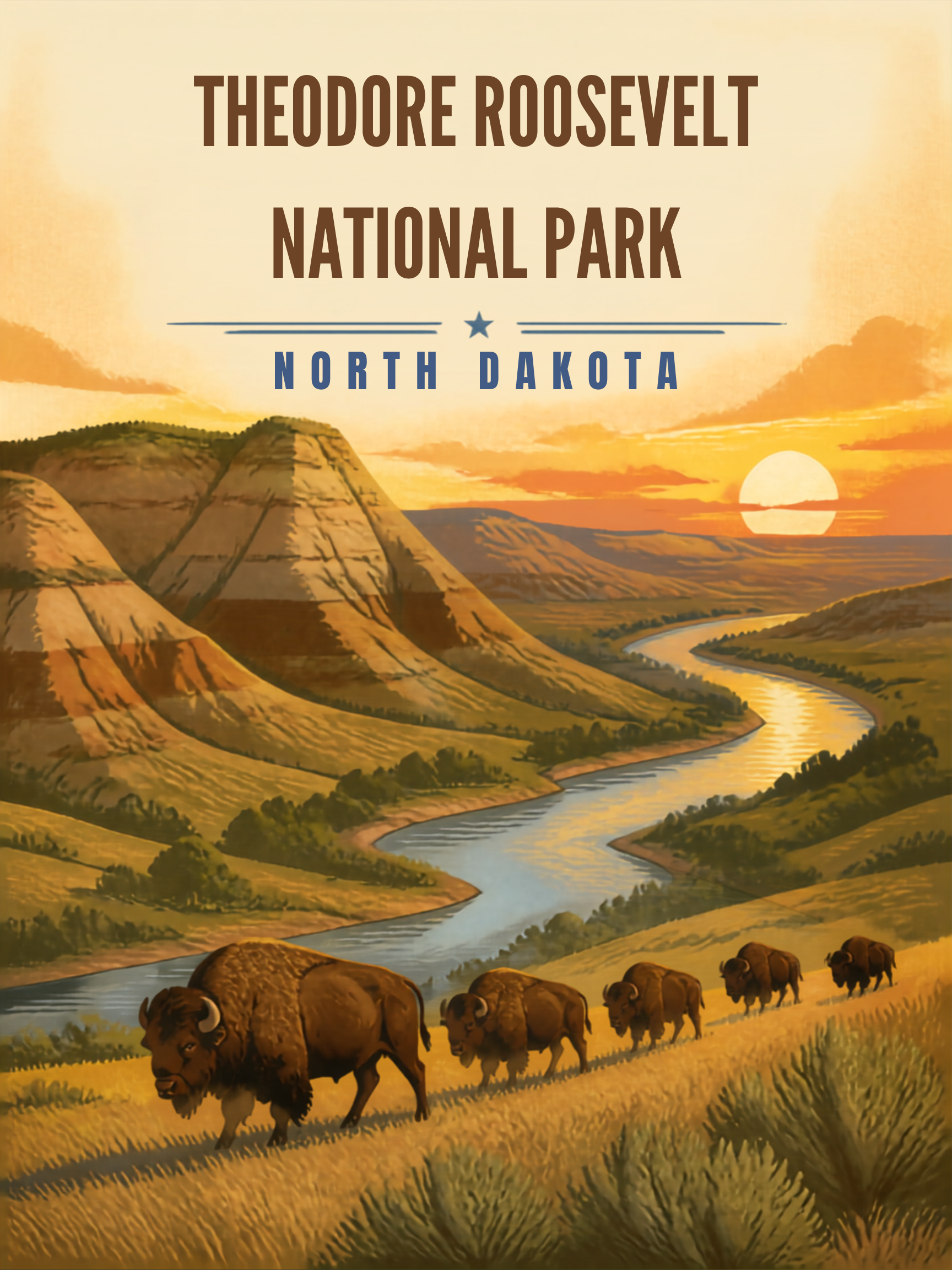
Welcome to Theodore Roosevelt National Park, a picturesque expanse in western North Dakota. Named after the 26th President of the United States, this park is renowned for its rugged badlands, diverse wildlife, and deep historical significance. The landscape that once inspired Roosevelt’s conservation ethic continues to embody the wild spirit of the American West.
Did You Know?
- Theodore Roosevelt National Park is the only national park named directly after a president.
- Theodore Roosevelt credited his time in the North Dakota Badlands with shaping his conservation philosophy and later efforts to protect America’s natural resources.
- The park protects three separate units: the South Unit, North Unit, and Elkhorn Ranch Unit.
- Wild horses roam freely throughout portions of the park and are among its most popular attractions.
- More than 70,000 acres of badlands, prairie, river bottoms, and wilderness are protected within the park.
My Personal Experience
This is one of the remote, hard-to-reach parks tucked away in western North Dakota. My wife and I visited on Easter 2017. As you know, I love watching wildlife, especially bison and here, there’s no shortage of them. We had planned to watch them safely from a distance. That was our plan but the bison had their own. We stopped at a picnic area for lunch, spotting a herd in the distance. While we were busy enjoying our sandwiches, we didn’t realize the herd had been moving… straight toward us. The open trunk of our car blocked part of our view, so we didn’t notice until the bison were only 30–40 feet away and closing in. If you’ve ever wanted to see someone move at light speed, that was your missed opportunity! We jumped into the car, slammed the doors, rolled up the windows, and silently hoped we wouldn’t have to explain to our insurance company why there were hoof prints on the hood. But what an experience seeing those massive animals up close, looking right into their eyes as they calmly passed by. Later that day, we also spotted one of the park’s wild horse herds, and managed to fit in a few hikes for our logbooks. If you plan well, you can combine a visit here with the South Dakota parks it’s a rewarding addition to any northern plains road trip.
Basic Facts
Address:
Theodore Roosevelt National Park
315 Second Avenue
Medora, ND 58645
Operation Hours and Seasons:
The park is generally open 24 hours a day, year-round.
Visitors:
Approximately 700,000 per year (2022)
Entrance Fees:
- Private Vehicle – $30.00 admits one private, non-commercial vehicle and all its occupants
- Per Person – $15.00
Website:
nps.gov/thro
Map:
nps.gov/thro/planyourvisit/maps.htm
Additional Information:
For additional local information, visit medora.com
The park has three distinct units: South Unit, North Unit, and Elkhorn Ranch Unit. Each offers unique experiences and should be explored.
Best Time to Visit
Many visitors consider fall the best time to visit. Temperatures are pleasant, crowds decrease, and the colorful cottonwoods along the Little Missouri River provide beautiful scenery.
Wildflowers begin blooming across the prairie and wildlife becomes increasingly active in spring. Temperatures are generally comfortable, although strong winds and occasional storms are common.
Summer is the busiest season. Long daylight hours and warm temperatures provide excellent opportunities for hiking, scenic drives, and wildlife viewing. Bison, wild horses, and prairie dogs are frequently observed throughout the park. Winter is he quietest season. Snow occasionally transforms the badlands into a striking winter landscape, and visitors often experience a level of solitude rarely found during the rest of the year.
Recommended Time
1 Day: Focus on the South Unit. Drive the Scenic Loop Road, visit several overlooks, hike one or two short trails, and spend time watching wildlife.
2-3 Days: The ideal amount of time for most visitors. Explore both the South Unit and North Unit, complete several hikes, and maximize wildlife-viewing opportunities.
Getting There
The closest town is Medora, North Dakota. From Medora, take I-94 W to reach the park’s South Unit entrance.
Approximate distances from other major towns:
- From Bismarck: 135 miles (2 hours)
- From Fargo: 300 miles (5 hours)
- From Rapid City, SD: 230 miles (4 hours)
Weather
The weather in Theodore Roosevelt National Park varies throughout the year.
- Spring (March to May): 50s °F (10-15°C) to 70s °F (20-25°C). Spring brings blooming wildflowers and moderate temperatures; strong winds possible.
- Summer (June to August): 80s to 90s °F (27-32°C). It’s hot and dry, ideal for wildlife viewing.
- Fall (September to November): 50s °F (10-15°C) to 70s °F (20-25°C). Colorful foliage, pleasant days, fewer crowds.
- Winter (December to February): 20s to 40s °F (-6 to 4°C), and nights often drop below freezing. Snow blankets the park, creating a serene landscape
Hiking
Theodore Roosevelt National Park offers a variety of hiking trails:
Easy:
- Wind Canyon Trail – 0.4 miles round trip: The ideal amount of time for most visitors. Explore both the South Unit and North Unit, complete several hikes, and maximize wildlife-viewing opportunities.
- Boicourt Trail – 0.8 miles round trip: This short walk rewards visitors with sweeping views across the South Unit. It is an excellent option for those seeking impressive scenery without a strenuous hike.
Moderate:
- Jones Creek Trail – 6.4 mile loop: A scenic route through rolling prairie and rugged badlands. Visitors often encounter bison, wild horses, and other wildlife along the way.
- Caprock Coulee Trail – 4.2 mile loop: One of the park’s signature hikes. The trail travels through colorful badlands formations, grasslands, and juniper-covered hills while providing excellent opportunities for wildlife viewing.
Strenuous:
- Achenbach Trail – 18 mile loop: One of the premier backcountry hikes in the park. The route traverses remote badlands terrain and offers a true wilderness experience with minimal crowds.tectural marvels of the ancient Puebloans while enjoying panoramic views of the surrounding canyons. You must be able to climb several ladders. Tickets can be purchased up to two days in advance at any of the park’s visitor centers or at the Durango Welcome Center in nearby Durango.
- Petrified Forest Loop – 10 miles round trip: A challenging hike leading through one of the park’s most fascinating geological areas. The trail passes large concentrations of petrified wood and offers outstanding solitude.
Scenic Drives
- South Unit Scenic Loop Drive: A 36-mile loop offering spectacular views and access to many trailheads.
- North Unit Scenic Drive: A 14-mile drive with breathtaking overlooks and picnic areas.
Best Viewpoints
- River Bend Overlook: One of the most iconic viewpoints in the South Unit, offering spectacular views of the Little Missouri River winding through the badlands.
- Buck Hill: The highest point accessible by road in the South Unit and one of the best locations for panoramic views.
- Oxbow Overlook: A dramatic North Unit viewpoint overlooking a sweeping bend in the Little Missouri River.
- Wind Canyon Overlook: Provides outstanding views of the river valley and surrounding badlands formations.
- Boicourt Overlook: An excellent location for appreciating the scale and rugged beauty of the South Unit.
Wildlife Viewing
Theodore Roosevelt National Park offers some of the finest wildlife viewing in the Great Plains. Bison are frequently seen throughout both the North and South Units, often grazing near roads and trails. Wild horses roam freely across portions of the park and are among the most sought-after sightings. Elk, mule deer, pronghorn, prairie dogs, coyotes, and bighorn sheep are also regularly observed. Birdwatchers may encounter golden eagles, hawks, meadowlarks, owls, and migratory birds throughout the year. Early morning and late afternoon generally provide the best wildlife-viewing opportunities.
Photography
- Sunrise Photography: The soft morning light highlights the colorful layers of the badlands and creates beautiful shadows across the landscape.
- Sunset Photography: Many visitors consider sunset the best time to photograph the park. Buck Hill, River Bend Overlook, and Wind Canyon are particularly rewarding locations.
- Wildlife Photography: Bison, wild horses, elk, prairie dogs, and numerous bird species provide outstanding wildlife-photography opportunities throughout the park.
- Landscape Photography: The badlands, river valleys, and prairie landscapes create endless opportunities for wide-angle photography and dramatic compositions.
- Night Photography: The park’s remote location and minimal light pollution make it an excellent destination for astrophotography and Milky Way photography.
Horseback Riding
Horseback riding is a traditional and popular way to explore the park. Bring your own horse as guided tours are no longer offered in the park. Stock use is allowed on designated trails and in the backcountry; check with the park office for current regulations. Only weed free hay/feed is allowed in the park. You can park your trailer at any trailhead with parking space big enough to accommodate trailers. Camping with your horse is allowed in specific locations. Check the park’s website for latest regulations and additional information at nps.gov/thro/planyourvisit/horseback-riding.htm.
Favorite riding routes include portions of the Maah Daah Hey Trail (also check for outfitters outside the park offering guided tours) and Jones Creek area, offering sweeping prairie views and solitude.
General Aviation
The most convenient airport for visiting Theodore Roosevelt National Park that has reliable rental car options is in Dickinson, North Dakota.
Dickinson Theodore Roosevelt Regional Airport (KDIK) in Dickinson, ND:
- Approximately 35 miles from the South Unit
- Longest runway: 7,301 feet
- 100LL available
Flying in western North Dakota is generally straightforward compared to many mountain park destinations. Pilots should still monitor strong prairie winds, summer thunderstorms, and rapidly changing weather conditions. Visibility is often excellent, and the badlands provide impressive aerial scenery. Flights over Theodore Roosevelt National Park reveal the dramatic contrast between the rugged badlands and the surrounding prairie, offering perspectives unavailable from the ground.
Nearby Attractions
- Medora: The primary gateway community featuring restaurants, lodging, museums, and the famous Medora Musical.
- Maah Daah Hey Trail: One of the premier long-distance trails in the United States, popular with hikers, mountain bikers, and horseback riders.
- Little Missouri National Grassland: Protects vast expanses of prairie and badlands surrounding the park.
- Elkhorn Ranch Unit: The site of Theodore Roosevelt’s historic ranch and often considered the heart of his connection to the badlands.
- North Dakota Cowboy Hall of Fame: A museum dedicated to the history, culture, and people of the American West.
Important Tips
- Keep Your Distance from Wildlife: My bison story demonstrates exactly why this matters. Bison may appear calm, but they can move surprisingly fast and should always be given plenty of space.
- Carry Plenty of Water: The dry climate and exposed terrain can quickly lead to dehydration, particularly during summer.
- Fuel Up Before Exploring: Services are limited once you leave Medora and the surrounding communities.
- Prepare for Wind: Strong prairie winds are common throughout much of the year.
- Download Maps in Advance: Cell service can be unreliable in portions of the park.
- Explore Both Main Units: Many visitors only visit the South Unit, but the North Unit offers equally impressive scenery and generally fewer crowds.
- Stay for Sunset: The changing colors of the badlands during the evening hours create some of the most beautiful scenery in the park.
Theodore Roosevelt National Park is more than a collection of scenic badlands and wildlife-filled prairies. It is a place where one of America’s most influential conservationists developed a lifelong appreciation for wild landscapes and the need to protect them.
Whether you come to see bison, wild horses, dramatic badlands scenery, or simply to experience a quieter corner of the National Park System, the park offers a genuine connection to the American West. For me, it will always be the place where a bison herd unexpectedly joined us for lunch and reminded me that, in a national park, wildlife usually has its own plans. The memories, scenery, and wildlife encounters found here make Theodore Roosevelt National Park one of the hidden gems of the National Park System.


