Rocky Mountain Region
BLACK CANYON OF THE GUNNISON NATIONAL PARK
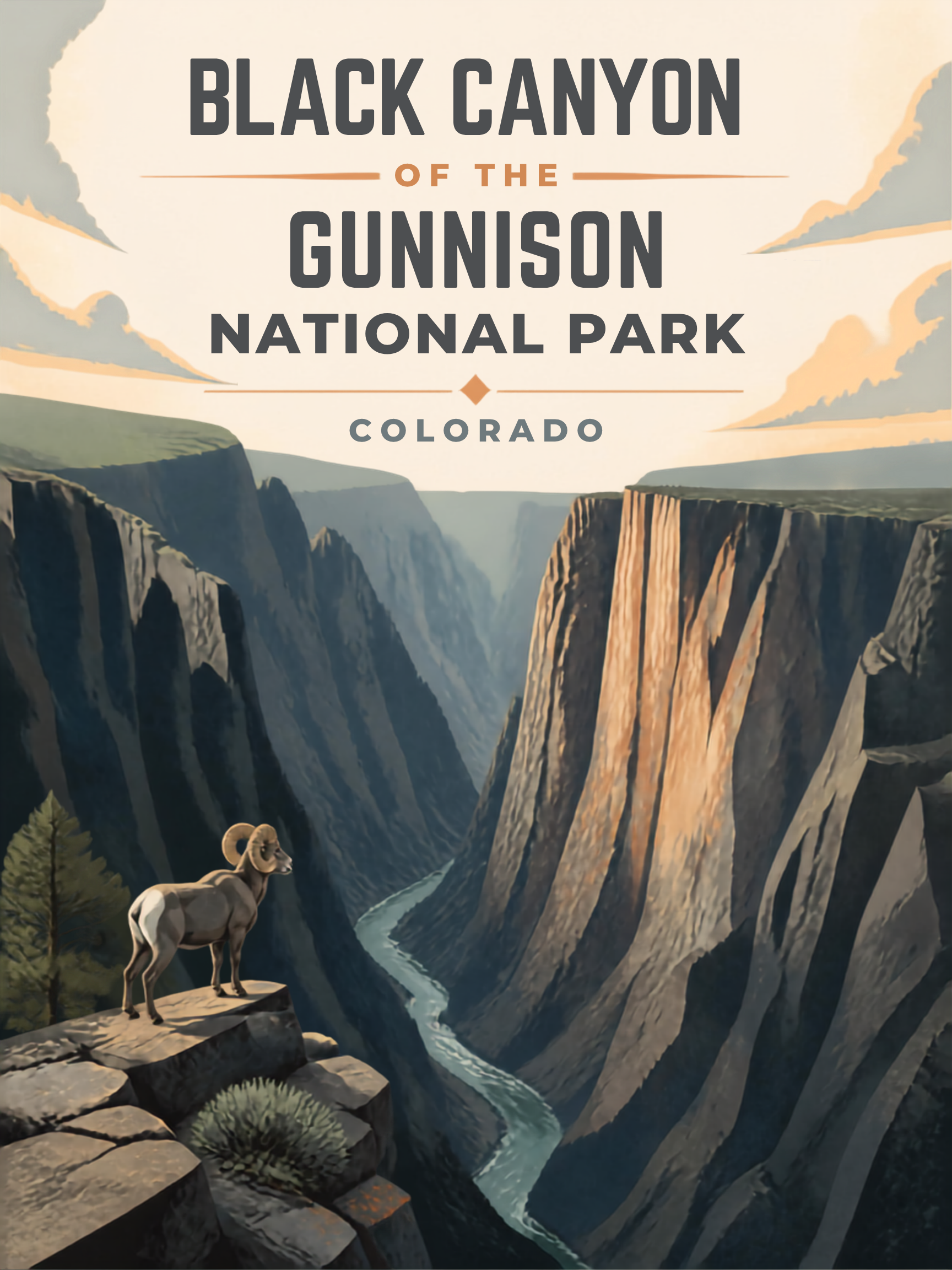
Welcome to Black Canyon of the Gunnison National Park, a place of dramatic contrasts and rugged beauty in western Colorado. Sheer cliffs drop nearly 2,000 feet into the roaring Gunnison River, creating one of the steepest canyons in North America. What sets Black Canyon apart is not its length or depth, but its narrowness and darkness. In some places, sunlight reaches the canyon floor for only 33 minutes per day, giving the canyon its name.
Carved over two million years by the Gunnison River cutting through Precambrian rock, the canyon is both awe-inspiring and humbling. This is one of four National Parks in Colorado, but unlike Rocky Mountain or Mesa Verde, Black Canyon remains off the beaten path and that’s part of its charm.
Did You Know?
- Black Canyon of the Gunnison contains some of the steepest cliffs, oldest rock, and narrowest canyon walls in North America.
- At its narrowest point, the canyon is only about 40 feet wide at the rim while dropping nearly 2,000 feet to the river below.
- Some portions of the canyon receive only 33 minutes of sunlight per day, which inspired the name “Black Canyon.”
- The Gunnison River drops an average of 95 feet per mile through the canyon, making it one of the steepest mountain descents of any river in North America.
- Much of the canyon’s rock is nearly two billion years old.

My Personal Experience
Black Canyon of the Gunnison is one of the least visited national parks, ranking around 45th out of 63 and I must admit that I skipped the park on my first two visits to Colorado. I’ve only been once, entering through the South Rim near Montrose. Despite being relatively quiet compared to Colorado’s marquee parks, the Black Canyon is unforgettable.
Driving the South Rim Road, a 7-mile scenic route with 12 viewpoints, was an easy way to take in the drama. Each stop reveals a different perspective: the Gunnison River far below, sheer rock faces rising like cathedrals, and spires glowing in shifting light. Parking was always available, a rare luxury in national parks these days.
I also recommend taking at least a short hike. Trails like Warner Point Nature Trail or Oak Flat Loop provide perspectives you can’t get from overlooks alone. Hiking here feels raw as the canyon walls are steep, and you truly sense nature’s scale. The North Rim offers an even quieter experience, but it’s more remote, with a gravel access road and limited facilities. If your trip allows, it’s worth the detour, but focusing on the South Rim alone still gives a rewarding visit.
Basic Facts
Address:
Black Canyon of the Gunnison National Park
10346 Highway 347
Montrose, CO 81401
Operation Hours and Seasons:
The park is open year-round, 24 hours a day. Some facilities and roads are closed in winter due to snow.
Visitors:
Over 300,000 per year (2022)
Entrance Fees:
- Private Vehicle: $30.00 (admits one private, non-commercial vehicle and all its occupants for seven days)
- Per Person: $15.00 (when entering on foot or bicycle, valid for seven days)
Website:
nps.gov/blca
Map:
nps.gov/blca/planyourvisit/maps.htm
Additional Information:
For additional local information, visit visitmontrose.com.

Best Time to Visit
Summer is the most popular season. All roads, visitor facilities, overlooks, and hiking trails are generally accessible. Warm temperatures and long daylight hours provide ideal conditions for sightseeing and photography.
Many visitors consider fall the best season. Temperatures are cooler, crowds diminish, and the changing foliage along the Gunnison River creates beautiful color contrasts against the dark canyon walls.
Wildflowers begin to bloom and wildlife becomes more active in spring. Snow may still affect some higher-elevation areas, particularly early in the season.
Winter is a quieter and often overlooked time to visit. Snow-covered canyon rims create striking scenery, although portions of the North Rim and some roads are closed for the season.
Recommended Time
1 Day: Perfect for most visitors. Drive the South Rim Road, stop at the major overlooks, visit the visitor center, and complete a short hike such as Warner Point Nature Trail or Chasm View Nature Trail.
2-3 Days: The ideal amount of time for hikers and photographers. Explore both the South Rim and North Rim, complete several hiking trails, and photograph the canyon during sunrise and sunset.
Getting There
Closest city is Montrose, Colorado (15 miles from South Rim entrance). Access the South Rim via US-50 and CO-347 and the North Rim via a gravel road off CO-92 (closed in winter). Grand Junction (~75 miles west) is a regional hub.
Weather
Black Canyon of the Gunnison National Park experiences varied weather throughout the year:
- Spring (March to May): 30s to 60s°F (0-15°C). Snow begins to melt, and wildflowers bloom.
- Summer (June to August): 70s to 90s°F (21-32°C). Warm weather with clear skies; ideal for hiking and outdoor activities.
- Fall (September to November): 30s to 60s°F (0-15°C). Crisp, clear days with vibrant fall foliage.
- Winter (December to February): 20s to 40s°F (-6 to 4°C). Cold with occasional snowfall; limited accessibility.
Black Canyon of the Gunnison National Park experiences significant temperature fluctuations between day and night throughout the year. It’s advisable to check the specific weather forecast before planning a trip and to be prepared for sudden changes in weather conditions.
Hiking
Black Canyon of the Gunnison National Park offers a variety of trails for all levels:
Easy:
- Gunnison Point Trail – short walk: Gunnison point near the visitor center provides a stunning overlook.
- Chasm View Nature Trail – 0.5 miles loop: The short trail offers dramatic views of the canyon.
Moderate:
- Oak Flat Loop Trail – 2 miles round trip: Hikers enjoy scenic vistas and diverse plant life along the trail.
- Warner Point Nature Trail – 1.5 miles round trip: The trails leads to an overlook with panoramic views of the Gunnison River.
Strenuous:
- Inner Canyon Routes – various lengths: Permits are required for these rugged and steep routes that descend into the canyon. The Gunnison Route is a popular 2-mile round trip.
Rock Climbing
Black Canyon is renowned for its challenging rock climbing routes. Proper preparation and permits are required for climbers.
Fishing
The Gunnison River is known for its excellent trout fishing. Proper permits and adherence to fishing regulations are required.
Scenic Drives
- South Rim Road: The park’s signature drive extends approximately seven miles and provides access to twelve spectacular viewpoints. Nearly every overlook offers a different perspective on the canyon’s immense depth and dramatic rock formations.
- North Rim Road: Far less visited than the South Rim, this seasonal road provides access to quieter overlooks and hiking trails. Visitors willing to make the drive are often rewarded with greater solitude and equally impressive views.
- West Elk Loop Scenic Byway: Located outside the park, this nationally designated scenic byway travels through some of Colorado’s most beautiful mountain landscapes and can easily be combined with a visit to Black Canyon.
Best Viewpoints
- Gunnison Point: Located near the visitor center, this overlook provides one of the most iconic views in the park and offers an excellent introduction to the canyon.
- Painted Wall View: The best location for viewing the Painted Wall, the tallest cliff in Colorado at approximately 2,250 feet.
- Chasm View: One of the narrowest sections of the canyon. The overlook dramatically demonstrates how little sunlight reaches the canyon floor.
- Dragon Point: Provides excellent views of the Gunnison River and some of the canyon’s most rugged terrain.
- Warner Point: Located at the end of the South Rim Road, this overlook offers sweeping views of the canyon and surrounding mountains.
Wildlife Viewing
Although geology dominates the landscape, Black Canyon supports a surprisingly diverse collection of wildlife. Mule deer are commonly seen throughout the park, particularly during the early morning and evening hours. Visitors may also encounter coyotes, black bears, bobcats, and numerous smaller mammals. Golden eagles, peregrine falcons, and other raptors frequently soar above the canyon walls, taking advantage of the strong updrafts created by the steep terrain. Spring and fall generally provide the best wildlife-viewing opportunities.
Photography
Black Canyon of the Gunnison is one of the most underrated photography destinations in the National Park System. The dramatic contrast between dark canyon walls, colorful rock formations, and the Gunnison River creates outstanding opportunities throughout the day:
- Sunrise Photography: Morning light gradually illuminates the eastern canyon walls while leaving portions of the canyon in shadow. Gunnison Point, Chasm View, and Dragon Point are particularly rewarding locations for sunrise photography.
- Sunset Photography: Many of the South Rim overlooks face west and provide excellent opportunities to capture warm evening light on the canyon walls. Painted Wall Overlook is especially popular during the final hour before sunset.
- Canyon Photography: The sheer scale of the canyon is difficult to capture in a single image. Visitors should photograph from multiple viewpoints throughout the park to appreciate the different perspectives and changing light conditions.
- Wildlife Photography: Mule deer, bighorn sheep, coyotes, raptors, and other wildlife can occasionally be photographed throughout the park. Early morning and evening generally provide the best opportunities.
- Night Photography: Black Canyon of the Gunnison is designated an International Dark Sky Park. The combination of dark skies, dramatic canyon rims, and minimal light pollution creates exceptional opportunities for astrophotography. The Milky Way is often visible on clear nights, particularly during the summer months.
Horseback Riding
Horses are not allowed on the South Rim and only in the North Rim Campground or on the North Rim Road while being trailered. The Deadhorse Trail is the only are in the whole park open to day use for horses or other pack animal. Some trails outside the park and in designated wilderness areas offer horseback riding opportunities. Several commercial outfitters in the Montrose and Gunnison regions offer guided horseback riding experiences outside the park. Check the NPS regulations for more information.
General Aviation
The airports in the nearby town of Montrose, Colorado and the town of Gunnison, Colorado offer reliable rental car options.
Montrose Regional Airport (KMTJ) in Montrose, CO:
- The most convenient airport for visitors approaching the South Rim.
- Approximately 15 miles from the park entrance
- Longest runway: 10,000 feet
- 100LL available
- Rental cars readily available
- Full-service FBO facilities
Gunnison–Crested Butte Regional Airport (KGUC) in Gunnison, CO:
- The best option for visitors approaching from the east.
- Approximately 65 miles from the park
- Longest runway: 9,400 feet
- 100LL available
- Rental cars available
- Excellent access to western Colorado mountain recreation
Pilots should be comfortable operating in mountainous terrain. Density altitude can become a significant factor during the summer months, even at airports with long runways. Mountain weather can change rapidly, and afternoon turbulence and thunderstorms are common throughout the warm season. The reward is spectacular flying scenery that includes deep canyons, alpine peaks, and some of Colorado’s most dramatic landscapes.
Nearby Attractions
- Curecanti National Recreation Area: A popular destination for boating, fishing, camping, and water recreation along the Gunnison River.
- Montrose: The primary gateway community to the park, offering lodging, restaurants, museums, and visitor services.
- Ouray: Often called the “Switzerland of America,” this mountain town is known for its scenery, hot springs, and outdoor recreation opportunities.
- Colorado National Monument: Protects spectacular red rock canyons, towering monoliths, and scenic drives near Grand Junction.
- Million Dollar Highway: One of the most scenic drives in North America, connecting Ouray and Silverton through the San Juan Mountains.
Important Tips
- Visit Multiple Overlooks: Each viewpoint reveals a different aspect of the canyon. Do not stop after only one or two overlooks.
- Carry Plenty of Water: The high elevation, dry climate, and exposed terrain can quickly lead to dehydration.
- Respect the Canyon Edge: Many overlooks are adjacent to extremely steep drop-offs. Stay behind barriers and supervise children carefully.
- Prepare for Rapid Weather Changes: Conditions can change quickly, particularly during the summer thunderstorm season.
- Understand Inner Canyon Risks: Descending into the canyon is far more demanding than most visitors expect. Permits are required and self-rescue may be necessary.
- Stay After Sunset: The park’s dark skies make it one of the best places in Colorado for stargazing and astrophotography.
Black Canyon of the Gunnison National Park may not receive the same attention as Rocky Mountain National Park or Mesa Verde, but it is one of the most dramatic landscapes in the American West. Its steep walls, immense depth, and ancient rock formations create a canyon experience unlike any other in North America.
Whether you spend a few hours driving the South Rim Road or several days exploring the overlooks, hiking trails, and surrounding region, the canyon leaves a powerful impression. It is a place that reminds visitors of the immense forces that have shaped the landscape over millions of years and one that deserves a place on every Colorado itinerary.


