Rocky Mountain Region
BRYCE CANYON
NATIONAL PARK
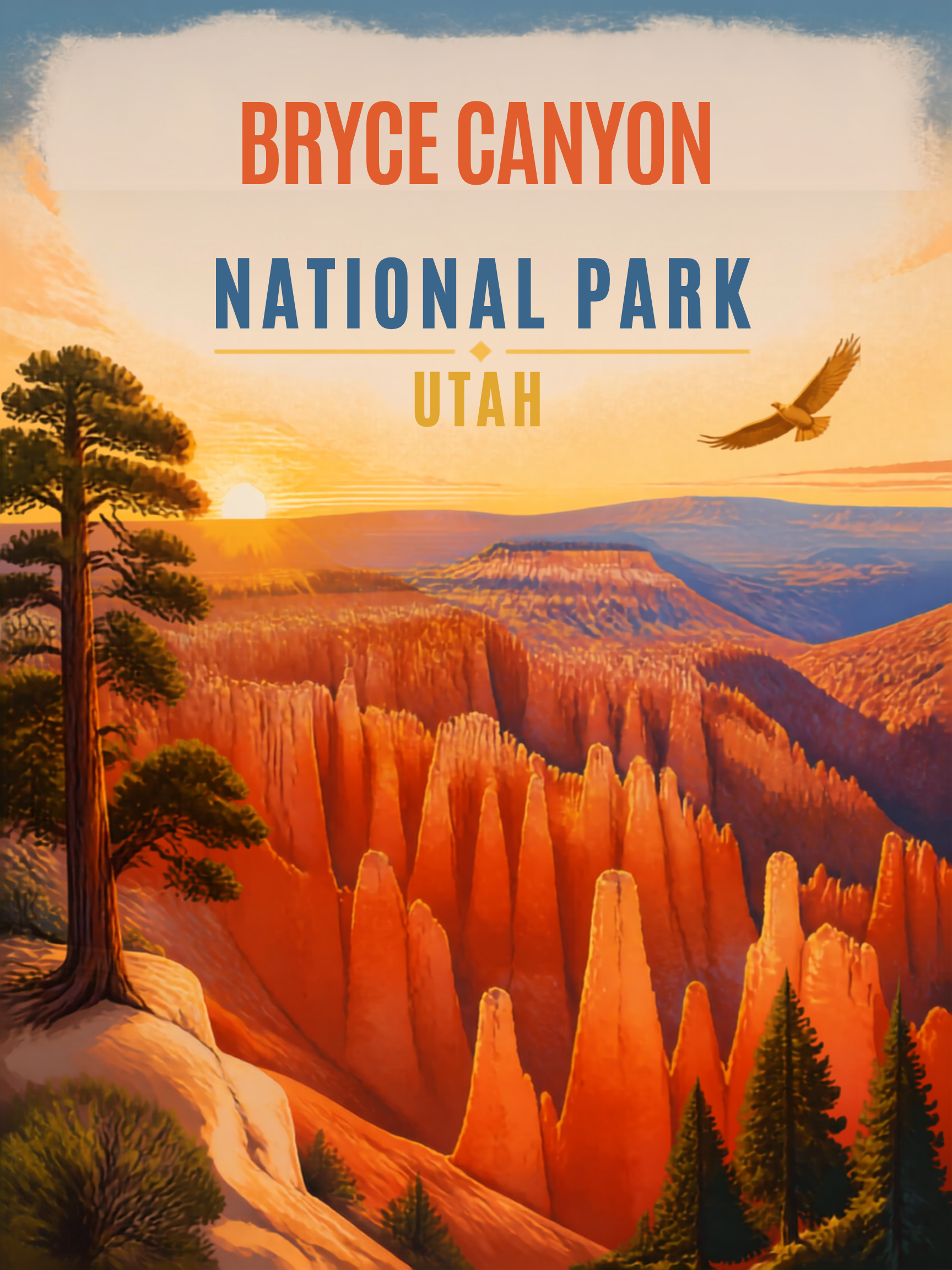
Welcome to Bryce Canyon National Park, a mesmerizing landscape of hoodoos, fins, and natural amphitheaters located in southern Utah. Spanning over 35,000 acres, Bryce Canyon is renowned for its unique rock formations carved by erosion over millions of years. It is one of the ‘mighty five’ National Parks of the Southwest.

Did You Know?
- Bryce Canyon is not actually a canyon. It is a series of natural amphitheaters carved into the eastern edge of the Paunsaugunt Plateau.
- The park contains the largest concentration of hoodoos found anywhere in the world.
- Hoodoos are formed through a combination of frost wedging and erosion, processes that continue to shape the landscape today.
- Bryce Canyon sits at elevations ranging from approximately 8,000 to over 9,000 feet, making it one of the highest national parks in Utah.

My Personal Experience
I visited Bryce Canyon five times and always stayed in charming Kanab, Utah. It is just 76 miles (1.5 hours) drive to Bryce but trust me: it will take you longer as you don’t want to miss any of the opportunities along UT-12 to take some pictures. While most of the scenic views are accessible by car, a visit to Bryce would be incomplete without a hike to the canyon floor. I felt like being in a different world. The feeling of a mix of tranquility and solitude is really hard to describe. There were other hikers but I did not care. Please don’t underestimate summers in Bryce and the combination of high altitude and the heat. Watching you huffing and puffing your way back up to the rim might be a fun activity for some visitors but maybe not so much fun for you. There are also guided horseback tours which will get you down to the canyon floor and back to the rim. It’ s a fun thing to do, especially if you love horses. However, staring into the canyon from a horseback while the horse walks up the countless switchback is certainly not for the faint of heart. The tour guide’s assurance that these animal are not suicidal did not really help… well, I learned the expression “oh my god corner” and yeah, I would definitely do it again.
Basic Facts
Address:
Bryce Canyon National Park
Hwy 63, Bryce, UT 84764
Operation Hours and Seasons:
The park is generally open 24 hours a day, year-round. Some facilities might be closed in winter.
Visitors:
Approximately 2.9 million per year (2021)
Entrance Fees:
- Private Vehicle – $35.00 admits one private, non-commercial vehicle and all its occupants for seven days.
- Per Person – $20.00 for individuals entering the park on foot, bicycle, or motorcycle for seven days.
Website:
nps.gov/brca
Map:
nps.gov/brca/planyourvisit/maps.htm
Additional Information:
For additional local information, visit brycecanyoncountry.com

Best Time to Visit
Spring through fall offers the best overall visitor experience.
Summer brings warm temperatures, full access to trails and facilities, ranger programs, and excellent conditions for hiking and photography. However, it is also the busiest time of year.
Spring and fall are often ideal. Temperatures are more comfortable, crowds are generally smaller, and the lighting conditions for photography can be exceptional.
Winter transforms Bryce Canyon into a completely different landscape. Snow-covered hoodoos create some of the most spectacular scenery in the National Park System and provide unique photography opportunities.

Recommended Time
1 Day: Drive the Bryce Canyon Scenic Drive, stop at the major viewpoints, and hike the Navajo Loop and Queens Garden combination trail. This provides an excellent introduction to the park’s unique landscape.
2-3 Days: The ideal amount of time for most visitors. Explore multiple hiking trails, attend ranger programs, photograph the park at sunrise and sunset, and enjoy a horseback ride into the canyon.

Getting There
Bryce Canyon National Park is easily accessible by car:
From the west, take Highway 12 from Panguitch, Utah, to the park entrance.
From the east, take Highway 12 from Tropic, Utah, to the park entrance.

Weather
Bryce Canyon National Park experiences a high desert climate, characterized by cool winters and warm summers. Here’s an overview of the average weather throughout the year:
Winter (December – February): 30°F to 40°F (-1°C to 4°C). Occasional snowfall, with an average snow depth of around 12 to 18 inches. Some facilities and roads may be closed during winter months, so check ahead before planning your visit.
Spring (March – May): 40°F to 60°F (4°C to 16°C). Occasional rain showers and snowmelt, with an average precipitation of around 1 to 2 inches per month. Ideal for hiking and exploring the park’s trails amidst blooming wildflowers.
Summer (June – August): 80°F (27°C) and occasionally reaching over 90°F (32°C). Clear skies and minimal rainfall, making it perfect for outdoor activities. Crowds peak during the summer months, so plan accordingly and stay hydrated.
Fall (September – November): 50°F to 70°F (10°C to 21°C). Crisp mornings and cooler evenings, with temperatures dropping into the 30s°F (0-4°C). Fall foliage adds vibrant colors to the landscape, making it a picturesque time to visit.
Hiking
Bryce Canyon offers a variety of hiking trails catering to all skill levels, from easy strolls to challenging treks.
Easy:
- Sunrise to Sunset – 1 mile one way: The only paved section of the Rim Trail is the easiest walk in the whole park. Get some nice views of Bryce Amphitheater.
- Rim Trail – 1-11 miles one way: The Rim Trail connects from Bryce Point to Fairyland Point and follows the rim of Bryce Amphitheater. Your hike could be everything between 1 and 11 miles. The trail is paved and flat from Sunset to Sunrise Point.
Moderate:
- Navajo Loop Trail: This popular trail takes you down into the heart of the Bryce Amphitheater, surrounded by towering hoodoos. The trail includes iconic spots like Wall Street and Thor’s Hammer.
- Queens Garden Trail: Explore the Queens Garden to witness some of the most intricate and fascinating hoodoo formations, including the Queen Victoria hoodoo.
Strenuous:
- Fairyland Loop Trail – 8 miles loop: For a longer and more secluded hike, take the Fairyland Loop Trail, which offers stunning vistas of the Bryce Canyon landscape.
- Peekaboo Loop Trail – 5.5 miles loop: This trail descents 670 feet into the canyon from Bryce Point. Watch for horses while you are mesmerized by this hoodoo-filled loop.
Ranger Programs
Enhance your visit with ranger-led programs and interpretive talks offered throughout the park.
Join guided walks, campfire programs, and astronomy events to learn about the park’s geology, wildlife, and cultural history from knowledgeable park rangers. Check the park’s website and/or the visitor centers for most recent updates.
Scenic Drives
- Bryce Canyon Scenic Drive: The park’s primary scenic road extends approximately 18 miles from the visitor center to Rainbow Point. Numerous overlooks provide spectacular views of Bryce Amphitheater, the park’s hoodoos, and the surrounding plateaus.
- Southern Scenic Section: The southern portion of the road receives fewer visitors and offers access to viewpoints such as Natural Bridge, Agua Canyon, Ponderosa Canyon, and Rainbow Point. Many visitors turn around before reaching these overlooks and miss some of the park’s most impressive scenery.
- Utah Scenic Byway 12: Although outside the park boundary, Scenic Byway 12 is frequently considered one of the most beautiful roads in America. It connects Bryce Canyon with Capitol Reef National Park and passes through some of the most dramatic landscapes in Utah.
Best Viewpoints
- Sunrise Point: One of the most popular viewpoints in the park and an excellent location for observing the first light of day illuminate the hoodoos.
- Sunset Point: Home to famous formations such as Thor’s Hammer and one of the best locations for viewing Bryce Amphitheater.
- Inspiration Point: Provides panoramic views across the heart of the amphitheater and showcases the immense scale of the hoodoo formations.
- Bryce Point: Offers one of the most dramatic perspectives of the Silent City and the surrounding canyon landscape.
- Rainbow Point: Located at the southern end of the scenic drive, Rainbow Point provides sweeping views across southern Utah and northern Arizona.
Wildlife Viewing
Despite its reputation as a geological wonderland, Bryce Canyon supports a surprisingly diverse collection of wildlife. Visitors frequently encounter mule deer throughout the park, particularly during the early morning and evening hours. Pronghorn can occasionally be seen in nearby grasslands, while Utah prairie dogs inhabit portions of the region. Birdwatchers may spot ravens, hawks, peregrine falcons, and numerous songbirds. The park’s forests also support black bears, mountain lions, and other mammals, although sightings are relatively uncommon.

Photography
Bryce Canyon is a paradise for photographers, offering endless opportunities to capture the park’s unique rock formations and vibrant colors.
- Sunrise and Sunset Points: Sunrise Point and Sunset Point are aptly named, offering dramatic lighting conditions that paint the hoodoos in vibrant hues. Don’t miss the chance to capture these moments.
- Inspiration Point: True to its name, Inspiration Point provides breathtaking panoramic views of the Bryce Amphitheater. It’s an ideal spot for capturing the vastness and intricacy of the canyon.
- Bryce Point: This viewpoint showcases an incredible vista of the Silent City, a collection of hoodoos that resemble a bustling metropolis.
Venture onto the trails for unique perspectives of the rock formations, especially during the changing light of sunrise or sunset.
Horseback Riding
Experience the beauty of Bryce Canyon from a different perspective with a horseback riding adventure. I would say that this is one of the most popular activities in Bryce.
Guided horseback tours are available from outfitters in and near the park, offering scenic rides through the hoodoos and forests of the canyon. Descending and ascending steep trails on horseback is a fantastic experience and you will learn about oh-my-god corners.
Ride along trails like the Peekaboo Loop or the Fairyland Loop for a unique and memorable experience amidst the towering rock formations. Check nps.gov/brca/planyourvisit/horse.htm for information on private horse ride reservations.
General Aviation
The closest GA airport is in Bryce Canyon City which is located just 4 miles north of the park and makes it a perfect gateway access. There is no need to rent a car as could use the park’s shuttle system. A free shuttle runs from the airport to Ruby’s Inn in Bryce Canyon City. This hotel is also a stop of the Bryce Canyon Shuttle
Bryce Canyon Airport (KBCE) in Bryce Canyon City, UT:
- The closest and most convenient airport for visiting Bryce Canyon National Park.
- Approximately 4 miles from the park entrance
- Longest runway: 7,395 feet
- 100LL available
- Seasonal transportation options available
- Direct access to Bryce Canyon City and the park shuttle system
A useful alternative with additional services and rental car options is
Cedar City Regional Airport (KCDC) – Cedar City, UT:
- Approximately 85 miles from the park
- Longest runway: 8,652 feet
- 100LL available
- Reliable rental car availability
Pilots should pay close attention to density altitude because Bryce Canyon Airport sits at approximately 7,590 feet above sea level. Summer temperatures can significantly affect aircraft performance. Mountainous terrain surrounds much of the area, and afternoon winds and turbulence are common during warmer months. Weather conditions can change rapidly, particularly during summer thunderstorm season. The reward is a spectacular flight through some of the most scenic landscapes in the American Southwest.
Nearby Attractions
- Zion National Park: Located approximately 80 miles southwest of Bryce Canyon, Zion offers towering sandstone cliffs, narrow slot canyons, and some of the most famous hikes in the National Park System.
- Capitol Reef National Park: A less-visited gem known for colorful cliffs, orchards, scenic drives, and fascinating geology.
- Grand Staircase-Escalante National Monument: Protects nearly two million acres of canyons, plateaus, arches, and remote desert landscapes.
- Kanab: A charming southwestern town that serves as an excellent base for exploring Bryce Canyon, Zion, and several other parks and monuments.
- Cedar Breaks National Monument: Often described as a smaller cousin of Bryce Canyon, Cedar Breaks features colorful amphitheaters and high-elevation scenery.
Important Tips
- Start Early: Popular parking areas and viewpoints can become crowded during the summer months. Early mornings offer cooler temperatures and fewer visitors.
- Do Not Skip the Canyon Floor: The viewpoints are spectacular, but Bryce Canyon is best experienced from below the rim where visitors can walk among the hoodoos.
- Prepare for Elevation: Most of the park sits above 8,000 feet. Visitors coming from lower elevations may notice the effects of altitude, especially while hiking uphill.
- Carry Water: The combination of dry air, elevation, and summer temperatures can quickly lead to dehydration.
- Make Horseback Riding Reservations Early: Horseback tours are popular and frequently sell out during peak season.
- Stay for Sunrise or Sunset: Bryce Canyon’s hoodoos change color dramatically throughout the day, making sunrise and sunset the most rewarding times for photography.
- Explore Beyond Bryce Amphitheater: Many visitors never drive beyond the first few viewpoints. The southern overlooks offer excellent scenery and significantly smaller crowds.
Bryce Canyon National Park may be one of the smallest parks in the Rocky Mountain Region, but it delivers some of the most unique scenery in the entire National Park System. The endless maze of hoodoos, fins, windows, and natural amphitheaters creates a landscape that feels more like another planet than southern Utah.
Whether you choose to admire the views from the rim, hike among the towering rock formations, ride horseback into the canyon, or photograph the hoodoos at sunrise, Bryce Canyon offers experiences that are difficult to find anywhere else in the world. It is a park that rewards visitors who slow down, explore beyond the overlooks, and take the time to appreciate the remarkable forces of nature that created this extraordinary landscape.


