Alaska and Pacific Northwest Region
GATES OF THE ARCTIC NATIONAL PARK
AND PRESERVE
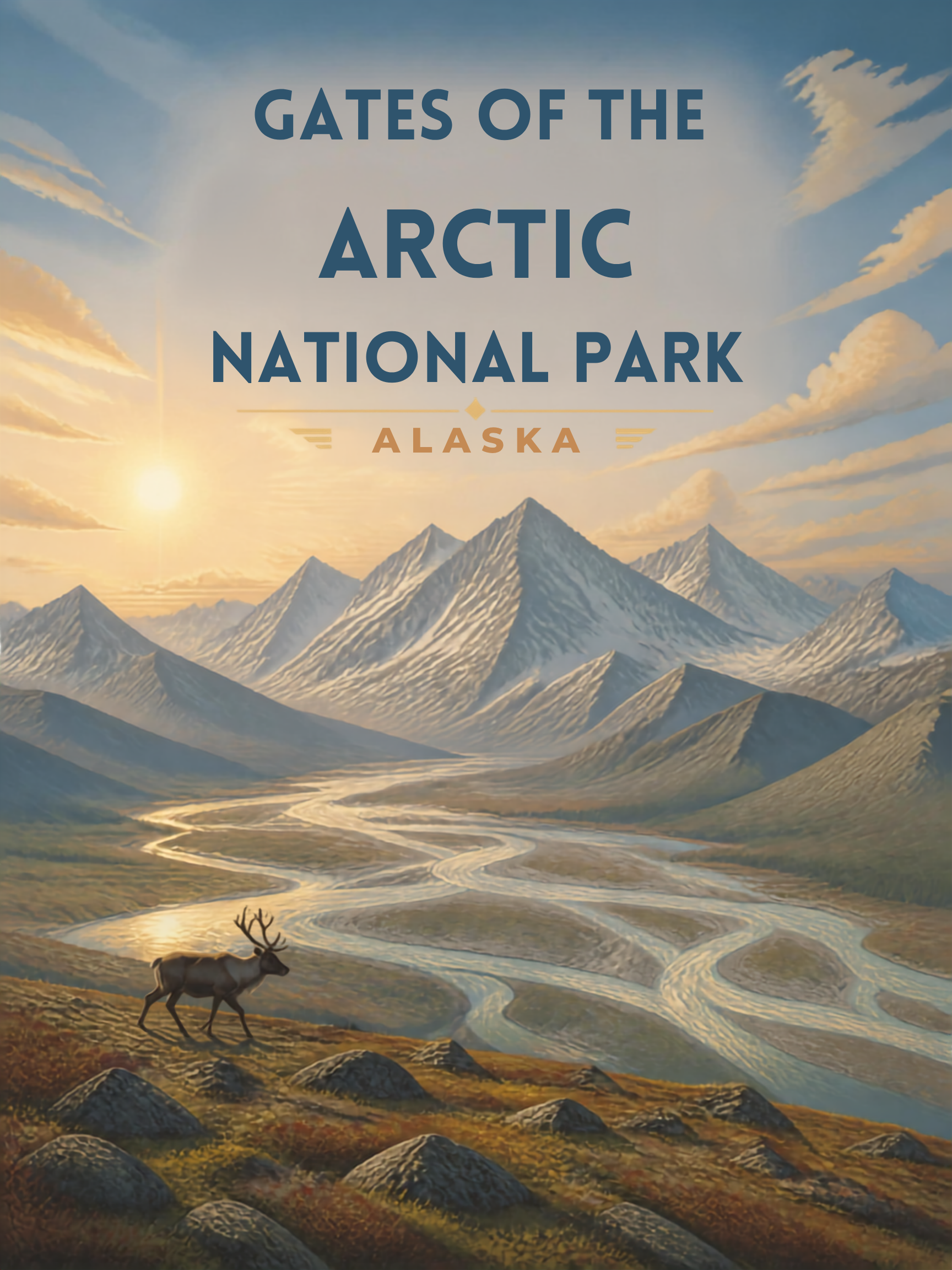
Welcome to Gates of the Arctic National Park and Preserve, a remote and rugged wilderness located in northern Alaska. This park offers unparalleled solitude, pristine landscapes, and one of the last true wilderness experiences on Earth.

Did You Know?
- Gates of the Arctic spans over 8.4 million acres and lies entirely north of the Arctic Circle.
- It consistently ranks among the least visited national parks more people visit the Grand Canyon in a single day than visit this park in an entire year.
- Indigenous peoples have used this land for hunting and subsistence for more than 12,000 years.

My Personal Experience
This is one of the most remote and least visited parks in the entire system and for a long time, I thought I had already visited it. I hadn’t.
In 2009, I drove the Dalton Highway from Fairbanks to Deadhorse on the Arctic Ocean. You pass through Coldfoot and will likely stop at the Arctic Interagency Visitor Center. It’s outside the park boundaries, and technically you still need to hike or fly into the park itself. I didn’t know that back then. So when I later found out, I had to reduce my park count by one.
My second and more expensive attempt finally did the trick. In 2020, my wife and I flew to Kotzebue and booked a flightseeing package that combined Kobuk Valley with Gates of the Arctic. We landed on a riverbank in the middle of the park. At one point, we even spotted a lone wolf likely an older one. The flight alone was worth it. The scale, the emptiness, the untouched wilderness is hard to describe. This time, I could finally check the park off my list and officially join the very small club of Gates of the Arctic visitors.

Basic Facts
Address:
Gates of the Arctic National Park and Preserve
4175 Geist Road
Fairbanks, AK 99709
Operation Hours and Seasons:
The park is open year-round, but accessibility is extremely limited in winter.
Visitors:
Fewer than 10,000 per year (2022)
Entrance Fees:
The park does not charge an entrance fee
Website:
nps.gov/gaar
Map:
nps.gov/gaar/planyourvisit/maps.htm
Additional Information:
For additional local information, visit explorefairbanks.com.

Best Time to Visit
Summer is the only practical time to visit. North of the Arctic Circle, you can experience nearly 24 hours of daylight. Conditions are significantly more manageable than during the harsh winter months

Recommended Time
The biggest catch is that you could spend a whole week without even seeing the mountain but due to limited available lodging, you need to book well in advance
1 Day: Ideal for a flightseeing tour.
7-12 Days: Recommended for true wilderness experiences such as backpacking or guided river trips.

Getting There
The closest major city is Fairbanks, Alaska. There are no roads into the park. Most visitors access the park via chartered bush planes from Fairbanks, Bettles, or Kotzebue.Alternatively, drive the Dalton Highway to Coldfoot and arrange access from there.

Weather
Conditions in Gates of the Arctic are highly variable and can change rapidly, even during summer. Visitors should be prepared for cold temperatures, wind, rain, and occasional snow during any month of the year.
- Spring (March to May): -20°F to 30°F (-29 to 1°C). Snow and ice dominate the landscape while daylight gradually returns.
- Summer (June to August): 40°F to 70°F (4 to 21°C). The brief Arctic summer brings nearly continuous daylight and the most accessible conditions for backcountry travel.
- Fall (September to November): -10s to 40s°F (-23 to 4°C). Tundra colors peak briefly before temperatures drop rapidly and snowfall returns.
- Winter (December to February): -20°F to 0°F (-29 to -18°C). Extreme cold, deep snow, and long periods of darkness characterize the Arctic winter.
Even during summer, nighttime temperatures can approach freezing, particularly at higher elevations.

Hiking
Gates of the Arctic offers a true wilderness hiking experience. There are no marked trails. Visitors must navigate using maps, GPS, and backcountry skills. Expect river crossings, uneven tundra, and rapidly changing weather. This is not a park for casual hiking it is for experienced backcountry travelers or guided expeditions.

Scenic Drives
There are no roads in the park. However, driving the Dalton Highway, a 500-mile gravel road from Fairbanks to the Arctic Ocean, is an adventure in itself (a drive of a lifetime) and often part of the overall experience.

Best Viewpoints
- Flightseeing Tours: The single best way to appreciate the scale of Gates of the Arctic, offering sweeping views of the Brooks Range, Arctic rivers, and remote wilderness.
- Arrigetch Peaks Region: One of the park’s most spectacular mountain landscapes, known for dramatic granite spires rising above the tundra.
- Anaktuvuk Pass Area: A classic Arctic landscape where mountains, tundra, and wildlife combine to create some of the park’s most memorable scenery.

Wildlife Viewing
Gates of the Arctic protects one of the most intact Arctic ecosystems in North America. Wildlife viewing is never guaranteed, but visitors who spend time in the backcountry may encounter caribou, grizzly bears, wolves, Dall sheep, moose, and foxes.
The park lies within the migration routes of the Western Arctic and Central Arctic caribou herds, and witnessing large groups moving across the tundra can be one of the most memorable experiences in the Arctic. Dall sheep are often found on steep mountain slopes, while grizzly bears and wolves roam the valleys and open tundra. During summer, migratory birds arrive from around the world to nest in the park’s wetlands and river corridors.
Unlike many national parks, there are no roads or developed wildlife-viewing areas. Every wildlife encounter here feels wild, unpredictable, and entirely natural.

Photography
Photography in Gates of the Arctic is defined by scale, isolation, and light.
- Aerial Photography: Flightseeing tours provide the best opportunity to appreciate the immense scale of the Brooks Range, braided rivers, and endless wilderness.
- Arctic Landscapes: Mountain ridges, tundra valleys, and winding rivers create dramatic compositions that feel untouched by human activity.
- Midnight Sun: During summer, the low-angle sunlight can last for hours, producing beautiful golden light late into the evening.
- Fall Colors: For a brief period in late August and early September, the tundra turns brilliant shades of red, orange, and gold.
Because there is virtually no light pollution, visitors staying in the region during darker months may also have opportunities to photograph the northern lights.

Horseback Riding
Due to the extremely remote and rugged nature of the park, horseback riding is not common and generally not part of typical visitor activities.

General Aviation
Aviation is the primary gateway to Gates of the Arctic and plays a role similar to roads in most other national parks. Bush planes land on gravel bars or remote strips. This is not suitable for inexperienced pilots
Key access airfields are:
Coldfoot (PACX) in Coldfoot, AK:
- Close to the Arctic Interagency Visitor Center
- 4,011 feet gravel runway
- No fuel available
Bettles (PABT) in Bettles, AK:
- 37 nautical miles southwest of Coldfoot
- 5,190 feet gravel runway
- 100 LL available
Ralph Wien Memorial Airport (PAOT) in Kotzebue, AK
- Start here for flight seeing tours
- Longest runway: 6,300 feet
- 100 LL available
Or fly into a full-service hub like Fairbanks International (PAFA) in Fairbanks, AK and rent a car to drive the Dalton Highway.
Pilots should be experienced in remote Alaska flying. Weather changes quickly, navigation options are limited, and many landing areas consist of gravel bars, unimproved strips, or wilderness airstrips. Flexibility is essential.

Nearby Attractions
- Kobuk Valley National Park: Famous for the Great Kobuk Sand Dunes and migrating caribou herds, offering one of the most unusual landscapes in the Arctic.
- Noatak National Preserve: Protects one of North America’s largest undisturbed river systems and offers exceptional wilderness opportunities.
- Cape Krusenstern National Monument: Known for coastal archaeology, Arctic wildlife, and opportunities to see musk oxen.
- Bering Land Bridge National Preserve: Preserves a portion of the ancient land connection that once linked Asia and North America.
- Dalton Highway: One of the world’s most remote road trips, stretching from Fairbanks to the Arctic Ocean through some of Alaska’s most spectacular landscapes.

Important Tips
- Weather: Conditions can change rapidly. Carry extra layers, rain gear, and emergency supplies regardless of season.
- Navigation: There are no marked trails, signs, or developed facilities in most of the park. Strong wilderness navigation skills are essential.
- Wildlife: You are in serious bear country. Carry bear spray, know how to use it, and follow proper food-storage practices.
- Communication: Cell service is generally unavailable. Satellite communication devices or emergency beacons are strongly recommended.
- Logistics: Transportation, lodging, and charter flights require significant advance planning. Weather delays are common.
- Arctic Tip: Distances are far greater than they appear. What looks like a short walk on the tundra may require hours of travel across uneven ground, river crossings, and dense vegetation.
Gates of the Arctic is not a typical national park; it’s a true expedition. Whether you arrive by bush plane, hike into the wilderness, or explore Alaska’s far north by air, this park offers one of the last truly untouched landscapes on Earth. Visiting requires effort, planning, and a bit of courage but the reward is an experience very few people will ever have.


