Southwest Region
HOT SPRINGS NATIONAL PARK
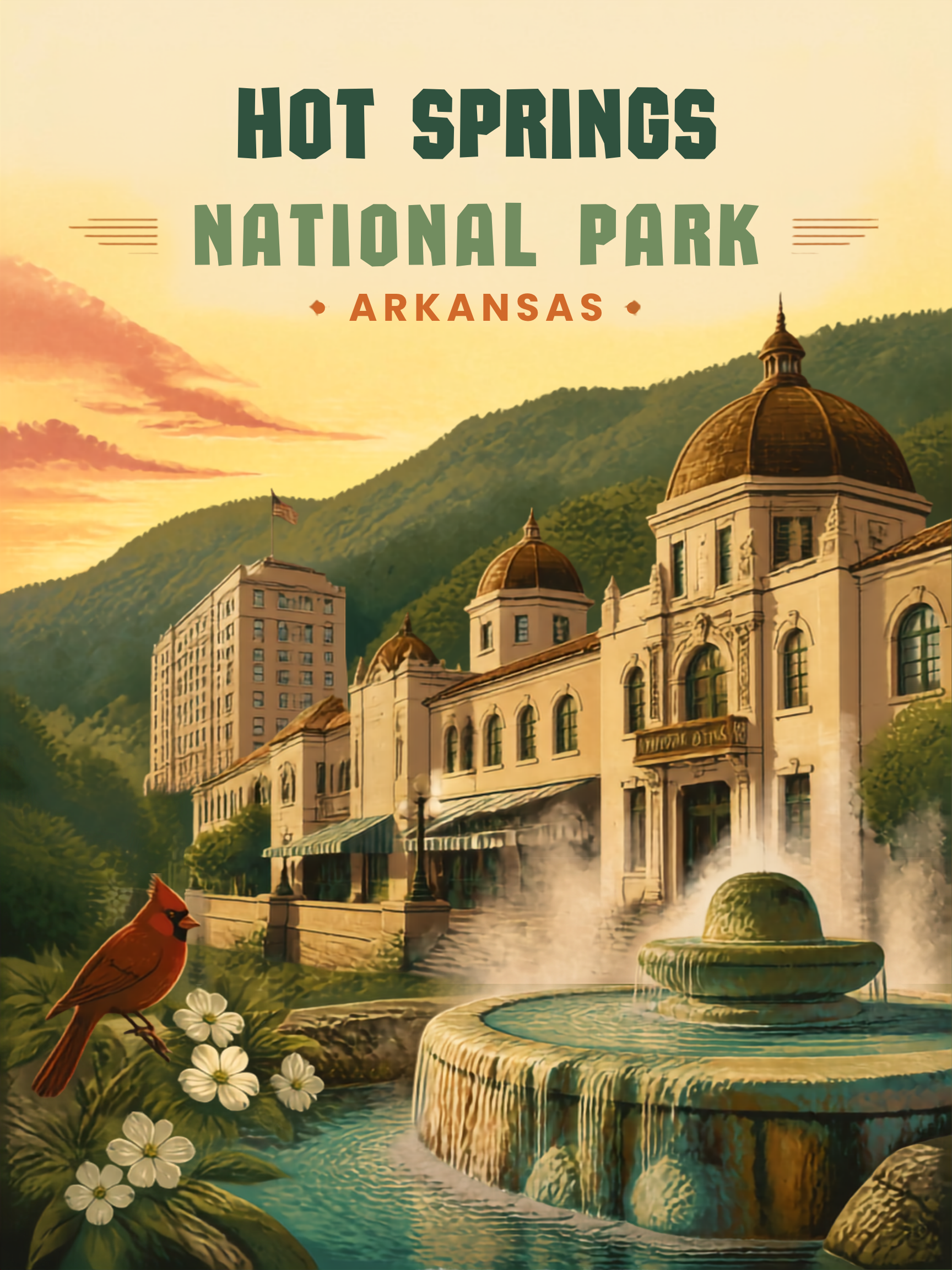
Welcome to Hot Springs National Park, a unique blend of natural hot springs, historic bathhouses, and forested hills located in central Arkansas. Unlike most national parks, Hot Springs is centered around a historic resort city that developed around thermal springs believed to possess healing properties. The park combines natural features, cultural history, scenic drives, and recreational opportunities into one of the most unusual destinations in the National Park System.

Did You Know?
- The thermal water is approximately 4,000 years old. Rainwater falls in the Ouachita Mountains, seeps roughly 6,000 feet underground, and resurfaces at approximately 143°F.
- Bathhouse Row features eight preserved early twentieth-century bathhouses.
- Unlike most hot springs in the western United States, Hot Springs’ geothermal waters are not associated with volcanic activity.
- Hot Springs Reservation was established in 1832, forty years before Yellowstone became the first national park.

My Personal Experience
Hot Springs is a bit of an unusual national park because it is located entirely within the resort city of Hot Springs, Arkansas. The thermal waters were long believed to have healing properties, and the city developed into a spa destination inspired by many of the famous spa towns of Europe. I think that is one of the reasons the place felt so familiar to me.
We visited for my birthday and spent the day exploring Bathhouse Row. In all honesty, most visitors can comfortably experience the park’s major attractions in a single day. We learned a great deal about the park’s history while touring the preserved bathhouses, many of which now serve as museums. Two bathhouses continue to operate today, and you can still see the steaming hot water emerging from the ground.
There are several hiking trails in the surrounding hills, and they are certainly enjoyable, but none struck me as a must-do attraction. The real focus of the park is its history, architecture, and thermal waters.
One of my favorite memories was relaxing in the outdoor hot tub at our hotel, which was fed by thermal spring water. Sitting outside in warm mineral water during the middle of winter was a fantastic experience. There is also a brewery on Bathhouse Row the only brewery located inside a national park where visitors can sample locally brewed beer. And finally, we had some of the best pancakes I can remember at a diner directly across the street. Sometimes it is the little things that make a trip memorable.

Basic Facts
Address:
Hot Springs National Park
369 Central Avenue
Hot Springs, AR 71901
Operation Hours and Seasons:
The park is open year-round, 24 hours a day.
Visitors:
Over 1.5 million per year (2022)
Entrance Fees:
The park does not charge an entrance fee.
Website:
nps.gov/hosp
Map:
nps.gov/hosp/planyourvisit/maps.htm
Additional Information:
For additional local information, visit hotsprings.org.

Best Time to Visit
Hot Springs is a year-round destination.
Spring and fall generally provide the most comfortable weather with pleasant temperatures for walking, sightseeing, and hiking.
Summer brings high humidity and temperatures that can feel oppressive, particularly when exploring Bathhouse Row and downtown Hot Springs.
Winter is often overlooked but can be an excellent time to visit. Temperatures remain relatively mild, crowds are smaller, and soaking in thermal water becomes even more enjoyable during cooler weather.

Recommended Time
1 Day: This is sufficient for most visitors. Tour the Fordyce Bathhouse Visitor Center, walk Bathhouse Row, collect thermal spring water from one of the public fountains, enjoy a traditional bath treatment, and visit the Hot Springs Mountain Tower.
2-3 Days: Add several hiking trails, drive the scenic mountain roads, explore downtown Hot Springs, and spend additional time enjoying the bathhouses, restaurants, and local attractions.

Getting There
The closest major city is Little Rock, Arkansas. From Little Rock, take I-30 West to US-70 West to Hot Springs. The park is approximately one hour southwest of Little Rock.

Weather
Hot Springs National Park experiences a humid subtropical climate:
- Spring (March to May): 50s to 70s°F (10-21°C). Comfortable temperatures and blooming vegetation make spring one of the most popular seasons to visit.
- Summer (June to August): 80s to 90s°F (27-32°C). Humidity can be intense, making hiking and sightseeing more strenuous.
- Fall (September to November): 50s to 70s°F (10-21°C). Fall foliage colors add additional beauty to the surrounding hills and forests.
- Winter (December to February): 40s to 60s°F (4-15°C). Cool temperatures and lighter crowds create pleasant sightseeing conditions.

Hiking
Hot Springs National Park offers a modest but enjoyable trail network in the surrounding Ouachita foothills.
Easy:
- Grand Promenade – 0.5 miles: A paved walkway overlooking Bathhouse Row and downtown Hot Springs.
- Hot Springs Mountain Trail – 1.7 mile loop: A pleasant trail through forested hills with views of the surrounding area.
Moderate:
- Goat Rock Trail – 1.2 miles round trip: Short hike leading to panoramic views from Goat Rock.
- Gulpha Gorge Trail – 4.8 miles round trip: Follows a scenic creek through a quieter section of the park and connects to portions of the longer Sunset Trail system.
Strenuous:
- West Mountain Trail – 2.8 miles loop: Steeper terrain with rewarding views of the city and surrounding mountains.
- Sunset Trail – 17 miles round trip: The park’s longest trail, traversing ridges, forests, and remote sections of the park. Hikers can complete shorter segments or combine portions into longer day hikes.
Bathhouses and Hot Springs
The bathhouses are the centerpiece of the park experience. Visitors can tour several historic bathhouses and enjoy thermal spring water throughout the district. The park features eight bathhouses, with two currently operating as traditional bathhouses: Buckstaff Bathhouse and Quapaw Baths & Spa.
The Fordyce Bathhouse serves as the visitor center and museum, providing an excellent introduction to the history of the park and the development of Hot Springs as a spa destination.

Scenic Drives
The park contains six scenic overlooks offering excellent opportunities for sunrise, sunset, and fall foliage viewing.
Hot Springs Mountain Scenic Drive: Originally built as a carriage road, this drive leads to the Hot Springs Mountain Tower and several overlooks.
West Mountain Scenic Drive: A scenic route through forested hills leading to multiple viewpoints and the Summit Loop.

Best Viewpoints
- Hot Springs Mountain Tower: The park’s premier viewpoint. The tower rises 216 feet above Hot Springs Mountain and offers panoramic views of Hot Springs, Lake Hamilton and the surrounding Ouachita Mountains of central Arkansas.
- West Mountain Overlooks: Several overlooks along West Mountain Scenic Drive provide excellent city and mountain views.

Wildlife Viewing
Wildlife is not the primary attraction, but the park’s forested hills support a surprising variety of species. Visitors may encounter white-tailed deer, gray squirrels, raccoons, armadillos, and numerous songbirds. Birdwatchers should look for woodpeckers, hawks, and migratory species throughout the year. Early morning and evening provide the best wildlife viewing opportunities, particularly on the park’s trail system away from downtown Hot Springs.

Photography
Hot Springs offers a very different photography experience than most national parks.
- Historic Architecture: Bathhouse Row is the park’s signature subject. The beautifully preserved bathhouses showcase impressive early twentieth-century architecture and are especially photogenic in the morning and evening light.
- Hot Springs Mountain Tower: The observation tower provides panoramic views of the city, the park, and the surrounding Ouachita Mountains.
- Fall Colors: Fall brings vibrant colors to the surrounding forests, making the scenic drives and hiking trails particularly attractive for landscape photography.
- Night Photography: The illuminated bathhouses and historic downtown area provide excellent opportunities for evening photography that are rarely found in other national parks.

Horseback Riding
Horseback riding is not permitted on park trails within Hot Springs National Park. Visitors interested in horseback riding can find commercial outfitters throughout the surrounding Ouachita Mountains and central Arkansas region.

General Aviation
Hot Springs National Park is one of the easiest national parks in the system to visit by general aviation aircraft. There is an airport conveniently located 3.5 miles to the southwest of the park.
Memorial Field Airport (KHOT) in Hot Springs, AR:
- Longest runway: 6,595 feet
- 100 LL available
The airport allows pilots to reach the park in less than ten minutes by car.
Flying conditions in central Arkansas are generally straightforward compared to many western parks. Pilots should remain alert for summer thunderstorms, morning fog, reduced visibility near lakes and river valleys, and hilly terrain west of the park. Overall, Hot Springs is one of the most accessible national parks for private pilots.

Nearby Attractions
- Crater of Diamonds State Park: One of the few places in the world where visitors can search for and keep any diamonds they discover.
- Little Rock Central High School National Historic Site: An important National Park Service site that tells the story of the 1957 school desegregation crisis and the broader Civil Rights Movement.
- Arkansas Post National Memorial: Preserves the first European settlement in the lower Mississippi Valley and offers insight into several centuries of American history.
- Arkansas State Capitol in Little Rock: An impressive neoclassical building located in Little Rock and the seat of Arkansas state government.
- Ouachita National Forest: Extensive hiking, scenic drives, lakes, and outdoor recreation opportunities surrounding the Hot Springs area.
- Garvan Woodland Gardens: Beautiful botanical gardens on the shores of Lake Hamilton, particularly attractive during spring blooms and holiday light displays

Important Tips
- Reservations: Bathhouse appointments can fill quickly, especially on weekends and holidays. Reserve treatments in advance whenever possible.
- Thermal Water: Visitors may collect thermal spring water from designated fountains throughout Bathhouse Row. Bring a reusable container.
- Bathhouse Expectations: Traditional bathhouse experiences differ from modern spas. Review available services beforehand so you know what to expect.
- Weather: Summer humidity can be surprisingly uncomfortable. Carry water and plan outdoor activities accordingly.
- Hiking: Although hiking is not the primary attraction, several trails offer a quieter side of the park away from the downtown area.
- Parking: Parking near Bathhouse Row can become limited during peak visitation periods. Consider parking once and exploring the area on foot.
- History: Take time to visit the Fordyce Bathhouse Museum. Understanding the history of the springs greatly enhances the overall experience.
- Don’t Miss the Tower: Even if you are not interested in hiking, the Hot Springs Mountain Tower provides the best overview of both the park and the surrounding Ouachita Mountains.
Hot Springs National Park is unlike any other park in the National Park System. Rather than focusing on wilderness, visitors experience a unique combination of thermal springs, historic architecture, scenic hills, and American spa culture.
Hot Springs Reservation was established forty years before the concept of a national park existed. Today, visitors can still experience many of the same thermal waters that attracted travelers more than a century ago. Whether you come for the history, the architecture, a traditional bath, or simply a relaxing weekend in Arkansas, Hot Springs offers an experience found nowhere else in the National Park System.


