Southeast Region
BISCAYNE NATIONAL PARK
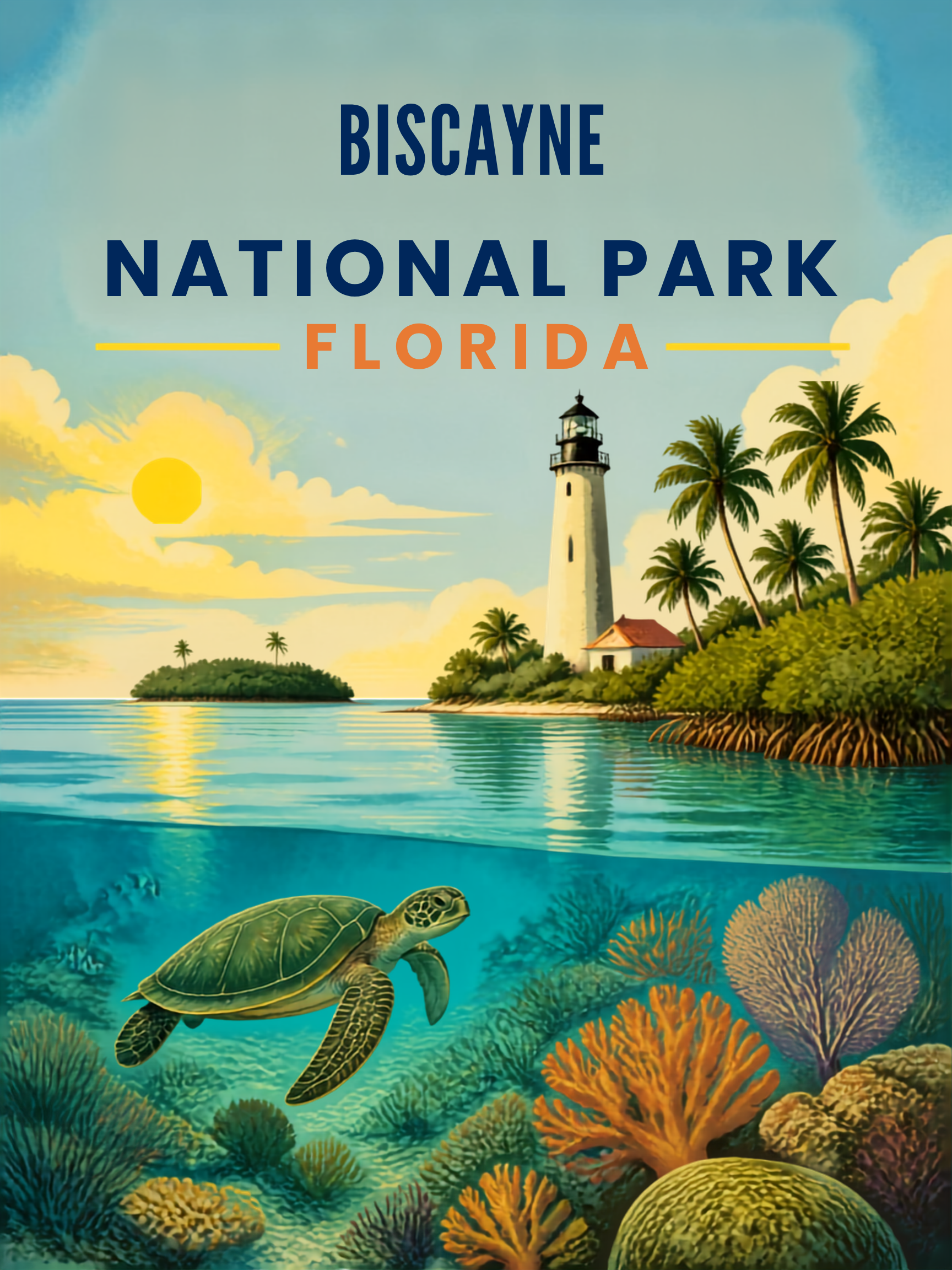
Welcome to Biscayne National Park, a spectacular marine park located just south of Miami. Protecting crystal-clear waters, coral reefs, mangrove forests, small islands, and abundant marine life, Biscayne is one of the most water-oriented parks in the National Park System. Nearly the entire park lies offshore, making this a paradise for boating, snorkeling, kayaking, fishing, and diving.

Did You Know?
- About 95% of Biscayne National Park is underwater
- The park preserves part of the world’s third-largest barrier reef system
- The Maritime Heritage Trail allows divers and snorkelers to explore mapped historic shipwrecks
- Human history in the Biscayne area stretches back more than 10,000 years.

My Personal Experience
Although Biscayne National Park sits only a short drive from the urban sprawl of Miami, it feels completely disconnected from city life. The park protects Biscayne Bay, offshore keys, mangrove shorelines, and coral reefs, but very little of it is actually accessible by land. If you truly want to experience Biscayne, you need to get on or preferably into the water. I decided to take a commercial glass-bottom boat tour, which turned out to be a fantastic compromise between sightseeing and staying dry. Watching the underwater world glide beneath the boat was mesmerizing. Coral formations, schools of colorful tropical fish, and marine life seemed to appear everywhere. The highlight came on the return trip. A pod of dolphins suddenly appeared beside the boat and began swimming alongside us. I managed to capture one of my favorite wildlife photographs I have ever taken. That picture now hangs permanently in our dining room and immediately brings me back to Biscayne every time I look at it.
Spend time on or in the water: snorkel, kayak, or join a boat tour and experience the park the way it was meant to be explored. You might see dolphins, sea turtles, rays, reef fish, manatees, and countless species of coastal birds.

Basic Facts
Address:
Biscayne National Park
9700 SW 328th Street
Homestead, FL 33033
Operation Hours and Seasons:
The park is open year-round, 24 hours a day.
Visitors:
Over 500,000 per year (2022)
Entrance Fees:
The park does not charge an entrance fee.
Website:
nps.gov/bisc
Map:
nps.gov/bisc/planyourvisit/maps.htm
Additional Information:
For additional local information, visit biscaynenationalpark.org.

Best Time to Visit
The park experiences two seasons like other parks in southern Florida: dry season and west season:
Dry Season (December–April)
The best overall time to visit and visitors can expect lower humidity, more comfortable temperatures, fewer mosquitoes and better boating conditions.
Wet Season (May–November)
Expect hot and humid weather with frequent thunderstorms, increased mosquito activity, and even tropical storm and hurricane potential. However, warmer water and calmer seas can create excellent snorkeling and diving visibility during certain summer periods.

Recommended Time
1 Day: Enough time to visit the Dante Fascell Visitor Center, explore Convoy Point, and join a guided boat or snorkeling tour.
2-3 Days: Ideal for kayaking, snorkeling, island visits, scuba diving, fishing, and exploring multiple sections of the park.

Getting There
The closest major city is Miami, Florida. From Miami, take US-1 South to Homestead, then follow signs to the Dante Fascell Visitor Center. Unlike many national parks, most of Biscayne cannot be accessed directly by road. Boat access is essential for fully experiencing the park.

Weather
Biscayne National Park experiences a tropical marine climate:
- Spring (March to May): 70s to 80s°F (21-27°C). Warm temperatures with relatively pleasant humidity levels.
- Summer (June to August): 80s to 90s°F (27-32°C). Hot, humid, and stormy with strong sun exposure.
- Fall (September to November): 70s to 80s°F (21-27°C). Still warm with increasing tropical storm risk.
- Winter (December to February): 60s to 80s°F (15-27°C). Mild temperatures and peak visitation season.
Afternoon thunderstorms can develop rapidly during warmer months. Water temperatures remain comfortable for boating and snorkeling throughout much of the year, although winter cold fronts can occasionally create rough conditions.

Hiking
Biscayne is not a traditional hiking park. Most experiences revolve around water-based recreation:
Easy:
- Convoy Point Trail: Short paved walk near the visitor center with views of Biscayne Bay, interpretive exhibits, and opportunities to spot birds, fish, and occasionally manatees in the shallow waters.
Island Exploration
Several islands like Boca Chita Key or Elliott Key contain short walking paths and open areas. These are usually accessed by private boat or guided tours. Boca Chita Key is particularly popular because of its historic lighthouse, picnic areas, and excellent views across the bay.
Boating and Sailing
Boating is the primary way to experience Biscayne National Park. Guided boat tours, sailing excursions, private boats, and island-hopping trips allow visitors to explore areas that are completely inaccessible from land.
Canoeing and Kayaking
Mangrove shorelines and shallow waters make Biscayne excellent for paddling. Kayakers can explore mangrove forests, coastal lagoons, quiet shorelines, or wildlife habitats. Guided eco-tours are widely available.
Snorkeling and Scuba Diving
Snorkeling and diving are among the park’s signature activities to discover the vibrant coral reefs, shipwrecks, and diverse marine life. The Maritime Heritage Trail is especially popular with divers. Guided tours are strongly recommended for first-time visitors.
Fishing
Enjoy saltwater fishing in designated areas and catch snappers, tarpon, bonefish, or even barracudas. Proper permits and adherence to fishing regulations are required.

Scenic Drives
This park is not experienced on the road but on the water, underwater, or from islands and coastal overlooks.

Best Viewpoints
- Boca Chita Key: The historic lighthouse area offers panoramic views of Biscayne Bay, the Atlantic Ocean, and, on clear days, the Miami skyline.
- Convoy Point: Excellent accessible shoreline views near the visitor center.
- Offshore Waters: Some of the park’s most beautiful scenery is visible only from boats.

Wildlife Viewing
Biscayne National Park protects one of the richest marine ecosystems in the National Park System. Dolphins are frequently seen from boat tours, while manatees often visit sheltered bays and mangrove-lined shorelines. Sea turtles, rays, reef fish, and countless coastal birds inhabit the park’s waters and islands. Winter and spring generally provide the best wildlife viewing conditions, although marine life can be observed year-round. Snorkeling and boat tours often offer the greatest opportunities to see the park’s underwater residents.

Photography
Biscayne is a fantastic park for marine and tropical photography.
- Underwater Photography: Coral reefs and tropical fish create outstanding underwater compositions.
- Golden Hour: Sunrise and sunset light beautifully enhance the turquoise water.
- Dolphins & Marine Wildlife: Boat tours often provide excellent opportunities to photograph dolphins, seabirds, and other marine wildlife against the backdrop of turquoise water.
- Night Photography: Minimal offshore light pollution can create surprisingly good stargazing conditions over the water.

Horseback Riding
This is predominantly an underwater park. Horseback Riding is not offered.

General Aviation
South Florida is extremely GA-friendly but also very busy. Because most of Biscayne is accessed by boat, rideshare services often work better than rental cars for shorter visits.
Miami Homestead General Aviation Airport (X51) in Homestead, FL:
- Rental car options in the city of Homestead
- 16 miles to the park
- Longest runway 4,001 ft
- 100LL available
Miami Exec Airport (KTMB) in Miami, FL:
- Rental car options on site
- 18 miles to the park
- Longest runway 6,000 ft
- 100LL available
There is heavy flight training activity throughout South Florida. Afternoon thunderstorms are common and coastal weather changes rapidly. Miami Class B airspace requires careful planning.

Nearby Attractions
- Everglades National Park: Massive subtropical wetland ecosystem west of Biscayne
- Big Cypress National Preserve: Scenic swamp landscapes and excellent alligator viewing
- Dry Tortugas National Park: Remote island fort accessible from Key West
- Florida Keys: Scenic overseas highway, diving, fishing, and tropical island atmosphere
- Coral Castle: A unique stone monument built by a single individual using massive coral rock blocks.

Important Tips
- Get on the Water: Most of the park cannot be experienced from land.
- Sun Exposure: South Florida sun is extremely intense year-round.
- Weather Awareness: Afternoon storms can develop quickly and affect boating conditions.
- Bring Motion Sickness Medication: Boat tours can become rough depending on wind and sea conditions.
- Reserve Tours Early: Snorkeling and boat tours often fill quickly during peak season.
- Protect Marine Ecosystems: Never touch coral reefs or marine wildlife.
- Seasickness: Even on calm days, offshore conditions can be rough. Visitors prone to motion sickness should consider taking medication before boat tours.
Biscayne National Park may be one of the most underrated parks in the National Park System. Its beauty largely exists beneath the waterline and offshore, rewarding visitors who take the time to explore by boat, snorkel, kayak, or dive. The combination of coral reefs, tropical waters, mangroves, shipwrecks, and marine wildlife creates a completely different national park experience than most visitors expect from South Florida. Biscayne proves that some of America’s greatest natural treasures are hidden just below the surface.


