Midwest Region
GATEWAY ARCH NATIONAL PARK
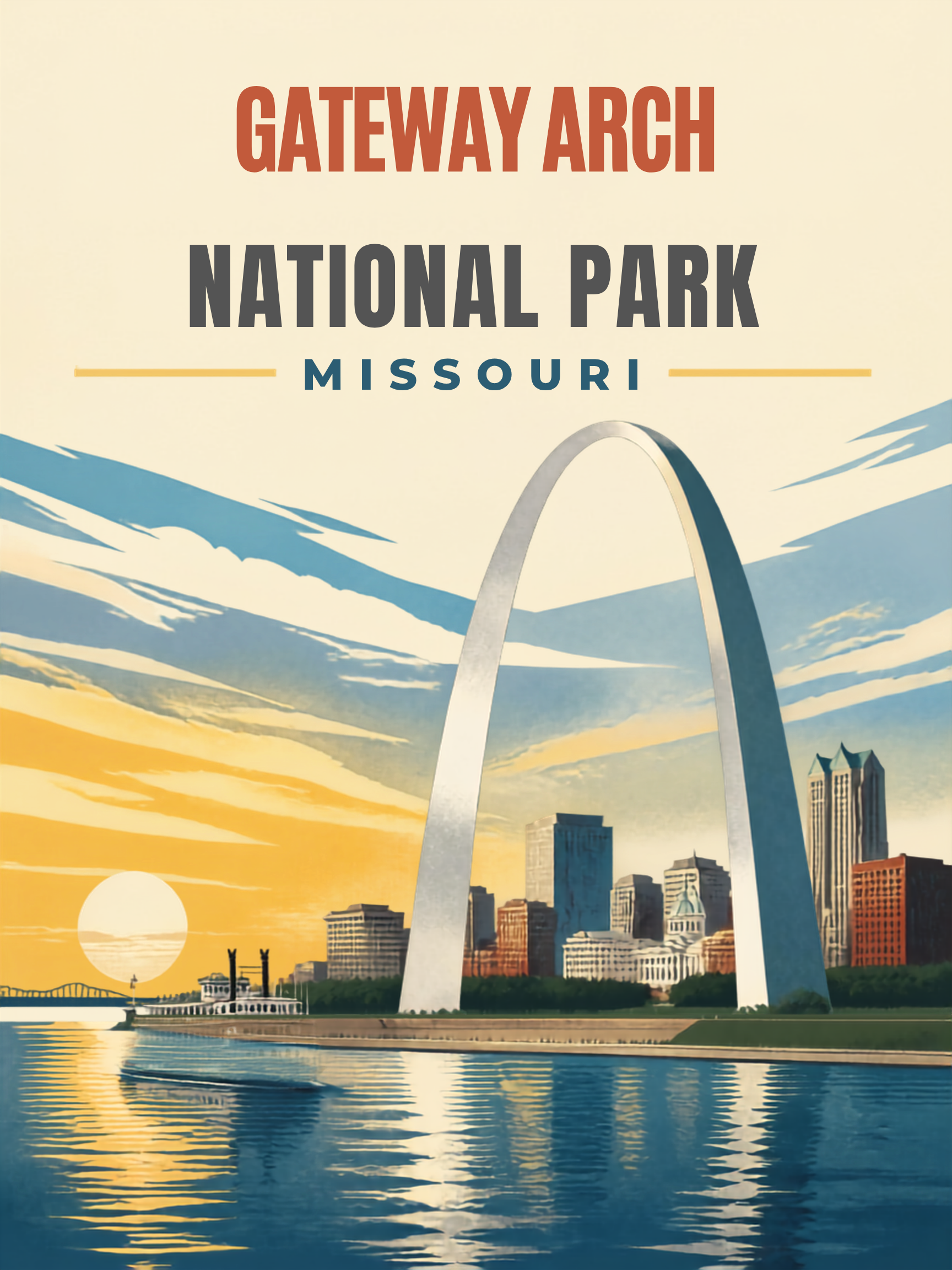
Welcome to Gateway Arch National Park, home to the iconic Gateway Arch, a symbol of the westward expansion of the United States. Located along the Mississippi River in downtown St. Louis, this urban national park combines modern architecture, American history, riverfront scenery, and cultural attractions in one compact but highly recognizable destination.

Did You Know?
- The Gateway Arch is the tallest man-made monument in the United States at 630 feet
- Construction required nearly 900 tons of stainless steel, more than any other project at the time
- At only about 91 acres, Gateway Arch is among the smallest national parks in the system
- The monument was inspired by President Thomas Jefferson’s vision of St. Louis as the “Gateway to the West”

My Personal Experience
If you think of St. Louis, you will probably picture the Gateway Arch. It has become the defining symbol of the city and one of the most recognizable landmarks in the United States.
The Arch was built as a monument to the westward expansion of the United States and stands near the starting point of the famous Lewis and Clark Expedition. The park itself used to be called Jefferson National Expansion Memorial before it was redesignated as a national park.
While I absolutely understand the historical importance of the site and the engineering achievement behind the Arch, I have to admit that I still struggle a little with the redesignation to “national park” status especially when comparing it with parks like Yellowstone, Yosemite, or the Grand Canyon. That said, there is no question that the Gateway Arch is one of the most iconic landmarks in the United States and an important part of the nation’s story.
We visited in 2019 and took a riverboat cruise on the Mississippi River, which turned out to be one of the best ways to photograph the monument. Seeing the stainless steel structure rise above the St. Louis skyline from the water really puts its size into perspective. You can also take the famous tram ride to the top of the Arch, but we decided to skip it and spend more time in the museum beneath the monument instead. The museum does an excellent job explaining the westward expansion era, the Louisiana Purchase, Native American history, and the role St. Louis played in opening the American frontier.

Basic Facts
Address:
Gateway Arch National Park
11 North 4th Street
St. Louis, MO 63102
Operation Hours and Seasons:
The park is open year-round. The Gateway Arch Visitor Center and Museum are open daily from 9:00 AM to 6:00 PM.
Visitors:
Over 2 million per year (2022)
Entrance Fees:
- Gateway Arch Entrance Fee: $3.00 (per person, 16 and older)
- Tram Ride to the Top: $15.00 (adults), $11.00 (children 3-15)
Website:
nps.gov/jeff
Map:
nps.gov/jeff/planyourvisit/maps.htm
Additional Information:
For additional local information, visit explorestlouis.com.

Best Time to Visit
Gateway Arch is a park you could visit year-round. Summer is hot and humid but lively with events and river activity. Spring and fall are most comfortable temperatures for walking the riverfront and exploring downtown St. Louis. Visitors in winter might even find some snow on the ground.

Recommended Time
1 Day: One day is all you need to explore this park. Visit the museum, ride the tram to the top, do a river boat cruise, and take lots of pictures.
2-3 Days: Allows visitors to combine Gateway Arch with other major St. Louis attractions such as Forest Park, museums, breweries, and historic neighborhoods.
.

Getting There
The park is located in downtown St. Louis, Missouri along the Mississippi. The closest major airport is St. Louis Lambert International Airport (STL). From the airport, take I-70 East to the park. The St. Louis MetroLink light rail system stops near the park and provides convenient downtown access.

Weather
Gateway Arch experiences a typical Midwestern climate with hot summers and cool winters:
- Spring (March to May): 50s to 70s°F (10-21°C). Pleasant temperatures and blooming trees make this one of the best times to visit.
- Summer (June to August): 80s to 90s°F (27-32°C). Hot, humid conditions are common along the riverfront.
- Fall (September to November): 50s to 70s°F (10-21°C). Comfortable weather and colorful foliage throughout the city parks.
- Winter (December to February): 30s to 50s°F (0-10°C). Cold with occasional snow and fewer crowds.
Thunderstorms can develop quickly during the warmer months, and summer humidity along the Mississippi River often makes temperatures feel hotter than the thermometer suggests.

Hiking
With less than 2 miles of paved paths which connect he Old Courthouse, the Arch, museum, and the Mississippi River, Gateway Arch is not a hiking destination. Enjoy a leisurely walk or bike ride along the riverfront paths. The park connects to several trails that offer scenic views of the river and downtown St. Louis.
Main Walking Areas
- Gateway Arch Grounds: Landscaped park area connecting the Arch, museum, and riverfront.
- Riverfront Promenade: Scenic paved paths along the Mississippi River.
- Old Courthouse Area: Historic district associated with the Dred Scott case and westward expansion history.
The park also connects to downtown St. Louis pathways and biking routes.
Exploring the Gateway Arch
The tram ride to the top remains the park’s signature attraction. Highlights include:
Panoramic views of downtown St. Louis, Mississippi River views, and Illinois riverfront scenery.
The small tram capsules themselves are part of the experience and may feel tight for claustrophobic visitors. Advance reservations are highly recommended during peak seasons.
Museum of Westward Expansion
Visit the Museum of Westward Expansion located beneath the Arch. The museum features interactive exhibits and artifacts related to the Lewis and Clark expedition, Native American history, the pioneers who settled the West, early St. Louis history, and construction of the Arch itself.
Riverboat Cruises
Mississippi River cruises provide some of the best photographic perspectives of the Arch.
Visitors are offered various options: sightseeing cruises, lunch or dinner cruises, or historical narration tours. Seeing the Arch rise above the riverfront skyline from the water is highly recommended.
Events and Programs
Gateway Arch National Park hosts various events and ranger-led programs throughout the year, including guided tours, educational programs, and cultural events. Check the park’s website for a schedule of events.

Scenic Drives
Gateway Arch itself is explored on foot. However, several nearby drives offer scenic city and river views: Memorial Drive, Great River Road, or Malcolm W. Martin Memorial Park area on the Illinois side.

Best Viewpoints
- Kiener Plaza: One of the classic postcard views of the Arch, with the Old Courthouse providing an excellent foreground.
- Mississippi River: Riverfront walks and boat cruises offer outstanding perspectives of the Arch rising above the St. Louis skyline.
- Top of the Arch: Panoramic views extending across downtown St. Louis, the Mississippi River, and into Illinois.
- Malcolm W. Martin Memorial Park: Located across the river in Illinois, this is arguably the best location for photographing the entire skyline and Arch together.

Wildlife Viewing
Wildlife is not the primary attraction at Gateway Arch National Park, but visitors can still observe a surprising variety of birds along the Mississippi River. Canada geese, ducks, gulls, herons, and seasonal migratory species are commonly seen along the riverfront. The nearby Mississippi flyway is one of North America’s major migration corridors, making spring and fall particularly interesting for birdwatchers. Most wildlife viewing opportunities are found along the river rather than around the Arch itself.

Photography
Gateway Arch offers some of the best urban and architectural photography opportunities in the National Park System.
- Sunrise & Sunset: Warm light reflecting off the stainless-steel surface dramatically changes the appearance of the Arch throughout the day.
- Riverfront Photography: Boat cruises and riverside pathways provide excellent opportunities to photograph the Arch together with the St. Louis skyline.
- Night Photography: The illuminated Arch creates striking cityscape compositions after dark.
- Reflections: Rain puddles, fountains, and polished surfaces around the grounds often create unique reflection opportunities.
- Architectural Photography: The clean lines and perfect curve of the Arch make it a fascinating subject from almost any angle, especially when framed by surrounding buildings or park landscapes.

Horseback Riding
Horseback riding is not available in Gateway Arch National Park.

General Aviation
Several airports provide excellent access to downtown St. Louis.
St. Louis Downtown Airport (KCPS) in Cahokia, Illinois:
- 5 miles from Gateway Arch, just on the other side of the Mississippi
- Longest runway: 7,002 feet
- 100LL available
- Ideal for taking a ride share to the park but also reliable rental car options
St Louis Regional Airport (KALN) in Alton Illinois:
- 25 miles to the north of the park
- Longest runway: 8,099 feet
- 100LL available
- Farther away than KCPS. Rental car availability may be limited and should be confirmed in advance.
The park sits beneath the busy Class B airspace of St. Louis Lambert International Airport. Nearby military operations from Scott Air Force Base create additional traffic. Expect heavy airline traffic and complex airspace transitions.

Nearby Attractions
- Forest Park: Home to the free St.Louis Zoo, Science Center, and Art Museum
- Ulysses S. Grant National Historic Site: Preserves the home and history of the 18th U.S. president
- St. Louis Union Station: Features the St. Louis Aquarium, a Ferris wheel, and shopping.
- Cathedral Basilica of Saint Louis: Famous for one of the world’s largest mosaic collections.
- City Museum: Unique interactive art and architecture attraction
- Anheuser-Busch Brewery: Historic brewery tours and beer gardens
- Cahokia Mounds: The largest pre-Columbian archaeological site north of Mexico and a UNESCO World Heritage Site located just across the river in Illinois.

Important Tips
- Reserve Tram Tickets Early: Popular time slots frequently sell out, especially during weekends and summer.
- Security Screening: Visitors entering the Arch and museum area should expect airport-style screening.
- Summer Heat: The riverfront can become extremely hot and humid during summer afternoons.
- Parking: Downtown parking is available but may require walking. Public transportation can be easier during busy periods.
- Photography Timing: Sunrise and sunset provide the best lighting and fewer crowds.
- Urban Awareness: Like any large city environment, remain aware of your surroundings while exploring downtown St. Louis.
Gateway Arch National Park is unlike almost every other national park in the United States. Rather than protecting wilderness, mountains, or dramatic geological features, it preserves a symbol of American expansion, ambition, engineering, and history. Whether you admire the architecture, explore the museum, photograph the skyline from the Mississippi River, or simply stand beneath the massive stainless steel arch, the park offers a distinctly urban but uniquely American national park experience.


