Mid-Atlantic Region
SHENANDOAH NATIONAL PARK
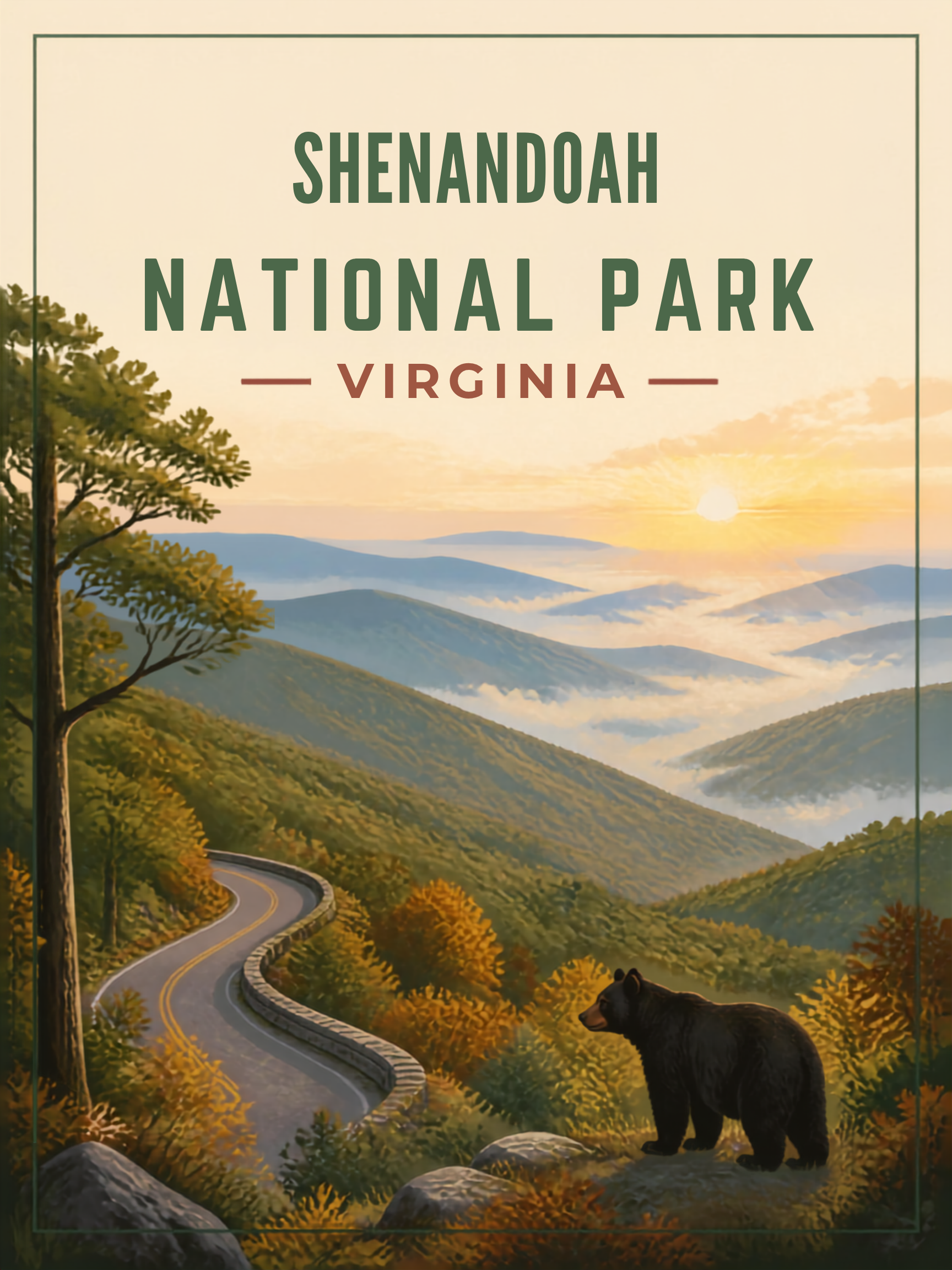
Welcome to Shenandoah National Park, a beautiful expanse of protected wilderness in the Blue Ridge Mountains of Virginia. Known for its sweeping mountain vistas, dense forests, and easy access from major East Coast cities, the park offers a perfect mix of scenic driving and rewarding hiking.

Did You Know?
- Some rocks found in the park such as those at Compton Peak are over one billion years old
- Shenandoah is a ‘recycled’ wilderness. The land was more than ninety percent farmland when the park was established in the 1930s. Today, it’s over 95% forested.
- Skyline Drive is 105 miles long and runs along the ridge from the North Entrance to the South Entrance of the park.

My Personal Experience
Shenandoah National Park has become home turf since my wife and I moved to Virginia and easily our most visited park. We take every visitor there for a day trip – no exceptions.
We usually enter through the North Entrance and drive Skyline Drive south to Big Meadows. I have to admit, I have driven the full Skyline Drive to the southern end only once. The park is enchanting in every season, but especially in fall when the foliage is at its peak. Expect long lines at the entrance as everyone wants to experience it. Watch for motorcyclists in spring, as many riders start their season here. While you could experience Shenandoah entirely from your car enjoying views of the mountains and the Shenandoah River (yes, that Take Me Home, Country Roads reference), I wouldn’t recommend it. Pick a trailhead along Skyline Drive and get out for a hike.
Please obey speed limits. Wildlife frequently crosses the road. Despite a healthy black bear population, I’ve only seen bears once: a sow crossing the road with two cubs. I did have a memorable encounter with a white-tailed deer that calmly approached me on a trail, sniffed my hand, and then decided I wasn’t particularly interesting.
Big Meadows is another great wildlife spot, especially for groups of deer grazing at dusk. And one last tip for summer: bring mosquito spray. You’re in the mountains but so are they.

Basic Facts
Address:
Shenandoah National Park
3655 US Highway 211 East
Luray, VA 22835
Operation Hours and Seasons:
The park is open year-round, with some facilities and services operating seasonally.
Visitors:
Over 1.4 million per year (2022)
Entrance Fees:
- Private Vehicle: $30.00 (admits one private, non-commercial vehicle and all its occupants for seven days)
- Per Person: $15.00 (when entering on foot or bicycle, valid for seven days)
Website:
nps.gov/shen
Map:
nps.gov/shen/planyourvisit/maps.htm
Additional Information:
For additional local information, visit visitshenandoah.org.

Best Time to Visit
Shenandoah is a year-round park but best seasons to visit are spring and fall.
Spring offers pleasant temperatures for hiking with wildflowers blooming while Fall is the prime time to see the foliage although the park can be extremely crowded.
Visiting in summer can provide some relief from the city heat but it could still be humid. Expect closures of Skyline Drive in winter with services closed for the season.

Recommended Time
1 Day: The ideal introduction. Drive a portion of Skyline Drive, stop at a few overlooks, and complete 1-2 hikes. Avoid trying to cover the entire park as you will spend most of your time in the car.
2-3 Days: The sweet spot. This allows you to drive the full Skyline Drive at a relaxed pace, explore multiple trailheads, and include a longer hike like Old Rag which is demanding and requires a significant amount of scrambling. Staying overnight inside or near the park significantly improves the experience. Stay additional days for a more immersive visit and explore different sections of the park in depth.

Getting There
The closest major cities are Washington, D.C., and Richmond, Virginia. From Washington, D.C., take I-66 West to Front Royal, Virginia. From Richmond, take I-64 West to Charlottesville, Virginia. Multiple entrances allow flexible access along Skyline Drive.

Weather
Shenandoah’s elevation creates cooler temperatures than surrounding lowlands, but humidity is still a factor in summer:
- Spring (March to May): 40s–70s°F (4–21°C). Wildflowers bloom, variable weather.
- Summer (June to August): 70s–90s°F (21–32°C). Humid with afternoon storms; popular time for visitors.
- Fall (September to November): 40s–70s°F (4–21°C). Crisp, clear days with vibrant fall foliage.
- Winter (December to February): 30s–50s°F (-1–10°C). Cold with occasional snow; fewer visitors. Expect temporary closures.
Expect noticeable temperature drops at higher elevations and rapid weather changes. Morning fog is common along Skyline Drive, particularly during spring and fall.

Hiking
Shenandoah National Park offers more than 500 miles of trails for all levels. Most trails originate at Skyline Drive and hikers descend into hollows or runs. Factor in additional time (and energy) for you climb back up.
Easy:
- Limberlost Trail – 1.3 miles loop: A flat, ADA-accessible trail through peaceful forest, making it an excellent introduction to Shenandoah’s woodland scenery.
- Dark Hollow Falls Trail – 1.4 miles round trip: A short but steep hike to one of the park’s most popular waterfalls.
Moderate:
- Hawksbill Mountain – 2.9 miles round trip: Leads to the park’s highest point with a stone observation platform and sweeping views.
- Compton Peak – 2.3 miles round trip: Combines mountain vistas with unique basalt column formations.
Strenuous:
- Whiteoak Canyon – 4.6 miles round trip: A rewarding hike to a series of cascading waterfalls and pools. Water flow is particularly impressive after periods of rain.
- Old Rag Mountain – 9 miles round trip: The park’s most famous hike, featuring rock scrambles, exposed sections, and outstanding summit views (upfront reservation on recreation.gov

Scenic Drives
Shenandoah National Park was designed as a park you enjoy by driving through. The 105 miles Skyline Drive is the defining feature and runs through the park from North to South on the mountain ridge providing 75 overlooks with countless panoramic views of the Blue Ridge Mountains and Shenandoah Valley.

Best Viewpoints
- Stony Man: One of the park’s most accessible summit views, offering sweeping panoramas of the Shenandoah Valley and the Blue Ridge Mountains.
- Hawksbill Mountain: The highest point in the park, featuring a stone observation platform with some of Shenandoah’s finest views.
- Gooney Manor Overlook: Located near Mile 6 on Skyline Drive, this overlook is a favorite sunset location and provides expansive views across the valley below.

Wildlife Viewing
Shenandoah supports an impressive diversity of wildlife, including black bears, white-tailed deer, bobcats, foxes, wild turkeys, and more than 190 bird species. Deer are commonly seen in open areas such as Big Meadows, particularly during the early morning and evening hours. Black bears are present throughout the park, although many visitors never see one despite a healthy population. Birdwatchers should keep an eye out for hawks, woodpeckers, and migratory songbirds along Skyline Drive and the park’s many forest trails. Dawn and dusk generally provide the best opportunities for wildlife viewing.

Photography
Shenandoah is ideal for landscape and seasonal photography:
- Golden Hour: Overlooks along Skyline Drive provide easy access to sunrise and sunset photography, with soft light illuminating the Blue Ridge Mountains.
- Fall Foliage: Late September through late October offers spectacular opportunities to capture fall colors. Expect crowds, limited parking, and long entrance lines during peak foliage weekends.
- Fog & Layers: Morning fog settling in the valleys creates the classic layered mountain scenes for which the Blue Ridge region is famous.
- Waterfalls: Trails such as Dark Hollow Falls and Whiteoak Canyon offer excellent opportunities for long-exposure photography, particularly after rainfall.

Horseback Riding
Horseback riding is a well-established activity in Shenandoah National Park, with over 180 miles of designated trails open to stock use. These trails are marked with yellow paint blazes on trees. Riders may bring their own horses, but should be aware of several rules and practical limitations:
- Stock use is restricted to designated trails only
- Horses are not permitted on most hiking trails or paved areas
- Trailer parking is limited, particularly along Skyline Drive
- There are no developed overnight facilities specifically for horses within the park
- Hay and feed brought into the park should follow best practices to prevent the spread of invasive species (check current requirements before arrival)
Check the park’s website for details: nps.gov/shen/planyourvisit/horseback_riding.htm.
Guided horseback rides are available seasonally (typically spring through fall) through the park’s concessionaire at Skyland. These rides are a good option for visitors without their own stock and provide access to scenic areas along Skyline Drive. Check their website goshenandoah.com for schedules.

General Aviation
Shenandoah National Park is very accessible for general aviation pilots, with several nearby airports offering varying levels of infrastructure. The key differentiator is availability of rental cars, which is critical for park access. Only the ones in Front Royal, Harrisonburg/Staunton, and Charlottesville seem to offer reliable rental car options.
Front Royal-Warren County Airport (KFRR) in Front Royal, VA:
- Right at the north entrance of the park
- Paved runway is 3,008 ft
- 100LL available
Shenandoah Valley Regional Airport (KSHD) in Harrisonburg, VA:
- Close to Swift Run Gap and Rockfish Gap entrances
- 6,000 ft paved runway
- 100LL available
Charlottesville-Albemarle Airport (KCHO) in Charlottesville, VA:
- Close to Rockfish Gap entrance
- 6,801 ft paved runway
- 100LL available
- Local FBO may charge handling fees
As an alternative without reliable rental car options:
Luray Caverns Airport (KLUA) in Luray, VA:
- Perfect for visiting Luray Caverns, a nearby attraction and central park access.
- 3,126 ft paved runway
- 100LL available
- Courtesy transport services to/from the Caverns
The park sits along the Blue Ridge Mountains, so expect rising terrain and ridge effects. Expect frequent morning fog in valleys as well as summer haze and thunderstorms.

Nearby Attractions
- Luray Caverns: East of Luray, VA and one of the largest cave systems in the eastern U.S., featuring impressive stalactites and the unique Great Stalacpipe Organ.
- Charlottesville Wine region: Charlottesville Wine Region: Home to more than 40 wineries set among the rolling foothills of the Blue Ridge Mountains, making it an excellent addition to a Shenandoah getaway.
- Monticello: This was the plantation of Thomas Jefferson, one of the Founding Fathers and author of the Declaration of Independence. Tickets are required to access the mansion and the grounds.
- Shenandoah River: Nearby Shenandoah is popular for kayaking, tubing, and fishing just outside the park.

Important Tips
- Crowds & Timing: Expect heavy traffic during weekends and peak fall foliage. Arrive early or visit midweek for a better experience.
- Driving & Wildlife: Speed limits are strictly enforced and necessary. Wildlife frequently crosses roads, especially at dawn and dusk.
- Weather & Preparation: Conditions can change quickly. Bring layers, even in summer, and be prepared for rain or fog at higher elevations.
- Hiking Strategy: Many trails descend first. Save energy for the return climb. Carry water, especially in humid summer conditions.
- Reservations & Permits: Popular hikes like Old Rag require advance reservations. Plan ahead during peak season.
- Insects & Comfort: Mosquitoes and ticks are common in warmer months. Bring repellent and check for ticks after hikes.
Shenandoah National Park is one of the most accessible national parks in the United States, yet it still delivers a genuine wilderness experience. Whether you’re enjoying a scenic drive along Skyline Drive, hiking to a waterfall, or simply watching the sunset over layered mountain ridges, Shenandoah proves that you don’t have to travel far to experience the beauty of a national park.


