Rocky Mountain Region
GLACIER NATIONAL PARK
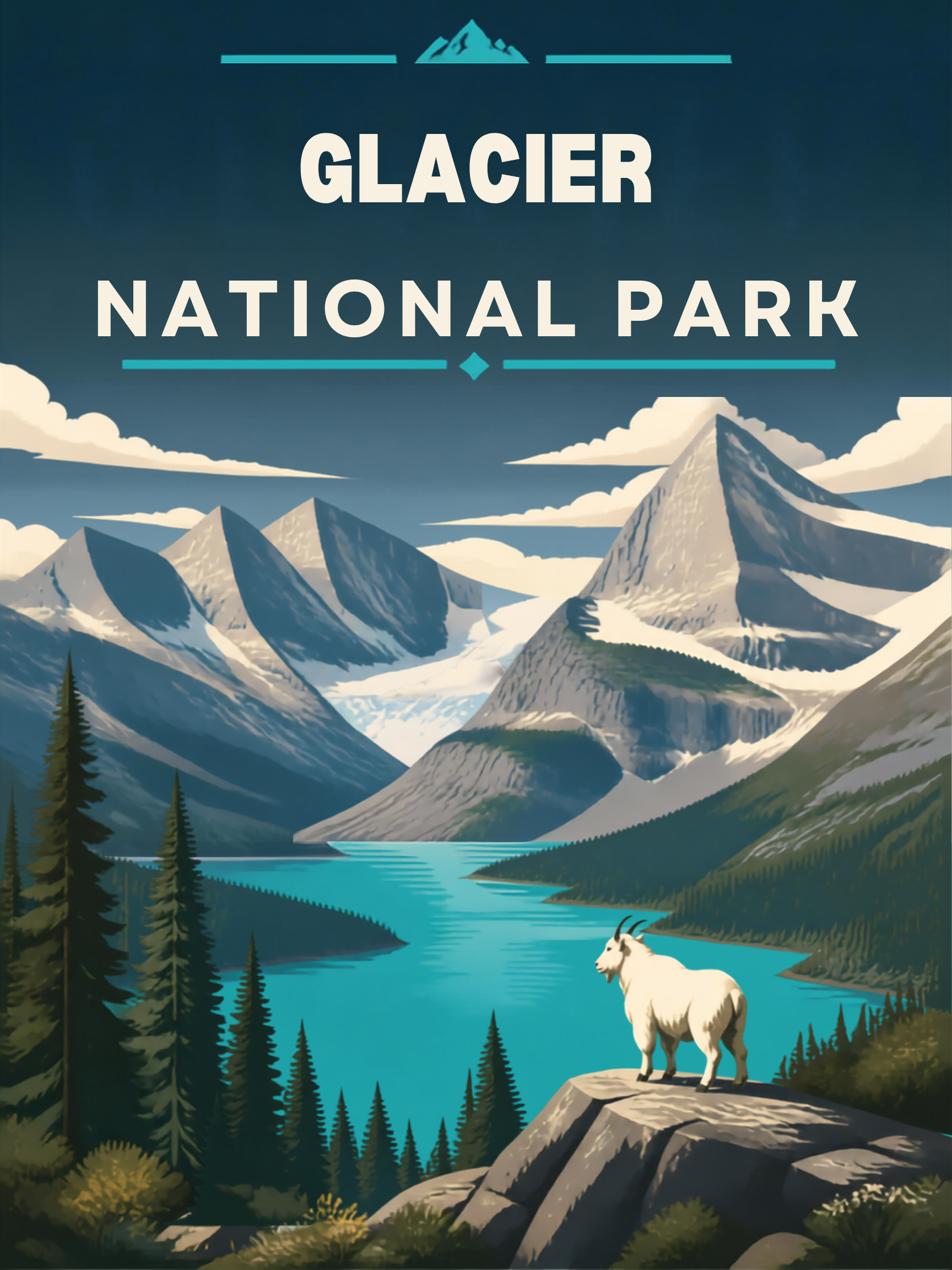
Welcome to Glacier National Park, a pristine wilderness in the Rocky Mountains of northwestern Montana. Known for its rugged peaks, spectacular glaciers, alpine meadows, turquoise lakes, and abundant wildlife, Glacier delivers breathtaking scenery and outdoor adventure at every turn. With more than 700 miles of trails and one of the most iconic drives in the United States, this park is a bucket-list destination for hikers, photographers, and nature lovers alike.

Did You Know?
- Glacier National Park contains portions of the world’s first International Peace Park, jointly managed with Canada’s Waterton Lakes National Park.
- The park once contained approximately 150 glaciers. Today, fewer than 30 active glaciers remain.
- Going-to-the-Sun Road is considered one of the greatest scenic drives in North America and took more than a decade to complete.
- Glacier National Park protects more than one million acres of wilderness and rugged mountain scenery.
- The park is home to one of the largest remaining grizzly bear populations in the lower 48 states.

My Personal Experience
Glacier is one of the most beautiful parks in the lower 48 but it feels remote. That’s the main reason I’ve only visited once, and why that trip sticks with me. It was 2004, long before smartphones, and after several hours driving from Helena I arrived in the tiny village of St. Mary at 3:30 PM on a July afternoon. With a population of 54 and no hotel reservation, I hoped to find a room. What was I thinking? Not wanting to double back to the next major town, my only option was to explore the park and drive the Going-to-the-Sun Road.
Oh man it was so worth it. I’d highly recommend the St. Mary Falls Trail, which begins right near the St. Mary entrance and leads to beautiful cascades and classic Glacier scenery. Don’t rush; this place rewards patience and relaxed exploration. The park gets extremely busy in summer even timed entry hasn’t fully solved congestion but seeing glaciers, waterfalls, and alpine vistas up close is unforgettable. I saw plenty of bighorn sheep, mountain goats, and even marmots along the way.
Plan to arrive early, take the whole day, and if possible spend a night in Kalispell or Whitefish afterward. If you’re lucky, you might even hear local tales about Sasquatch sightings near the Canadian border!
Basic Facts
Address:
Glacier National Park
64 Grinnell Drive
West Glacier, MT 59936
Operation Hours and Seasons:
The park is open 24 hours a day, year-round. Visitor centers and roads have seasonal schedules and closures dependent on snow.
Visitors:
Approximately 3 million per year (2022)
Entrance Fees:
- Private Vehicle – $35.00 admits one private, non-commercial vehicle and all its occupants for 7 days
- Per Person – $20.00
Website:
nps.gov/glac
Map:
nps.gov/glac/planyourvisit/maps.htm
Additional Information:
For additional local information, visit glaciermt.com
Important Note
In 2025, Glacier National Park implemented a timed vehicle entry reservation system for the Going-to-the-Sun Road (west side) and the North Fork area during peak summer hours (usually mid-June through late September). Reservations were required for access between 7 AM and 3 PM past the reservation checkpoints.
However, recent updates indicate that for 2026, Glacier has discontinued the vehicle reservation requirement for Going-to-the-Sun Road, restoring more spontaneous access for visitors without a timed entry ticket. Roads may still be congested, and parking at popular trailheads like Logan Pass can fill quickly.
Always check the park’s official page before your visit for the latest vehicle access policies and road conditions.
Driving Going-to-the-Sun Road itself about 50 scenic miles from east to west typically takes 2 to 2.5 hours without stops, but expect to spend a full day exploring viewpoints, pull-outs, and trailheads along the way.
The park also offers a free Going-to-the-Sun Road shuttle service during summer months, which helps reduce congestion and provides access to key stops without needing to drive yourself.
Best Time to Visit
Summer is the peak season and the only time when Going-to-the-Sun Road is typically fully open. Most hiking trails, visitor centers, and facilities are accessible. Fall is one of the best times to visit. Crowds decline significantly, temperatures are comfortable, and fall colors begin appearing throughout the valleys.
Wildflowers emerge and wildlife becomes increasingly active in spring. Snow often remains at higher elevations, and Going-to-the-Sun Road may not yet be fully open. Visitors have a completely different Glacier experience in winter. Deep snow, solitude, and winter recreation dominate, although many roads and facilities are closed.

Recommended Time
1 Day: Drive Going-to-the-Sun Road, stop at Logan Pass, hike St. Mary Falls, and enjoy several overlooks along the route.
2-3 Days: Ideal for most visitors. Explore both the east and west sides of the park, complete several hikes, and spend time in the Many Glacier area.
Getting there
- West Entrance (West Glacier): From Kalispell, MT, take Highway 2 east about 33 miles.
- East Entrances: From Browning, MT, follow Highway 89 north and follow signs to the East Glacier entrance zones (Many Glacier, St. Mary).
- Glacier’s Canadian neighbor, Waterton Lakes National Park, is about 50 miles north of St. Mary (≈ 1 hour by road), making for a superb international add-on.
Weather
Weather in Glacier varies dramatically with elevation and season:
- Spring (Mar–May): 40s–60s°F at lower elevations; snow lingers higher up.
- Summer (Jun–Aug): 70s–80s°F; ideal for hiking but expect crowds.
- Fall (Sep–Nov): 40s–60s°F; crisp days and spectacular fall color.
- Winter (Dec–Feb): 20s–30s°F; deep snow, many roads closed.
Always layer up. Afternoon storms and sharp temperature swings are common.
Hiking
With 700+ miles of trails, Glacier offers hikes for all experience levels:
Easy:
- St. Mary Falls – 1.1 miles one way: One of the most rewarding short hikes in Glacier. The trail leads to beautiful turquoise waterfalls and provides an excellent introduction to the park’s scenery. Its location near the east entrance makes it a perfect first stop.
- Virginia Falls – 1.5 miles one way: Continuing beyond St. Mary Falls brings visitors to the impressive Virginia Falls, where water plunges nearly 50 feet into a dramatic mountain setting.
Moderate:
- Iceberg Lake Trail – 9.6 miles round trip: One of the finest hikes in the park. The trail traverses alpine meadows, passes through prime wildlife habitat, and ends at a stunning turquoise lake often filled with floating ice well into summer.
- Avalanche Lake – 4.5 miles round trip: A classic Glacier hike. The trail passes through ancient cedar forest before reaching a spectacular alpine lake surrounded by steep cliffs and cascading waterfalls.
Strenuous:
- Highline Trail – 15 miles one way: One of the most famous hikes in North America. Following the Continental Divide, the trail offers continuous panoramic views of Glacier’s rugged peaks, valleys, and alpine landscapes.
- Grinnell Glacier Trail – 11.2 miles round trip: Arguably Glacier’s signature hike. Visitors are rewarded with incredible views of glaciers, alpine lakes, waterfalls, and wildlife. Boat shuttles can shorten the overall distance
Other notable hikes include Hidden Lake Overlook, Ptarmigan Tunnel, and trails in the Many Glacier area with waterfall views and alpine scenery.
Scenic Drives
- Going-to-the-Sun Road: This 50-mile route is one of the most scenic drives in the world, offering spectacular views of mountains, glaciers, and wildlife. The road is usually open from late June to mid-October, depending on weather conditions.
- Many Glacier Road: A 12-mile road that provides access to beautiful lakes, hiking trails, and opportunities for wildlife viewing.
Both drives offer endless pullouts for photography and short walks.
Best Viewpoints
- Logan Pass: The heart of Glacier National Park and one of the most spectacular viewpoints in the Rocky Mountains.
- Wild Goose Island Overlook: Perhaps the park’s most iconic photograph. The tiny island framed by St. Mary Lake and surrounding peaks is instantly recognizable.
- Jackson Glacier Overlook: One of the easiest places in the park to view an active glacier from the road.
- Many Glacier Valley: Some of Glacier’s most dramatic scenery can be found in this spectacular valley of lakes, cliffs, and glaciers.
- Lake McDonald: One of the park’s most photographed locations, famous for its crystal-clear water and colorful shoreline stones.
Wildlife Viewing
Glacier National Park offers exceptional wildlife-viewing opportunities. Mountain goats and bighorn sheep are frequently observed near Logan Pass and other alpine areas. Grizzly bears and black bears inhabit much of the park and are occasionally seen from roads and trails. Moose, elk, mule deer, and white-tailed deer occur throughout the valleys, while marmots and pikas are common at higher elevations. Birdwatchers may encounter bald eagles, golden eagles, osprey, and numerous mountain species. Early morning and evening generally provide the best wildlife-viewing opportunities.

Photography
Glacier’s landscapes present endless photographic opportunities:
- Alpine Lakes & Reflections: Lake McDonald, St. Mary Lake, Avalanche Lake, Iceberg Lake, Swiftcurrent Lake, and many others provide some of the finest mountain-lake photography in North America. Calm mornings often produce spectacular reflections.
- Glaciers & Icefields: Although Glacier’s glaciers are shrinking, they remain among the park’s defining features. Grinnell Glacier, Jackson Glacier, and the surrounding glacial valleys provide outstanding photographic subjects.
- Going-to-the-Sun Road: Few roads in the world offer as many photographic opportunities. Towering peaks, waterfalls, glaciers, alpine meadows, and dramatic overlooks appear around nearly every corner.
- Wildlife Photography: Mountain goats, bighorn sheep, bears, moose, marmots, and numerous bird species make Glacier one of the premier wildlife-photography destinations in the Rocky Mountains.
- Wildflowers and Alpine Meadows: During mid-summer, many high-elevation meadows explode with colorful wildflowers, particularly near Logan Pass, Hidden Lake, and Many Glacier.
- Night Photography: Glacier’s remote location provides excellent dark-sky conditions. Mountain silhouettes, alpine lakes, and the Milky Way combine to create exceptional astrophotography opportunities.
Night photography here can capture starry skies far from light pollution, but it’s the glacial lakes and mountain reflections that truly define Glacier’s visual signature.
Horseback Riding
Horseback riding remains one of the classic ways to experience Glacier National Park’s backcountry. Visitors may bring horses and other stock animals onto many designated trails throughout the park. Stock use is prohibited on certain heavily used trails, including portions of Going-to-the-Sun Road and other sensitive areas. Daily head limits apply on some routes to protect park resources.
Current regulations, trail restrictions, camping requirements, and information regarding border crossings into Canada are available at: nps.gov/glac/planyourvisit/horseback-riding.htm. Several commercial outfitters near West Glacier, St. Mary, and Many Glacier offer guided horseback rides ranging from short trail rides to multi-day backcountry trips.
General Aviation
Two airports in Kalispell, Montana offer premier access to Glacier National Park.
Glacier Park International Airport (KGPI) in Kalispell, MT:
- The most convenient airport for visiting Glacier National Park.
- Approximately 30 miles from the West Entrance
- Longest runway: 9,007 feet
- 100LL available
- Multiple rental car providers
Kalispell City Airport (S27) in Kalispell, MT:
- A popular general aviation alternative.
- Approximately 35 miles from the West Entrance
- Longest runway: 5,665 feet
- 100LL available
- General aviation services available
- Rental cars available
Pilots flying into Glacier National Park should be comfortable operating near mountainous terrain. Density altitude can become a significant factor during summer months, particularly at higher-elevation airports throughout Montana. Mountain weather changes rapidly, and turbulence, strong winds, and afternoon thunderstorms are common. The reward is some of the most spectacular flying scenery in North America, including glacier-carved valleys, alpine lakes, rugged peaks, and the dramatic spine of the Continental Divide.
Nearby Attractions
- Waterton Lakes National Park: Glacier’s Canadian counterpart and part of the Waterton-Glacier International Peace Park.
- Whitefish: A charming mountain town offering excellent lodging, restaurants, and outdoor recreation opportunities.
- Kalispell: The primary gateway city to the park and a useful base for exploring northwestern Montana.
- Flathead Lake: One of the largest natural freshwater lakes west of the Mississippi River.
- Bob Marshall Wilderness Complex: One of the largest wilderness areas in the lower 48 states and a paradise for backcountry enthusiasts.
Important Tips
- Start Early: Popular trailheads and parking areas, particularly at Logan Pass, often fill before mid-morning during the summer season.
- Carry Bear Spray: Anyone hiking in Glacier should carry bear spray and understand how to use it properly.
- Check Road Conditions Daily: Going-to-the-Sun Road conditions can change because of weather, construction, or wildlife activity.
- Dress in Layers: Temperatures can vary dramatically between valley floors and alpine areas.
- Book Lodging Early: Accommodations inside and near the park often sell out months in advance.
- Do Not Rush Going-to-the-Sun Road: Although the drive itself takes only a few hours, the overlooks, hikes, and viewpoints can easily fill an entire day.
- Explore Beyond the Main Road: Many Glacier, Two Medicine, and North Fork often provide some of the most memorable experiences in the park.
Glacier National Park represents wilderness on a grand scale. Towering peaks, glacier-carved valleys, alpine lakes, abundant wildlife, and one of the world’s great scenic drives combine to create an unforgettable destination.
Whether you are hiking to a remote glacier, photographing mountain goats along a ridgeline, driving Going-to-the-Sun Road, or simply watching the evening light reflect across a turquoise lake, Glacier delivers experiences that remain with visitors long after they leave. It is one of the crown jewels of the National Park System and a place that fully deserves its reputation as one of the most beautiful landscapes in North America.


