Rocky Mountain Region
THEODORE ROOSEVELT
NATIONAL PARK
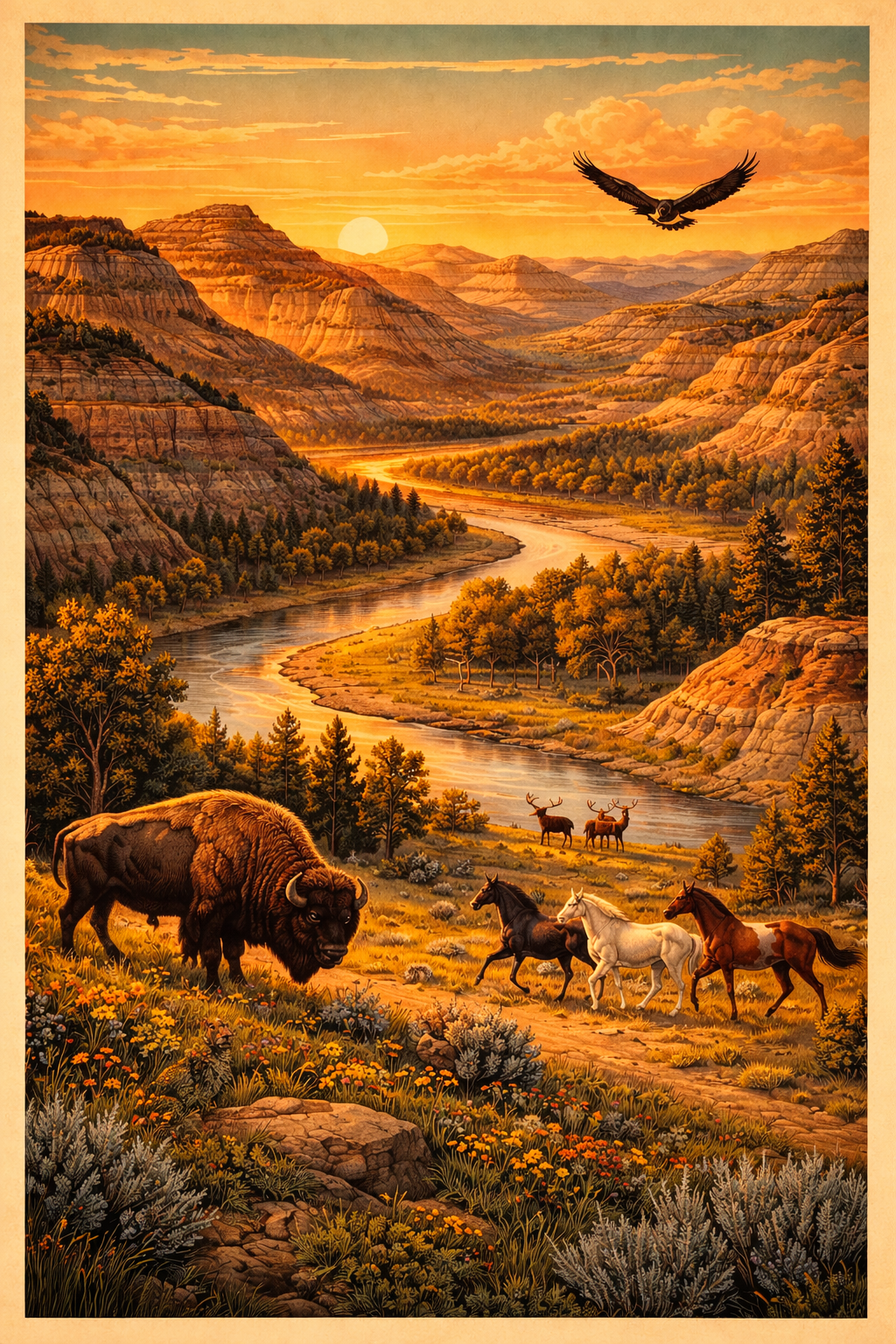
Welcome to Theodore Roosevelt National Park, a picturesque expanse in western North Dakota. Named after the 26th President of the United States, this park is renowned for its rugged badlands, diverse wildlife, and deep historical significance. The landscape that once inspired Roosevelt’s conservation ethic continues to embody the wild spirit of the American West.

My personal experience
This is one of the remote, hard-to-reach parks — tucked away in western North Dakota. My wife and I visited on Easter 2017. As you know, I love watching wildlife, especially bison — and here, there’s no shortage of them. We had planned to watch them safely from a distance. That was our plan — but the bison had their own. We stopped at a picnic area for lunch, spotting a herd in the distance. While we were busy enjoying our sandwiches, we didn’t realize the herd had been moving… straight toward us. The open trunk of our car blocked part of our view, so we didn’t notice until the bison were only 30–40 feet away and closing in. If you’ve ever wanted to see someone move at light speed, that was your missed opportunity! We jumped into the car, slammed the doors, rolled up the windows, and silently hoped we wouldn’t have to explain to our insurance company why there were hoof prints on the hood. But what an experience — seeing those massive animals up close, looking right into their eyes as they calmly passed by. Later that day, we also spotted one of the park’s wild horse herds, and managed to fit in a few hikes for our logbooks. If you plan well, you can combine a visit here with the South Dakota parks — it’s a rewarding addition to any northern plains road trip.

Basic Facts
Address:
Theodore Roosevelt National Park
315 Second Avenue
Medora, ND 58645
Operation Hours and Seasons:
The park is generally open 24 hours a day, year-round.
Visitors:
Approximately 700,000 per year (2022)
Entrance Fees:
- Private Vehicle – $30.00 admits one private, non-commercial vehicle and all its occupants
- Per Person – $15.00
Website:
nps.gov/thro
Map:
nps.gov/thro/planyourvisit/maps.htm
Additional Information:
For additional local information, visit medora.com
The park has three distinct units: South Unit, North Unit, and Elkhorn Ranch Unit. Each offers unique experiences and should be explored.
Getting there
The closest town is Medora, North Dakota. From Medora, take I-94 W to reach the park’s South Unit entrance.
Approximate distances from other major towns:
From Rapid City, SD: 230 miles (4 hours)
From Bismarck: 135 miles (2 hours)
From Fargo: 300 miles (5 hours)
Weather
The weather in Theodore Roosevelt National Park varies throughout the year.
- Spring (March to May): Temperatures: Average highs range from 50s °F (10-15°C) to 70s °F (20-25°C). Spring brings blooming wildflowers and moderate temperatures; strong winds possible.
- Summer (June to August): Temperatures: Highs often reach 80s to 90s °F (27-32°C). It’s hot and dry, ideal for wildlife viewing.
- Fall (September to November): Temperatures: Highs range from 50s °F (10-15°C) to 70s °F (20-25°C). Colorful foliage, pleasant days, fewer crowds.
- Winter (December to February): Temperatures: Highs in the 20s to 40s °F (-6 to 4°C), and nights often drop below freezing. Snow blankets the park, creating a serene landscape.
Let’s dive into the various activities you can enjoy during your visit:
Hiking
Theodore Roosevelt National Park offers a variety of hiking trails:
Easy:
- Wind Canyon Trail: A 0.4-mile trail offering panoramic views of the Little Missouri River.
- Boicourt Trail: A 0.8-mile round trip to a stunning overlook of the badlands.
Moderate:
- Jones Creek Trail: A 6.4-mile round trip through scenic valleys and hills.
- Caprock Coulee Trail: A 4.2-mile loop that showcases diverse geological formations.
Strenuous:
- Petrified Forest Loop: A 10-mile trail through one of the largest petrified wood areas in the park.
- Achenbach Trail: A 18-mile loop in the North Unit, perfect for experienced hikers seeking solitude.
Wildlife Viewing
This park is one of the best places in the Great Plains to observe wildlife. You’ll likely see bison, elk, wild horses, prairie dogs, and occasionally bighorn sheep or coyotes. Bird enthusiasts can spot raptors, meadowlarks, and sandhill cranes during migration.
Best times: early morning and late afternoon, when animals are most active.
Scenic Drives
- South Unit Scenic Loop Drive: A 36-mile loop offering spectacular views and access to many trailheads.
- North Unit Scenic Drive: A 14-mile drive with breathtaking overlooks and picnic areas.

Photography
Capture the stunning landscapes and unique sand formations:
- Golden Hour: Soft sunlight enhances the textures and colors of the dunes and surrounding mountains.
- Night Photography: The clear skies offer excellent opportunities for photographing the Milky Way and stars.
Horseback Riding
Horseback riding is a traditional and popular way to explore the park. Bring your own horse as guided tours are no longer offered in the park. Stock use is allowed on designated trails and in the backcountry; check with the park office for current regulations. Only weed free hay/feed is allowed in the park. You can park your trailer at any trailhead with parking space big enough to accommodate trailers. Camping with your horse is allowed in specific locations.
Favorite riding routes include portions of the Maah Daah Hey Trail (also check for outfitters outside the park offering guided tours) and Jones Creek area, offering sweeping prairie views and solitude.
General Aviation
Private pilots can fly into Dickinson Theodore Roosevelt Regional Airport (DIK), about 35 miles from the park. Ground transportation options include car rentals to reach the park. Longest runway is 7,301 ft and the local FBO offers 100LL and Jet A. I could not find any vendors offering flight seeing tours to the park.

Important Tips
- Weather Preparedness: Conditions change quickly; bring layers, water, and sun protection.
- Permits: Required for backcountry camping and some horseback routes.
- Respect Wildlife: Keep safe distances — bison may appear calm but can charge suddenly.
- Navigation: Cell service is limited. Carry a map and let someone know your plans.
- Leave No Trace: Stay on marked trails and pack out all trash.
Theodore Roosevelt National Park is where the rugged beauty of the Badlands meets the enduring legacy of America’s conservation president. Whether you’re hiking among eroded cliffs, watching wild horses gallop across the prairie, or standing quietly as a herd of bison passes by, you’ll feel a powerful connection to the landscape that shaped Theodore Roosevelt — and, in many ways, the modern idea of national parks themselves.


